
How Silent Sliding Door Technology Performs
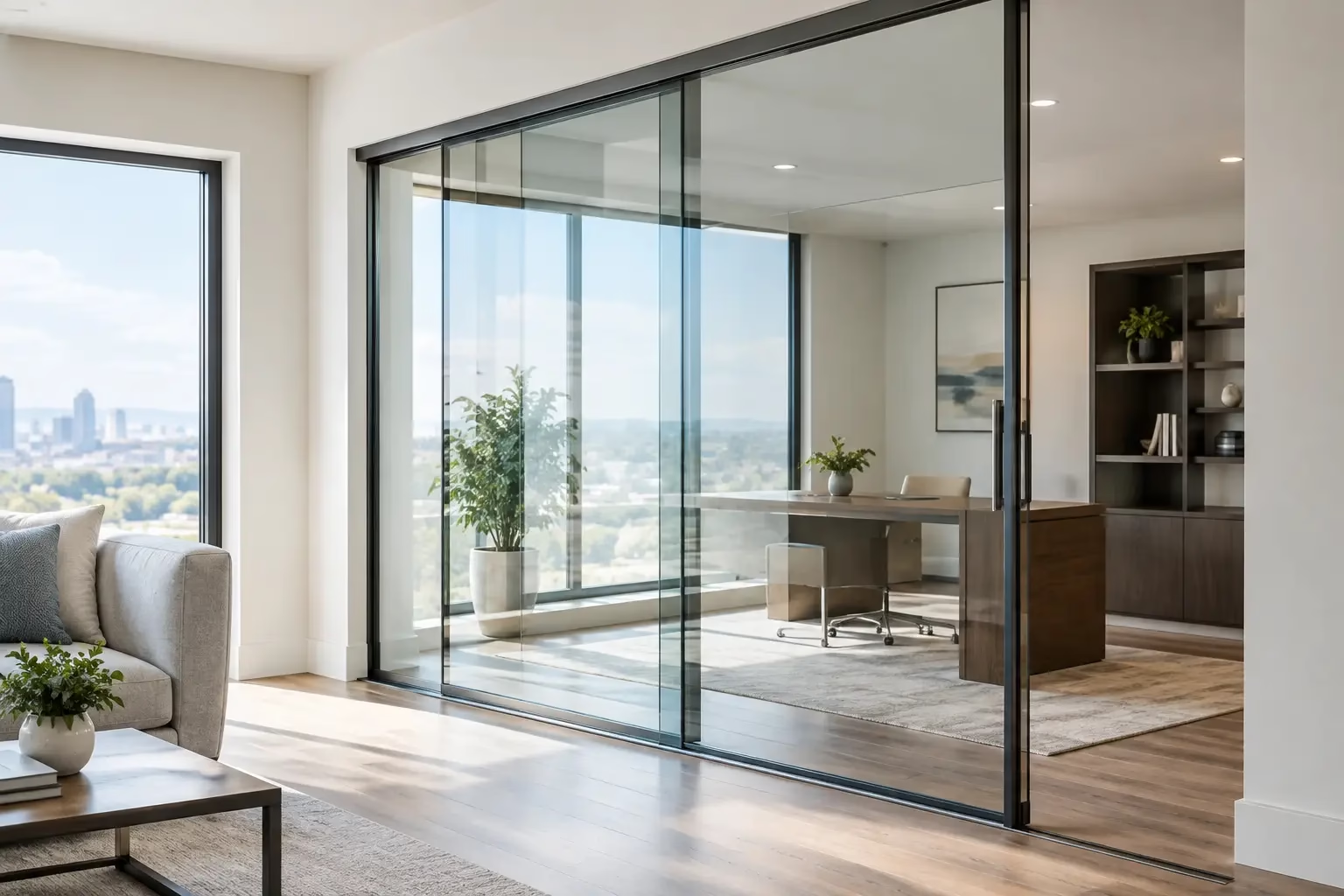
How Silent Sliding Door Technology Performs
A glass sliding door should not announce every arrival, meeting, or room change. In an executive office, a conference room, a salon suite, or a home workspace, noisy rollers and abrupt stops can make an otherwise refined interior feel unfinished. Silent sliding door technology addresses that detail with engineered components that control movement, reduce vibration, and make daily operation feel intentional.
For commercial and residential buyers, quiet operation is more than a luxury feature. It affects concentration, privacy, perceived quality, and the long-term experience of the space. The right system also has to carry the weight of glass safely, remain aligned through frequent use, and fit the dimensions and design language of the project.
What Silent Sliding Door Technology Actually Does
Silent operation comes from a complete sliding system rather than one isolated hardware upgrade. The track, rollers, door panel, guides, stops, and locking features must work together. When one component is underspecified or incorrectly installed, the result may be rattling, scraping, uneven travel, or a door that closes too quickly.
At the center of the system are precision rollers that support the panel and distribute its weight evenly. Quality roller assemblies use durable wheels and bearings designed to limit friction as the door moves across the track. This reduces the metal-on-metal vibration and rolling noise often associated with basic sliding door hardware.
Controlled closing is equally valuable. Soft-close mechanisms capture the door near the end of its travel and slow it before contact with the stop. Instead of a sharp impact, the panel finishes its movement with a measured, quiet close. That protects the hardware, reduces noise in shared environments, and creates a more polished interaction every time the door is used.
For glass doors, bottom guidance is another critical part of performance. A properly designed floor guide keeps the panel from swinging or shifting out of plane while allowing it to slide freely. In systems with bottom-wheel support and locking design, this engineering also contributes to stability and safety, especially for larger or frequently operated panels.
Why Quiet Sliding Doors Matter in Workspaces
Open offices benefit from daylight and visual connection, but they also need areas where conversations, client meetings, and focused work can happen without disruption. Sliding glass doors create division without closing off the room. Silent sliding door technology helps preserve that benefit because people can enter and leave a room without the clatter of a conventional track system.
In conference rooms, quiet movement supports meetings already in progress. A team member can step out, a client can arrive, or a presentation can begin without a loud door becoming the center of attention. For private offices and HR rooms, the benefit is subtler but still real: controlled doors reinforce a calmer, more professional setting.
Salon suites and wellness spaces have a similar need. These environments are designed around service, comfort, and privacy. A door that rattles along its track or strikes the frame undermines the sense of care built into the space. Quiet sliding systems help maintain a composed atmosphere while preserving valuable floor area.
The same principle applies at home. A sliding glass door can define a home office, divide a bedroom, close a closet, or separate a multi-use living area without the swing clearance required by a hinged door. When family members work different hours or share compact spaces, low-noise operation becomes a practical advantage.
The Components Behind Quiet Performance
A silent door is not simply a door with soft-close hardware added at the end. Specifiers should evaluate the system as a whole, beginning with the intended panel size, glass thickness, opening width, frequency of use, and mounting condition.
Precision Track and Roller Design
The track must be straight, properly supported, and rated for the panel weight. Even high-quality rollers cannot compensate for a poorly mounted or flexing track. Precision-aligned tracks allow the wheels to travel consistently, which limits vibration and prevents the intermittent clicking or grinding that develops when a system is out of level.
Rollers should be selected for the actual glass panel, not the minimum possible load. Oversized doors, taller-than-standard openings, and double-panel configurations require hardware engineered for that application. Capacity margins matter because they support smoother travel and help preserve performance over years of regular use.
Soft-Close and Controlled Stops
Soft-close devices reduce the final impact at one or both ends of travel. They are particularly useful in offices, bedrooms, closets, and any environment where doors may be used repeatedly throughout the day. A quality mechanism should engage predictably without making the door difficult to open or requiring an exaggerated pull to release it.
Stops also need adjustment. Their role is not just to prevent overtravel. Correctly positioned stops ensure the panel lands where it should, whether that means fully closing an opening, aligning with a fixed glass panel, or stopping clear of adjacent furniture and walls.
Bottom Guidance and Safety Locking
Glass panels are substantial architectural elements, and quiet movement should never come at the expense of stability. Bottom guides control lateral movement and help the door maintain its intended path. Safety-focused bottom-wheel locking designs can add further protection by securing the panel in its operating position.
This is especially relevant for commercial projects, homes with children, and any installation where doors will be operated by many different users. A stable system feels quieter because it does not shake, chatter, or drift as it moves.
Silent Operation Depends on Proper Installation
The best hardware can still perform poorly if the opening is not measured accurately or the mounting surface is unsuitable. Glass sliding doors require careful planning before installation, particularly in retrofit projects where walls, ceilings, floors, and trim may not be perfectly level.
First, confirm the clear opening and available wall space for the panel when open. Then evaluate the structural support behind the mounting location. A track carrying a heavy glass door needs secure anchoring into an appropriate substrate or blocking. Do not rely on finish materials alone to carry the load.
Floor conditions matter as well. A bottom guide needs a consistent reference point, and transitions in flooring can affect alignment. In commercial interiors, coordinate the door system with electrical work, ceiling details, millwork, and furniture layouts early. This prevents a finished space from requiring last-minute compromises that affect function or appearance.
Custom sizing can make a significant difference. Standard dimensions work well for many openings, but made-to-order panels allow the system to align with existing architecture, partition layouts, and desired sightlines. Doors22 designs glass office and interior sliding systems around exact project requirements, with installation coordination available through partners in major cities.
Where the Trade-Offs Appear
Silent systems deliver clear benefits, but they should be specified realistically. A heavier glass panel may provide a more substantial visual presence and better acoustic separation than a lighter panel, yet it requires appropriately rated tracks and rollers. Larger openings may need more complex hardware, additional panels, or carefully planned parking space.
Soft-close hardware adds control, but it should match the panel weight and user experience. If it is too aggressive, the door can feel slow near the end of travel. If it is not correctly adjusted, it may fail to engage consistently. The objective is controlled movement that feels natural, not a mechanism users have to fight.
Glass also supports visual privacy differently than solid doors. Clear glass maximizes light flow and openness, while frosted, tinted, or patterned options provide greater discretion. For conference rooms, offices, bedrooms, or treatment spaces, the right choice depends on whether the priority is visibility, privacy, or a balance of both.
Finally, quiet sliding performance does not automatically mean soundproofing. A well-engineered glass door can reduce distractions and create separation, but full acoustic isolation depends on the complete wall system, perimeter seals, ceiling construction, and gaps around the opening. Projects with strict confidentiality or sound-control requirements should address those details from the start.
Choosing a System Built for Daily Use
When comparing sliding glass door options, look beyond the finish and panel appearance. Ask how the door is supported, how it is guided, whether the hardware is rated for the panel size, and how the system controls closing. Request clear information on safety features, customization, warranty coverage, and installation requirements.
For high-traffic commercial spaces, prioritize durable hardware, stable bottom guidance, and adjustment access for long-term maintenance. For residential applications, consider who will use the door, how often it will move, and whether the opening needs added privacy. In both cases, a demountable system can be a smart choice when future reconfiguration is likely.
A quiet door is one of those details people may not describe immediately, but they notice it every day. Specify the system around the space, the panel, and the way people will use it, and the result is an interior that works with calm precision rather than asking for attention.
.png) Share this post with others
Share this post with others


