
Bottom Wheel Locks for Safer Sliding Glass Doors
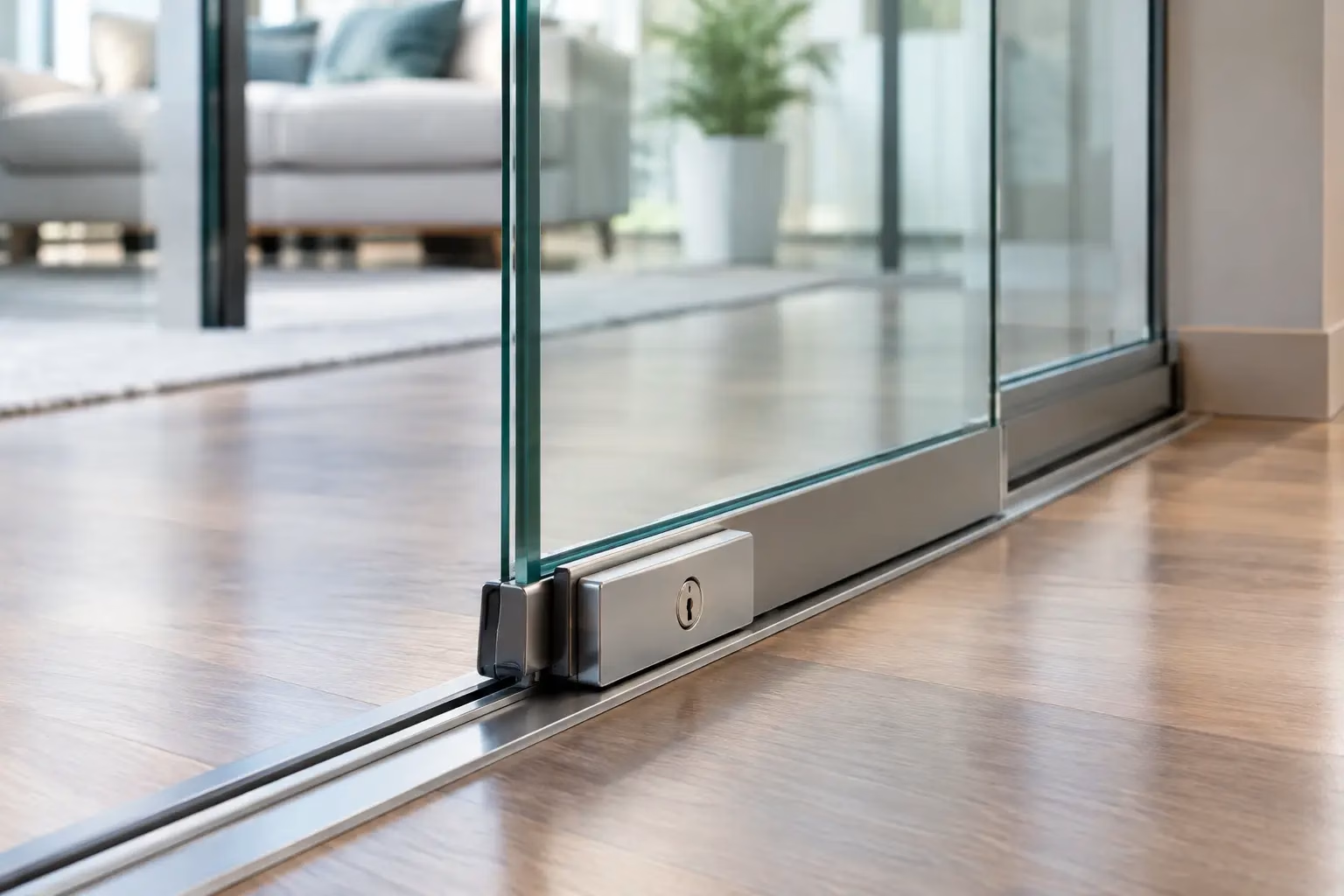
Bottom Wheel Locks for Safer Sliding Glass Doors
A sliding glass door should feel refined in motion, but its safety is decided when the door is closed, opened, and used repeatedly over years. Bottom wheel locks are a key part of that performance. They help keep a sliding panel properly engaged with its track, reduce the risk of unwanted movement or derailment, and support the stable operation expected in commercial and residential interiors.
For office partitions, conference room doors, closet systems, and room dividers, this detail matters more than it may appear. Glass panels are substantial, highly visible architectural elements. Their hardware must be engineered for controlled movement, dependable alignment, and daily use without compromising the clean, open look that makes glass systems so valuable.
What Are Bottom Wheel Locks?
Bottom wheel locks are safety-focused mechanisms integrated into, or positioned near, the lower rolling hardware of a sliding door system. Depending on the system design, they may help secure the panel to the track, prevent lifting, limit unintended release from the guide path, or hold the door in a defined position.
They are not the same as a privacy lock or keyed lock. A privacy lock controls whether someone can open a door from the opposite side. Bottom wheel locks primarily address how the panel interacts with the track and roller assembly. Their job is mechanical stability.
In a well-designed sliding glass system, the lower wheels carry much of the panel’s operating load. Adding a positive locking or retention feature at that point helps ensure the panel remains properly seated as it travels. This is especially relevant for wide glass doors, tall panels, high-traffic office openings, and spaces where users may open and close doors quickly throughout the day.
Why Bottom Wheel Locks Matter for Glass Door Safety
A premium sliding system is more than glass, a handle, and a track. Each component affects performance. If a door can be lifted too easily, shifts out of alignment, or loses proper engagement with its guide, the result can be noise, rough travel, premature hardware wear, and a less secure operating experience.
Bottom wheel locks provide a practical layer of protection by helping the panel stay where it was engineered to operate. For property owners and facility managers, that means greater confidence in a door that may be used dozens or hundreds of times each week.
The benefit is also visual. A panel that stays aligned maintains consistent reveals, cleaner lines, and a more intentional architectural finish. In a glass office partition, even minor misalignment is noticeable. The door may still move, but it no longer looks or feels like a precision-built system.
Better protection in active commercial spaces
Commercial interiors place different demands on sliding glass doors than a low-use guest room or closet. Employees move between offices, clients enter conference rooms, and teams reconfigure spaces as their needs change. A door system must tolerate consistent use without becoming loose, loud, or difficult to operate.
Bottom wheel retention is particularly useful in settings such as conference rooms, executive offices, salon suites, home offices, and shared workspaces. These are environments where glass is selected to preserve daylight and visual connection, but users still need dependable separation, acoustic control, and privacy when the door is closed.
A stronger fit for larger and heavier panels
The larger the glass panel, the more important proper hardware engineering becomes. Oversized doors create greater load demands and more momentum during operation. That does not mean every large door requires the same lock design, but it does mean the full system – glass thickness, wheel capacity, track, guides, stops, and locking features – must be specified as one coordinated assembly.
A bottom wheel lock should never be treated as a substitute for correctly rated hardware. It is a supporting safety feature within a system that has been designed for the door’s size, weight, and intended use.
How Bottom Wheel Locks Support Smooth, Quiet Operation
Safety and quiet performance are closely connected. When a sliding panel remains correctly positioned on its track, the wheels are more likely to roll as intended rather than bind, scrape, or place uneven pressure on surrounding components.
That does not mean a locking feature eliminates all noise. Sound can also come from debris in the track, worn rollers, an uneven opening, loose fasteners, or contact between the panel and adjacent framing. Still, proper lower-wheel engagement helps create the stable foundation required for silent technology and a controlled glide.
For a modern office, this distinction is meaningful. A glass door that rattles or drags can undermine an otherwise polished interior. For a home office or bedroom divider, it can become a daily irritation. Well-engineered rollers and retention hardware allow the door to move with a deliberate, quiet feel while remaining securely guided.
Choosing a System With the Right Wheel-Locking Design
The best configuration depends on the opening, panel dimensions, use level, and installation conditions. Rather than selecting a sliding glass door on appearance alone, ask how the lower rolling assembly is designed to manage safety and long-term performance.
Start with the panel itself. Tempered safety glass, appropriate thickness, and accurately finished edges are essential. Next, confirm that the rollers are rated for the panel weight and that the track is designed to remain rigid and level. A locking or anti-lift feature can perform properly only when the surrounding hardware has been specified correctly.
It is also worth considering who will use the door. A lightly used closet panel has different requirements than a frequently operated conference room entry. A residential room divider may prioritize clean sightlines and quiet travel, while a commercial application may require greater durability, more frequent adjustment capability, and coordinated installation across multiple openings.
Customization is often the difference between a door that merely fits and a system that performs. Made-to-measure dimensions account for the actual opening, finished floor condition, wall structure, and adjacent glass or framing. This is especially important in renovations, where surfaces may not be perfectly level or square.
Installation Details That Affect Performance
Even high-quality hardware cannot overcome poor installation. Bottom wheel locks and rolling assemblies need accurate adjustment so the panel is plumb, level, and consistently engaged from one end of travel to the other.
The floor track or lower guide must be clean, straight, and firmly supported. The upper track must be properly anchored to suitable structure. Stops should be positioned to prevent the panel from striking walls, sidelites, or other doors. Once installed, the door should be tested slowly and at normal operating speed to identify rubbing, vibration, or inconsistent resistance.
For demountable glass office systems, installation planning should also account for future changes. One of the advantages of a modular partition is the ability to adapt an interior as teams grow, offices shift, or a conference room becomes two smaller spaces. Hardware that is designed for adjustment and service supports that flexibility without requiring a complete rebuild.
Professional installation coordination can be the right choice for large panels, multi-door office projects, or openings with structural and alignment challenges. A capable DIY installer may be well suited to a simpler residential application, provided the manufacturer supplies clear measurements and the installer follows the system requirements closely.
Maintenance: Small Checks, Long-Term Results
Bottom wheel locks do not usually require complicated maintenance, but they should not be ignored. Periodic inspection helps preserve performance and can reveal small issues before they affect the door’s operation.
Keep the track free of dust, grit, pet hair, and construction debris. Check that the panel travels smoothly without excessive side-to-side movement. Listen for new scraping, clicking, or rattling sounds, and inspect visible fasteners and guides for looseness. If the door begins to drag or sit unevenly, have the rollers and retention hardware evaluated rather than forcing the panel through the track.
Avoid applying unapproved lubricants. Some products attract dirt, while others can interfere with finishes or manufacturer-recommended maintenance practices. The right cleaning method depends on the track material and wheel design.
When a Bottom Wheel Lock Is Not the Whole Answer
A bottom wheel lock improves stability, but it does not replace a security lock where access control is needed. If a private office, consultation room, or bedroom requires controlled entry, specify a locking handle or privacy hardware designed for that purpose.
It also cannot correct an improperly framed opening, overloaded rollers, damaged glass, or a track that has been installed out of level. Safety comes from the complete system working together: precision glass, rated hardware, secure anchoring, correct adjustment, and responsible use.
For design-conscious spaces, that engineering is what makes a minimal glass door feel substantial rather than delicate. Doors22 sliding and demountable glass systems are designed around this balance – clean visual lines, custom-fit planning, silent movement, and safety-focused hardware built for long-term use.
When planning a new sliding glass door or office partition, ask about the lower wheel assembly before finalizing the design. A system that looks exceptional should also stay aligned, roll quietly, and give every user confidence each time the panel moves.
 Share this post with others


