
Are Sliding Glass Doors Safe for Modern Spaces?
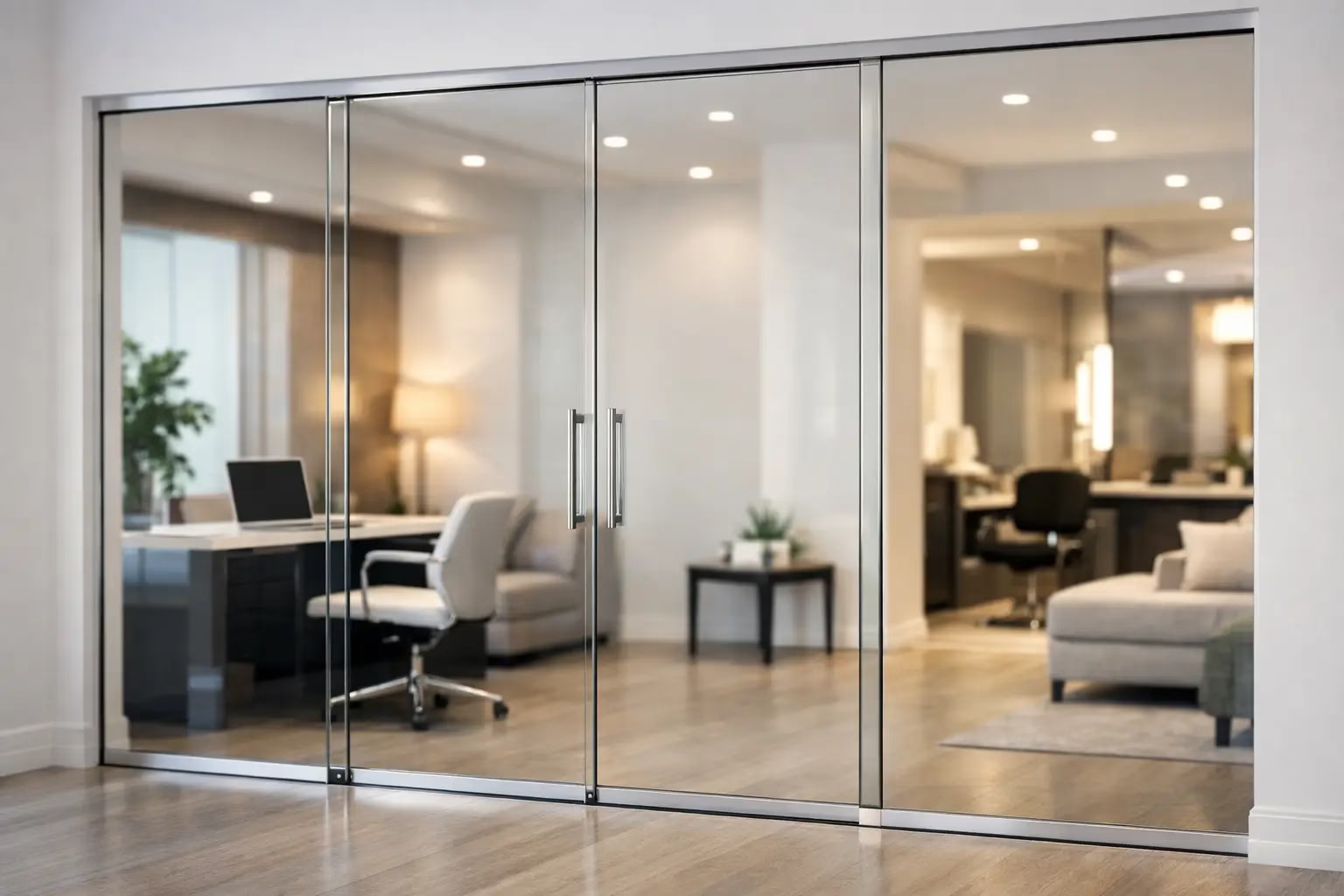
Are Sliding Glass Doors Safe for Modern Spaces?
A sliding glass door can make a room feel larger, brighter, and more efficient in a single move. But when buyers ask, are sliding glass doors safe, they are usually weighing two things at once – security and physical safety. That distinction matters, because a door can look impressive and still fall short if the glass, locking system, track design, or installation quality is wrong.
For interior applications, the answer is often yes – sliding glass doors are safe when they are properly engineered, built with the right glass, and installed with precision. For commercial offices, home offices, closets, room dividers, and conference rooms, safety comes down to the details that are not always obvious at first glance. The frame strength, wheel system, lock design, and glass specification all play a direct role in long-term performance.
Are sliding glass doors safe when compared to hinged doors?
They can be, but the comparison depends on where the door is used and how it is built. A hinged door has a simple advantage: most people understand how it works, and many traditional lock types have been tested for decades. A sliding glass door works differently. It relies on smooth movement along a track, alignment across a wider opening, and hardware that has to manage both motion and stability.
That does not make it less safe by default. In many interior settings, a sliding system can actually reduce certain risks. There is no door swing to collide with furniture, no sudden arc into a hallway, and no need to reserve clearance space. In tighter floor plans, that can improve circulation and lower the chance of impact in busy areas.
The trade-off is that sliding systems demand better hardware and cleaner installation. If the rollers are low-grade, the track is not level, or the lock is weak, performance can decline faster than with a conventional swing door. A premium sliding system is built for safety and performance. A cheap one often feels fine on day one and disappointing a year later.
What makes a sliding glass door safe?
The first factor is glass type. Tempered glass is a baseline expectation for quality interior systems because it is designed to break into smaller, less dangerous pieces if shattered. Laminated glass adds another layer of protection by holding together when broken, which can be especially useful where privacy, sound control, or added impact resistance matters. In many commercial environments, glass specification should never be treated as an afterthought.
The second factor is the hardware system. A door panel may look minimal, but the mechanics behind it do most of the safety work. Stable rollers, secure stops, anti-jump features, and dependable locking points all help prevent derailment, unwanted movement, and forced opening. Bottom-wheel designs are especially relevant because they support the panel more directly and can improve long-term stability when engineered correctly.
The third factor is the frame and track assembly. A poorly made frame can flex over time. A poorly designed track can collect debris, create drag, and cause uneven movement. When that happens, users tend to force the door, and forced movement is where wear, misalignment, and safety issues begin.
Glass strength matters more than visual style
A clear, minimal glass door can still be a high-safety product. The key is not thickness alone, but the full specification. Tempered safety glass is standard for many quality systems, while laminated options may be the better fit in spaces that need enhanced performance. In offices, that can include conference rooms, private meeting spaces, and executive enclosures. In residential settings, it may apply to home offices, room dividers, and larger panel configurations.
If children, pets, or heavy daily traffic are part of the equation, it is worth asking how the glass will perform under real use, not just how it photographs. The safest choice is usually the one designed for the traffic level and room function.
Locking design is not optional
When people question whether sliding glass doors are safe, weak locks are often the reason. Some lower-end systems rely on simple latches that do little more than keep the panel closed. Better systems are designed with more secure locking engagement and stable panel positioning.
For interior doors, the goal is not always intrusion resistance in the same way as an exterior entry door. It may be privacy, access control, or preventing unintended movement. In all cases, the hardware should feel deliberate, secure, and consistent over repeated use.
Installation quality affects safety every day
Even a well-designed door can underperform if it is installed out of level or with poor anchoring. Misalignment can create gaps, strain the rollers, and weaken lock engagement. Over time, that can lead to sticking, rattling, or unsafe movement.
This is one reason custom sizing matters. A made-to-measure opening allows the system to fit the space correctly instead of forcing adjustments around standard dimensions that do not quite work. For buyers investing in a refined interior, correct fit is not only a design decision. It is a safety and durability decision.
Where sliding glass doors perform best
Interior sliding glass doors are often an excellent choice for offices and homes where openness matters. In commercial spaces, they support light flow, visibility, and efficient use of square footage without closing off the environment. In homes, they help define areas while keeping the overall layout cleaner and brighter.
They are especially effective in conference rooms, private offices, home office enclosures, closet systems, and room dividers. These are settings where a swinging slab door can waste floor area or interrupt furniture planning. A sliding panel solves that problem while maintaining a polished architectural look.
That said, not every environment has the same safety priorities. A quiet executive office may prioritize acoustic control and elegant operation. A salon suite or shared workplace may prioritize durability under frequent use. A family home may focus more on child safety, smooth movement, and dependable panel retention. Good specification starts with how the space will actually function.
Common concerns about sliding glass door safety
One concern is breakage. With proper safety glass, the risk profile is far better than many buyers assume. Another is derailment. This usually points back to hardware quality, track design, and installation accuracy. A well-engineered system should move smoothly and stay stable without wobble or jump.
Privacy is another frequent issue. Safety and privacy are not the same thing, but they often overlap in office and residential design. Frosted, tinted, or patterned glass can solve privacy concerns without giving up the safety benefits of a quality sliding system.
There is also the question of long-term wear. Sliding glass doors are mechanical systems, so they need components designed to last for decades, not just survive shipping. Quiet operation, smooth rolling, and secure locking are signs of a system built for daily use rather than occasional use.
How to choose a safer sliding glass door system
Start with the glass specification and verify that it is safety-rated for the intended application. Then look closely at the hardware. Ask how the panel is supported, how it is prevented from jumping the track, and how the locking mechanism performs over time. If the answers are vague, that is useful information.
Next, consider whether standard sizing is enough or whether the project needs custom dimensions. A correct fit improves both aesthetics and performance. For offices and premium residential spaces, customization often produces a cleaner result with fewer compromises.
Finally, think beyond the panel itself. Safe performance depends on the whole system: frame, rollers, stops, lock, track, glass, and installation. At Doors22, that system approach is what separates a design feature from a long-term solution.
So, are sliding glass doors safe?
Yes – when they are designed with safety glass, engineered hardware, stable locking, and precise installation. They are not automatically safe just because they are modern, and they are not automatically risky just because they are made of glass. The real answer sits in the build quality.
For buyers who want light, flexibility, and a clean architectural finish, sliding glass doors can be a strong safety choice as well as a smart design choice. The best results come from treating the door as a performance product, not just a visual upgrade. If you start there, you can create a space that looks open and refined while still feeling secure every time the door moves.
.png) Share this post with others
Share this post with others


