
Frameless Interior Sliding Glass Doors
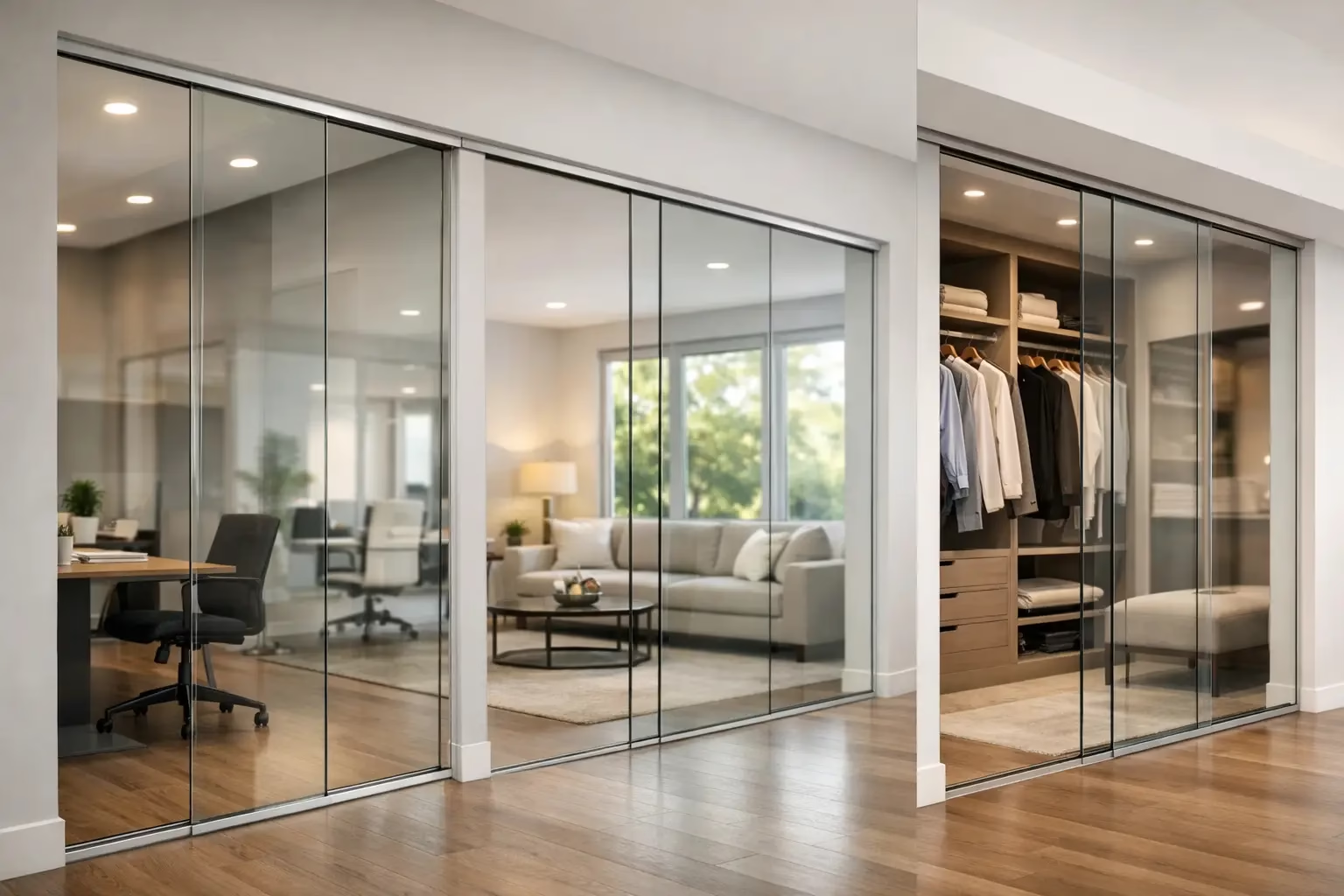
Frameless Interior Sliding Glass Doors
A walled-off floor plan can make a space feel smaller than it is. That is exactly why frameless interior sliding glass doors have become a smart upgrade for offices, conference rooms, home offices, closets, and room dividers. They keep the visual line open, allow natural light to move through the interior, and create separation without the heavy look of traditional framed systems.
For buyers who care about design, performance, and long-term value, the appeal is straightforward. A frameless system looks cleaner, occupies less visual space, and supports a more flexible layout. But the right result depends on more than appearance alone. Glass type, hardware quality, safety features, sound control, and installation conditions all matter.
Why frameless interior sliding glass doors work so well
The first reason is visual simplicity. Without bulky vertical frames interrupting the surface, the glass reads as one clean plane. In a commercial setting, that can make offices and meeting rooms feel brighter and more connected. In a residential setting, it helps smaller rooms feel less boxed in while still giving each area a defined purpose.
The second reason is space efficiency. Swing doors need clearance. Sliding doors do not. That makes them especially practical in tighter footprints, including home offices, closets, salon suites, private treatment rooms, and compact conference spaces where every square foot needs to work harder.
There is also a strong operational benefit. A properly engineered sliding glass door system should move quietly, close smoothly, and hold up under repeated daily use. In active interiors, that is not a luxury feature. It is part of basic performance.
Where frameless interior sliding glass doors make the most sense
These systems are highly versatile, but they are not one-size-fits-all. In offices, they are often used to separate private work areas, conference rooms, and executive spaces while preserving openness and daylight. That balance matters in workplaces that want privacy without creating a closed, dated feel.
In residential interiors, they work well as home office enclosures, bedroom dividers, walk-in closet doors, and transitions between living areas. They are especially useful when a homeowner wants a room to feel defined without giving up brightness or floor space.
For multi-use commercial environments such as salons, studios, and medical or wellness suites, sliding glass doors support a polished look while helping operators organize the interior more efficiently. The clean lines fit modern build-outs, and custom sizing makes it easier to adapt the system to the actual footprint instead of forcing the footprint to adapt to a standard door.
What to evaluate before you buy
The biggest mistake buyers make is treating all glass door systems as interchangeable. They are not. Two products may look similar in a photo and perform very differently once installed.
Glass and safety engineering
Tempered safety glass is the baseline for interior applications where durability and occupant protection matter. Depending on the use case, thickness also affects the feel of the system. Heavier glass generally creates a more substantial, premium impression, but it also increases demands on hardware and installation precision.
If the door will be used frequently, or if it is going into a busy commercial setting, safety engineering should be part of the buying decision from the start. A bottom-wheel locking design, stable track alignment, and dependable hardware reduce movement issues and improve long-term reliability.
Track and roller performance
A frameless door is only as good as the system that carries it. Quiet operation is one of the clearest signs of quality. If the rollers drag, rattle, or lose alignment over time, the visual appeal of the glass will not make up for the day-to-day frustration.
Look for systems designed for silent performance and sustained use. That matters in conference rooms, home offices, and bedrooms where noise becomes part of the user experience. A door that glides well on day one but gets louder after six months is not a premium solution.
Fit and customization
Openings are not always perfectly standard, especially in renovation projects. Custom sizing can be the difference between a clean architectural finish and a compromised installation. It also gives designers and property owners more freedom to match proportions, ceiling heights, and adjacent glazing.
This is particularly important for demountable interior systems, where flexibility and future reconfiguration may be part of the plan. If there is any chance the layout could change later, choosing a system built with adaptability in mind is usually the smarter long-term investment.
Design trade-offs to think through
Frameless interior sliding glass doors solve many problems, but they are not the right answer for every priority. If maximum acoustic isolation is the goal, a solid-core swing door may still outperform a sliding glass door. Glass can reduce noise transfer, especially when paired with the right system design, but sliding applications typically do not create the same level of seal as more enclosed door types.
Privacy also depends on the glass selection. Clear glass supports openness and light flow, but it does not hide visual activity. Frosted, reeded, or tinted options can improve privacy while preserving brightness, though each choice changes the overall aesthetic. For some clients, that trade-off is easy. For others, especially in executive offices or sensitive work areas, it requires a more deliberate balance.
There is also the question of statement versus subtlety. Frameless systems feel minimal and refined. If the surrounding interior is highly traditional or heavily detailed, that modern look may either create a compelling contrast or feel out of sync. The answer depends on the design intent.
Installation matters more than most buyers expect
Even a well-made system can underperform if the opening is not prepared correctly. Wall condition, structural backing, floor levelness, and precise measurements all affect how the door will operate once installed.
In commercial projects, coordination with contractors and installers is often the safest route because the door system has to align with broader construction tolerances and scheduling demands. In residential projects, some installations are straightforward enough for experienced DIY buyers, but custom openings and larger panels often benefit from professional handling.
This is one reason engineered systems from specialized suppliers tend to outperform generic options. The difference is not just the product. It is the support around sizing, configuration, hardware selection, and installation planning.
Why buyers choose premium systems over basic ones
At the low end of the market, sliding glass doors can look attractive in photos and disappoint in practice. Common issues include noisy rollers, weak hardware, visible wear, limited sizing, and reduced stability. Those problems show up fastest in high-use settings.
Premium frameless interior sliding glass doors are built for safety and performance first, then finished with the visual restraint clients want. The better systems are designed to last for decades, not just to survive installation. That means stronger engineering, more reliable movement, cleaner detailing, and better support for custom conditions.
For architects, designers, and facility decision-makers, that reliability matters because callbacks cost time. For homeowners, it matters because an interior upgrade should improve daily use, not add maintenance headaches.
Choosing the right system for your space
The best starting point is not the glass finish or hardware color. It is the function of the room. Ask how much privacy is needed, how often the door will be used, whether acoustic control matters, and whether the opening is standard or custom. Once those questions are clear, the right configuration becomes easier to define.
For many buyers, the most effective route is a made-to-order solution that matches the opening and use case exactly. That approach reduces compromise and creates a cleaner finished result. Doors22 supports that process with standard and custom sizing, safety-focused engineering, and installation coordination options that help move a project from concept to completion without unnecessary delays.
Frameless interior sliding glass doors are not just a style choice. When specified well, they are a performance decision that improves how a space feels, functions, and adapts over time. If you are planning an office upgrade or refining a residential interior, the right glass door system can do more than divide space. It can make the entire layout work better.
.png) Share this post with others
Share this post with others


