
Custom Sliding Glass Doors Interior Guide
Custom Sliding Glass Doors Interior Guide
A swinging door can waste more space than most people realize. In a compact office, home office, salon suite, or bedroom, the clearance arc alone can limit furniture placement, interrupt traffic flow, and make a finished layout feel tighter than it should. That is exactly why custom sliding glass doors interior solutions have become a practical upgrade for people who want openness, privacy, and better use of every square foot.
The appeal is not only visual. A well-engineered interior sliding glass system improves how a space works day to day. It lets light move deeper into the room, creates clear boundaries without heavy walls, and supports a cleaner, more flexible floor plan. For commercial spaces, that can mean better visibility, collaboration, and a more refined client-facing environment. For residential interiors, it often means turning one room into two functions without making either one feel closed off.
Why custom sliding glass doors interior systems make sense
Standard doors solve a basic need. Custom systems solve a layout problem. That distinction matters when the opening is not a common size, when the room needs a specific level of privacy, or when the design requires a more precise architectural look.
Custom sizing is one of the biggest advantages. Many interior openings are slightly off from standard dimensions, especially in renovations, converted lofts, older homes, and tenant improvement projects. A made-to-measure glass door system removes the compromise of filler panels, awkward gaps, or hardware that looks oversized for the opening.
There is also the performance side. Premium interior sliding systems are built for safety and performance, not just appearance. The quality difference shows up in daily use – how quietly the door moves, how stable it feels on the track, and how confidently it locks into place. In high-use environments like offices, conference rooms, or shared home spaces, that is not a minor detail.
Where custom sliding glass doors work best
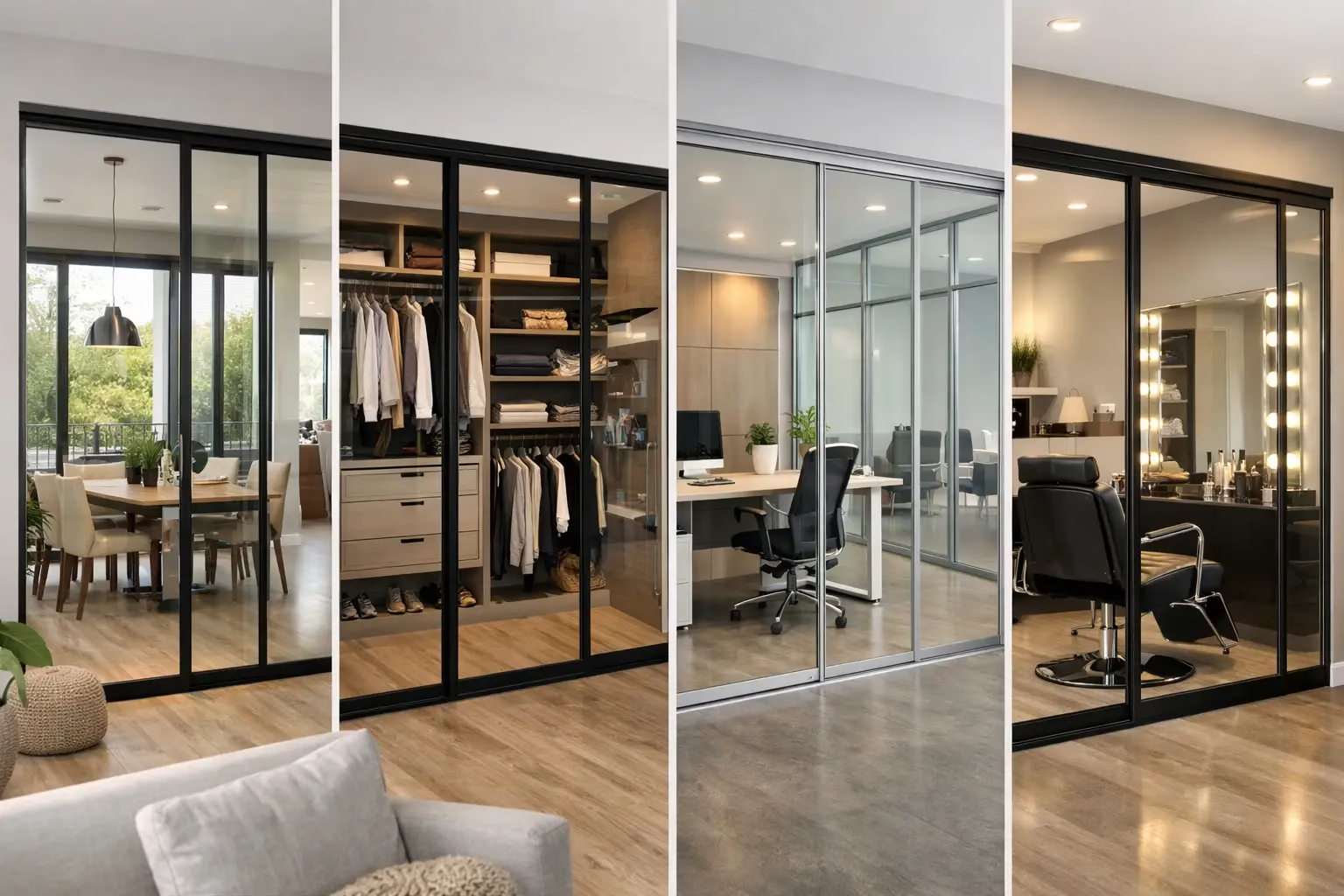
The most successful installations start with a clear use case. In commercial interiors, sliding glass doors are often used to define conference rooms, private offices, executive suites, reception-adjacent meeting areas, and modular work zones. They help preserve sightlines and natural light while still creating dedicated spaces for focus or client conversations.
In residential settings, they are especially effective in home offices, walk-in closets, bedroom dividers, laundry areas, and multi-use living spaces. A glass room divider with a sliding panel can give a remote worker separation during the day without making the home feel carved into smaller, darker rooms.
That said, the right solution depends on how much privacy is needed. Clear glass works well when openness is the priority. Frosted or tinted finishes make more sense when visual screening matters. A family home office and a law firm conference room may both need sliding glass doors, but not the same glass specification.
Design choices that affect the final result
Not all glass doors create the same impression. The frame profile, panel style, glass finish, and track design all influence both performance and appearance.
Framed systems tend to feel more defined and architectural. They are often a strong fit for commercial environments where durability and visual structure matter. Minimal frame or cleaner-profile systems can feel lighter and more residential, especially in modern interiors where the goal is to keep the design quiet.
Glass selection has just as much impact. Clear tempered glass keeps spaces bright and connected. Frosted glass softens visibility and adds privacy without losing light. Some projects benefit from mixing finishes across different areas, especially in office layouts where open collaboration zones and enclosed meeting rooms need different levels of discretion.
Hardware matters more than many buyers expect. A sliding door is a moving system, not a fixed panel. If the rollers, bottom guidance, and lock design are underbuilt, the door will eventually announce it through noise, instability, or alignment issues. Silent operation is one of the details that separates a premium interior installation from one that feels temporary.
What to look for in the engineering
A sliding glass door should look refined, but it also needs to hold up under repeated use. This is where buyers should pay attention to more than finish samples and renderings.
Start with safety. Tempered safety glass is essential for interior use, particularly in homes with children, busy office corridors, and customer-facing businesses. The door should also be supported by a stable system that reduces sway and protects smooth operation over time. Bottom-wheel locking designs can add a more secure and controlled feel compared with systems that rely too heavily on top-hung movement alone.
Then consider durability. A door installed in a private guest room does not face the same wear as one used all day in an office partition system. Commercial buyers should be especially focused on track strength, rolling hardware, and how the system handles frequent opening and closing. Products designed to last for decades usually show that advantage in the construction details, not in marketing language.
Demountable construction is another factor worth considering. If there is any chance the layout will change later, a movable or demountable glass system offers a practical long-term advantage. This is especially relevant for growing businesses, leased offices, and homeowners planning future reconfiguration.
Measuring and planning for a custom fit
The cleaner the opening, the better the result. Accurate measurements are critical because interior sliding systems are visible architectural elements. Even small inconsistencies can affect alignment, reveal gaps, or create a less polished finish.
For that reason, planning should account for more than width and height. Wall condition, floor levelness, ceiling condition, trim details, and adjacent obstructions all matter. In offices, this can include return walls, electrical devices, and coordination with partition panels. In homes, it may involve baseboards, casing, flooring transitions, or nearby cabinetry.
This is where custom fabrication earns its value. Instead of forcing the opening to fit the product, the product is built to the opening. That usually leads to a stronger visual result and a smoother installation process.
Installation: DIY-friendly in some cases, partner-supported in others
Some interior sliding glass door systems are manageable for experienced installers or capable DIY buyers, particularly in straightforward residential applications. But larger panels, multi-panel systems, and commercial glass partitions typically benefit from professional coordination.
The main reason is not just weight. It is alignment. A premium glass door only performs as intended when the track, panel, and locking components are installed precisely. A small installation error can show up as drag, inconsistent movement, or visual imbalance.
For commercial projects, installation coordination becomes even more important when multiple openings or full glass office systems are involved. Lead times, access conditions, and sequencing with other trades can affect the project schedule. Buyers who want speed should ask not only how fast the product ships, but how installation support is handled.
Cost depends on more than door size
Price is always part of the decision, but comparing systems based only on panel dimensions can be misleading. The total cost of custom sliding glass doors interior applications is shaped by glass type, frame finish, hardware quality, number of panels, lock options, and whether the system is standard-sized or made to order.
Commercial buyers should also factor in the value of flexibility. A demountable system may cost more upfront than a fixed framed opening, but it can reduce future renovation costs if the layout changes. Residential buyers often see value in the space savings alone, especially where a swinging door would interfere with furniture or circulation.
Cheap systems can look acceptable at first and become frustrating later. Noise, wobble, poor locking, and visible wear tend to appear after installation, not before. For a high-visibility interior feature, that trade-off usually does not pay off.
Choosing the right supplier
The best supplier is not simply the one with the lowest listed price. It is the one that can match the product to the application, provide accurate custom options, and support the project from quote through delivery and installation coordination.
That means asking practical questions. Is the system built for safety and performance? Can it be fabricated to exact measurements? Is there a clear difference between standard and custom pricing? Are there finish and glass options that fit the design intent? Can the company support large commercial projects as well as residential orders?
For buyers who want a modern system with technical credibility, that combination matters. Doors22 is positioned around that exact balance – refined design, custom sizing, silent technology, and engineered safety features that make the finished space look sharp and work hard.
The right glass door should do more than divide a room. It should make the space feel brighter, move better, and stay dependable long after the installation crew leaves.
.png) Share this post with others
Share this post with others


