
Custom Size Glass Partition Wall Guide
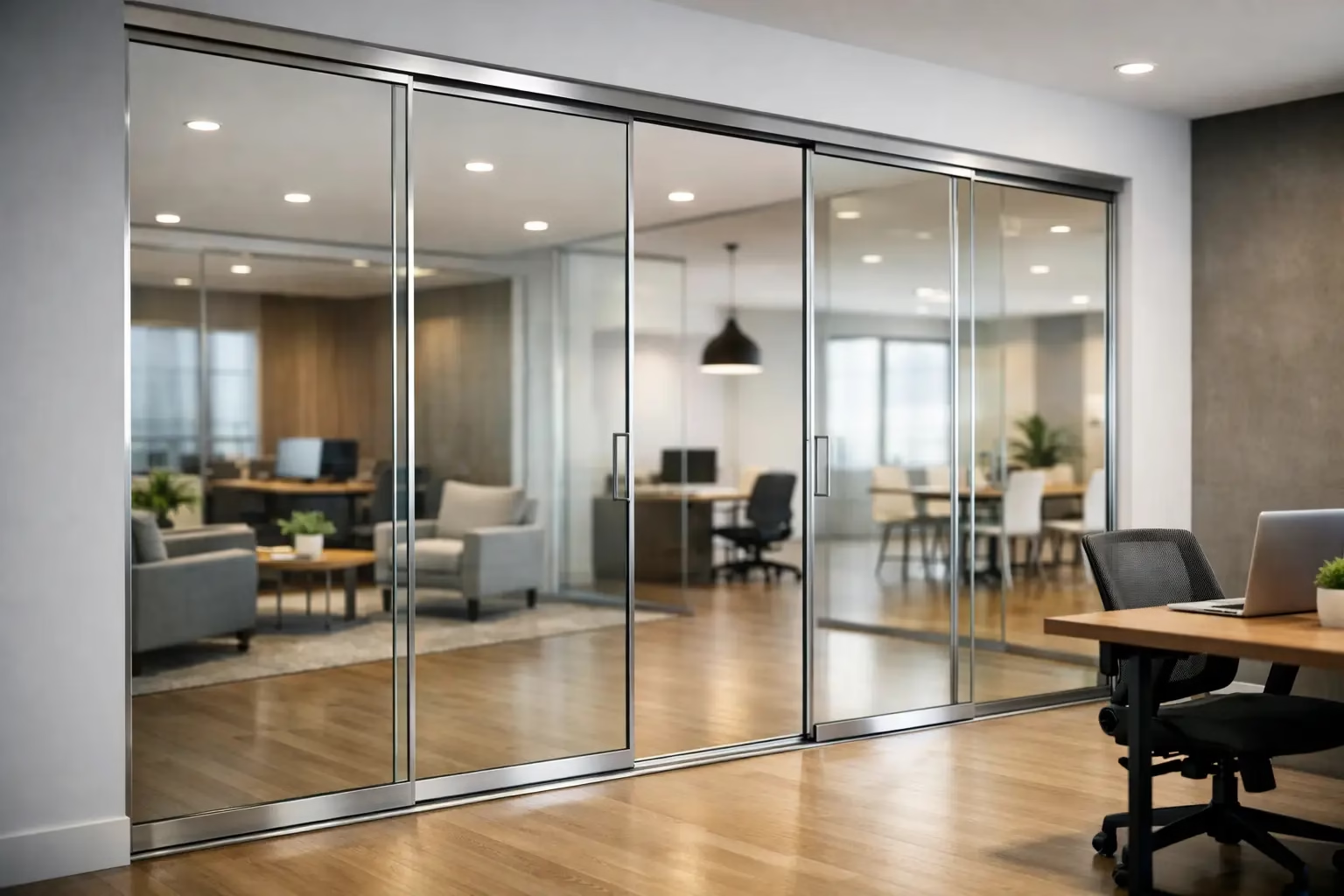
Custom Size Glass Partition Wall Guide
A floor plan can look efficient on paper and still fail in daily use. Teams need privacy without losing daylight. Homeowners want separation without making rooms feel smaller. That is where a custom size glass partition wall stands apart from fixed drywall or off-the-shelf dividers. It gives you exact-fit space definition, cleaner sightlines, and the flexibility to design around how people actually work and live.
Why a custom size glass partition wall solves the real problem
Most interior layouts are not built around standard dimensions. Ceiling heights vary. Openings are rarely perfect. Existing walls, bulkheads, HVAC drops, sprinklers, and flooring transitions create conditions that make standard partition systems harder to fit well. When a system is made to exact measurements, the result is not just more polished visually. It performs better.
A custom size glass partition wall allows you to control the width, height, door placement, panel configuration, and overall footprint based on the space you have, not the space a catalog assumes. In a commercial office, that can mean turning an awkward corner into a functional conference room or private office. In a residence, it can mean creating a home office enclosure, bedroom divider, or closet solution that looks integrated instead of added later.
This matters because interior glass is rarely only about appearance. It affects traffic flow, acoustics, perceived openness, and how efficiently square footage is used. A well-sized system improves all of those at once.
Where custom sizing makes the biggest difference
In offices, custom sizing is often the difference between a partition that feels intentional and one that feels compromised. Conference rooms need enough enclosure for privacy but should not block natural light from reaching the core of the floor plan. Private offices often need to fit between structural elements or align with existing furniture and circulation paths. Glass cubicles and demountable rooms need repeatable dimensions, but they also need flexibility where the building is not perfectly uniform.
For salons, medical-adjacent interiors, and service businesses, exact sizing helps maximize rentable or usable rooms without making the space feel closed in. A few inches can determine whether a workstation is comfortable, whether code clearances are met, or whether storage fits where it needs to.
In residential projects, the priorities shift slightly. Homeowners usually want a clean visual boundary while preserving light and openness. A custom system works well for home offices, loft-style separations, dining room dividers, and modern closet enclosures. Here, sizing is not only about fit. It is about proportion. The glass panels, frame lines, and door layout need to feel balanced within the room.
Design choices that affect performance
Framed, minimal-frame, and full system look
Not every custom size glass partition wall is trying to make the same statement. Some clients want a stronger architectural frame that anchors the room. Others want the lightest possible visual footprint. The right choice depends on the style of the interior, but also on use.
A more substantial framed system can feel grounded and durable in high-traffic commercial settings. Minimal profiles can create a cleaner residential look or a more contemporary executive office. The trade-off is that thinner visual lines often demand tighter coordination and a more deliberate installation approach.
Fixed panels, sliding doors, and swing doors
Door type changes how the system functions every day. Sliding doors save clearance space and support a streamlined look, which is especially useful in tighter offices, closets, and room dividers. Swing doors can feel more familiar and may suit certain conference rooms or private offices where a traditional entry is preferred.
Fixed panels make sense where the goal is enclosure without repeated access. Combining fixed glass with one or more operable doors is often the best balance. The right answer depends on how often the space is used, how much clearance is available, and whether the room needs to adapt later.
Clear, frosted, or mixed privacy zones
Glass does not mean zero privacy. Clear panels maximize light and visibility, which is often ideal for open offices and shared living areas. Frosted sections or partial privacy treatments help where discretion matters, such as meeting rooms, focused work zones, salons, or home offices facing common areas.
The practical approach is usually selective privacy rather than total opacity. You preserve openness while screening the parts of the room that actually need it.
Safety and durability are not optional
A premium glass system should look refined, but appearance alone is not enough. Any custom size glass partition wall should be built for safety and performance, especially in busy offices and family homes. That starts with quality tempered safety glass and continues through the hardware, track design, and locking details.
This is one area where engineering matters more than many buyers expect. A system can look similar in photos and perform very differently over time. Weak hardware, poor bottom guidance, or lower-grade components often lead to noise, instability, or wear that shows up quickly in daily use.
For movable and demountable systems, stability is especially important. A well-engineered bottom-wheel locking design, quiet operation, and durable track components contribute to a safer and more dependable experience. These details matter because glass partitions are handled, opened, closed, and cleaned constantly. If they are going to last for decades, they need to be designed that way from the start.
Demountable systems vs permanent construction
One of the strongest arguments for a custom glass partition is not just how it looks now, but how it adapts later. Permanent drywall works when the layout is unlikely to change. Many offices and mixed-use interiors do not have that luxury.
A demountable custom size glass partition wall gives owners and facility teams more control over future reconfiguration. If departments shift, headcount changes, or a room needs a new purpose, the system can often be relocated or adjusted with far less disruption than conventional construction. That reduces waste, shortens downtime, and protects the original investment.
For commercial buyers, that flexibility has real operating value. For residential buyers, it offers a different kind of benefit. It keeps the home adaptable as needs change, whether that means adding a dedicated workspace now or repurposing the area later.
What to measure before requesting a quote
Custom sizing starts with accurate information. The obvious dimensions are width and height, but those are only the beginning. Ceiling condition, wall condition, floor levelness, and the exact placement of obstructions all influence what can be built and how cleanly it can be installed.
If the project includes a door, door swing or slide direction matters. So does the intended use of the room. A conference room that hosts presentations may need a different privacy approach than a private office. A home divider near a kitchen may need a different door layout than a closet enclosure.
This is why quote accuracy depends on more than rough measurements. Clear project details lead to a better-fit system, more predictable pricing, and fewer surprises during installation. For many buyers, especially on commercial jobs, installation coordination is just as important as manufacturing precision.
The cost question buyers always ask
Custom usually costs more than standard sizing, but not always by as much as people assume. The larger question is whether standard sizing creates compromises that end up costing more in appearance, usability, or additional field modification.
Price depends on panel count, overall dimensions, glass type, frame finish, door style, and installation conditions. A simple room divider with a sliding door will not be priced the same as a multi-panel conference room enclosure with specialized privacy treatments. Commercial projects with repeated modules may gain efficiency, while one-off residential applications may prioritize visual detail over repetition.
The smart way to compare options is to look at long-term value. A well-built custom system delivers exact fit, cleaner detailing, and better day-to-day performance. It can also reduce renovation waste if the system is demountable and designed to move with the space.
Choosing the right partner for a custom size glass partition wall
The best result comes from a manufacturer that understands both design intent and engineering reality. That means clear quoting, exact sizing, dependable hardware, and support that extends beyond the first drawing. It also means knowing when a requested configuration needs adjustment for safety, function, or installation efficiency.
For buyers who care about finish quality, silence in operation, and systems designed to last for decades, product details matter. So does responsiveness. If you are specifying for an office, retail suite, salon, or home, the right team should be able to move from concept to quote quickly and with confidence. Doors22 approaches these projects with that balance of design precision and practical execution.
A custom glass partition should not force you to choose between aesthetics and performance. If the measurements are right, the engineering is sound, and the system is designed around real use, the space feels sharper, lighter, and more useful from day one. That is usually the point where a good interior upgrade stops feeling like an expense and starts looking like smart planning.
.png) Share this post with others
Share this post with others


