
Sliding Doors vs Hinged Doors
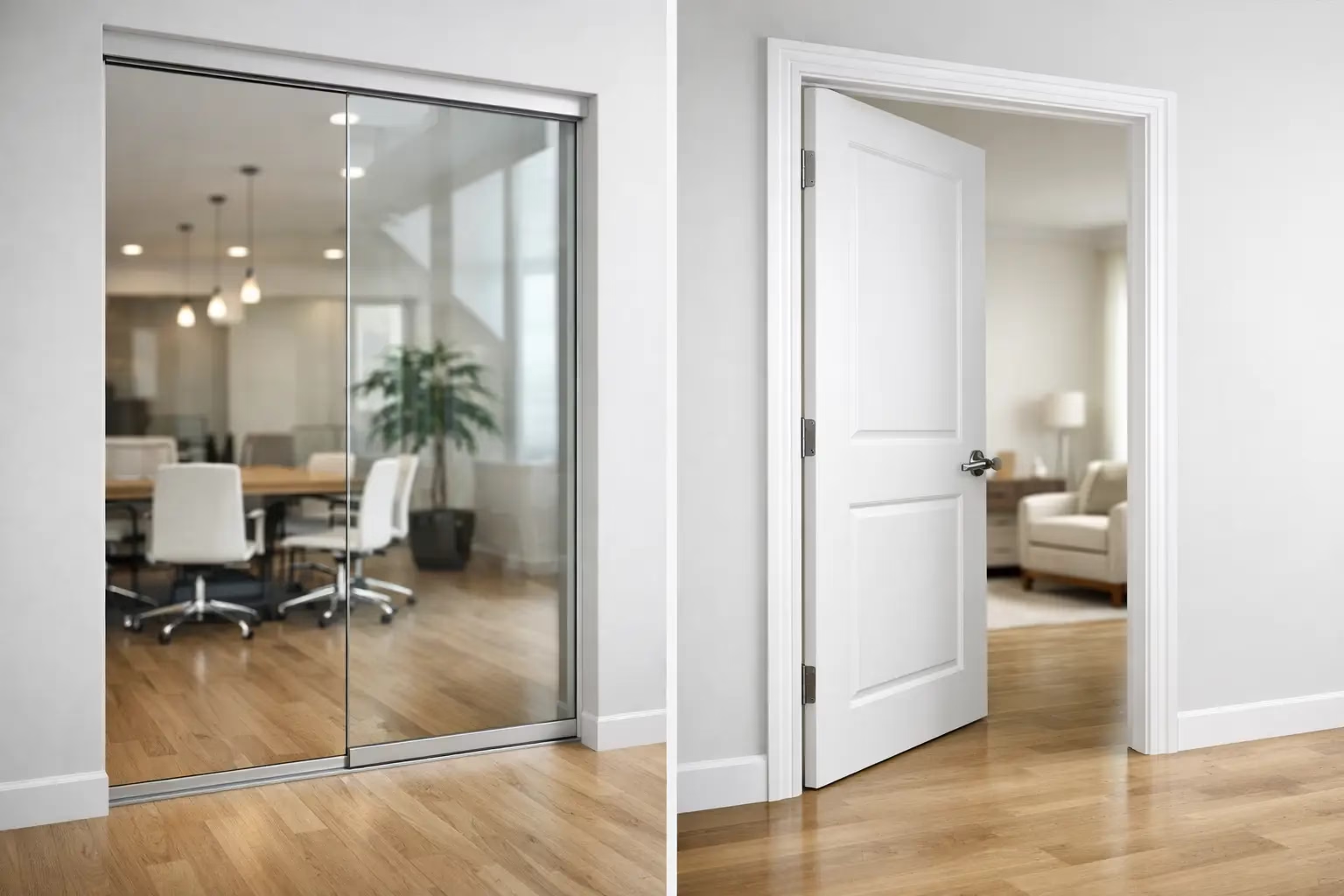
Sliding Doors vs Hinged Doors
A door decision usually looks simple until the layout is tight, the sightlines matter, and every square foot has a job to do. That is where sliding doors vs hinged doors becomes more than a style preference. In offices, home offices, closets, conference rooms, and room dividers, the right door changes how a space moves, sounds, and performs every day.
For some projects, a hinged door is the familiar and practical choice. For others, a sliding system is the better engineered answer because it preserves floor area, keeps visual lines clean, and supports a more flexible interior plan. The best option depends on how the room is used, how often the door opens and closes, and what level of privacy, clearance, and design consistency the space demands.
Sliding doors vs hinged doors: the space question
If space efficiency is the first priority, sliding doors usually have the advantage. A hinged door needs a full swing arc, which means the area around the opening cannot be occupied by furniture, cabinetry, seating, or circulation. In compact offices, narrow corridors, home workspaces, and closets, that clearance requirement can limit the layout more than most people expect.
A sliding door moves along a track instead of into the room. That simple difference can free up valuable square footage and make planning easier. In commercial interiors, it can improve traffic flow around conference rooms, private offices, and glass partitions. In residential settings, it often makes more sense for closets, room dividers, and home office enclosures where every inch matters.
That said, not every wall is ideal for a sliding system. The door panel needs room to travel, so the adjacent wall area must remain clear. If that wall needs switches, shelving, artwork, or casework, a hinged door may fit better.
How each door type changes the way a room works
A hinged door creates a more conventional entry experience. It offers a clear sense of opening and closing off a room, which can feel appropriate in executive offices, private bathrooms, bedrooms, or spaces where users expect a traditional door operation. It is direct, familiar, and easy for most installers and occupants to understand.
Sliding doors create a different kind of usability. They are especially effective when the goal is controlled openness rather than complete separation. In a modern office, that can mean preserving transparency while still defining rooms. In a home, it can mean separating a workspace from the living area without making the interior feel boxed in.
This is one reason glass sliding systems have become a strong fit for design-conscious interiors. They support light flow, maintain visual connection, and reduce the heavy visual interruption that a swinging slab door often introduces.
Privacy, acoustics, and expectations
When clients compare sliding doors vs hinged doors, privacy is often where the conversation gets more specific. A standard hinged door generally creates a tighter perimeter seal, which can help with sound control and visual privacy. For rooms where confidentiality or acoustic separation is critical, that advantage matters.
Sliding doors can still provide privacy, but the result depends heavily on system quality, panel design, and installation precision. Frosted or tinted glass can improve visual privacy, while a properly engineered track and frame system can create a more solid, secure feel. Still, if the project requires the strongest possible acoustic barrier, a hinged door often has the edge.
The better question is not which door is universally quieter. It is whether the level of privacy matches the room’s purpose. For many offices, meeting rooms, salon suites, and home offices, the combination of separation, light transmission, and modern appearance makes a sliding glass solution the stronger overall choice.
Design language and visual impact
Door style should match the architecture of the room, not compete with it. Hinged doors can work in almost any setting, but they tend to read as more traditional unless specified with very clean detailing. In modern interiors, they can sometimes feel heavier, especially when surrounded by glass walls or open-plan elements.
Sliding doors naturally align with contemporary interiors because they emphasize clean lines and minimal interruption. They look intentional in glass office systems, interior partitions, and room dividers where transparency and simplicity are part of the design goal. The effect is not only aesthetic. It also helps a space feel larger, brighter, and more organized.
This matters in both commercial and residential applications. A conference room with a sliding glass door looks efficient and current. A home office enclosure with the same approach feels integrated instead of improvised. A closet door that slides instead of swings can make a bedroom read cleaner and more architectural.
Safety and performance are not small details
A premium door system should not rely on appearance alone. Performance matters over years of use, especially in high-traffic offices or active homes. Hinged doors have fewer moving parts in some cases, but they also place repeated stress on hinges, frames, and swing clearance zones. They can slam, obstruct traffic, and create wear points where the door edge meets nearby walls or furniture.
Sliding systems require stronger engineering than many buyers realize. Track design, wheel quality, panel stability, and locking mechanisms all affect long-term reliability. In glass applications, safety engineering becomes even more important. A well-built system should be designed for safe operation, quiet movement, and dependable daily use, not just visual appeal.
This is where product quality separates premium interior systems from commodity doors. A properly engineered sliding glass solution should feel controlled, silent, and stable in motion. It should also be built for safety and performance, especially in commercial settings where repeated use is constant.
Installation and project planning
Hinged doors are often perceived as the easier option because they are familiar. In straightforward framed openings, that is often true. If the project is a basic replacement and the room layout is generous, a hinged door can be the fastest path.
Sliding doors become more compelling when the project includes custom dimensions, glass partitions, demountable systems, or a need to coordinate with a larger interior buildout. In these cases, the door is part of a system, not a stand-alone component. That changes the decision.
For offices, clinics, salons, and modern residential spaces, a sliding glass door often works best when it is measured and specified as part of the entire wall or enclosure. That allows for better alignment, cleaner sightlines, and stronger overall performance. Custom sizing is especially valuable when standard openings do not match the layout or when the goal is a refined, built-in look.
When sliding doors are the better choice
Sliding doors are usually the smarter option when space planning is tight, the design is modern, and light flow matters. They are also a strong fit when the room should feel flexible rather than permanently closed off. This makes them especially effective for glass office partitions, conference rooms, home offices, closets, and room divider applications.
They also make sense when visual sophistication matters as much as function. In premium interiors, a sliding glass system can help the architecture feel cleaner and more expensive without wasting usable square footage. For clients who want a layout that looks open but still works hard, sliding doors often solve more problems than they create.
When hinged doors still make sense
Hinged doors remain a solid choice when a room needs a stronger sense of closure, when wall space for panel travel is limited, or when acoustic control is a higher priority than openness. They are also practical in more conventional layouts where swing clearance is not an issue and the design language does not call for glass or minimal detailing.
There is no reason to force a sliding solution into a project that does not support it. The right specification depends on the room, the wall conditions, and the performance goal.
Choosing the right system for your space
The smartest way to evaluate sliding doors vs hinged doors is to start with function, then let design follow. Ask how much clearance the room can spare, how private the space needs to be, how much natural light you want to preserve, and whether the project benefits from a custom interior system rather than a standard door package.
If the answer points toward flexibility, modern aesthetics, and efficient use of space, a sliding system is often the better long-term investment. For businesses and homeowners who want a refined interior that performs well every day, engineered glass solutions from Doors22 are built to meet that standard with custom sizing, silent operation, and layouts designed to last for decades.
A good door should do more than open and close. It should make the room work better the moment it is installed.
.png) Share this post with others
Share this post with others


