
Guide to Movable Glass Partitions
Guide to Movable Glass Partitions
A fixed wall solves one problem and creates another. It gives you separation, but it also locks your floor plan in place. This guide to movable glass partitions is built for buyers who need more from a space – privacy when required, openness when it matters, and a system designed to last for decades.
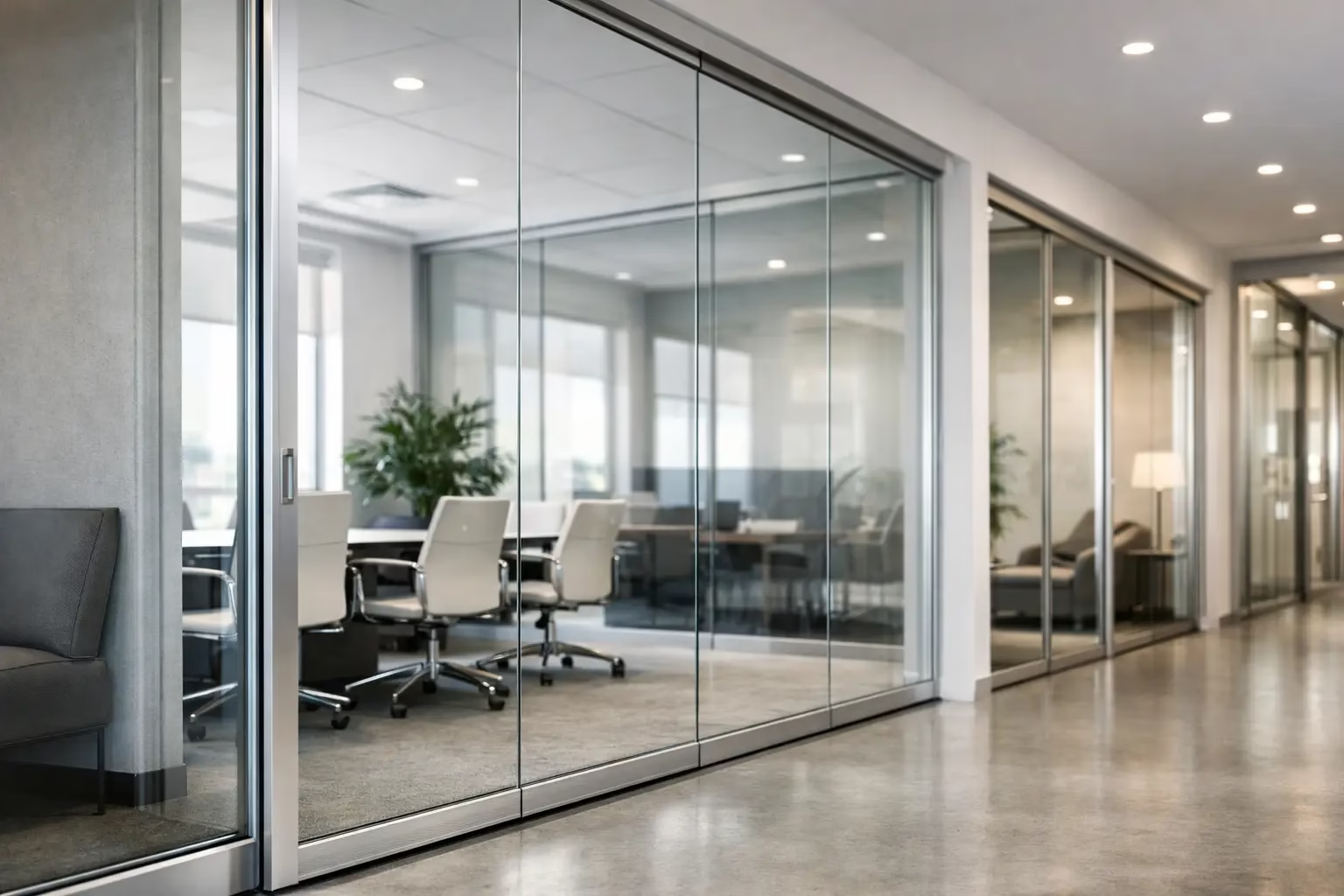
Movable glass partitions sit in the sweet spot between architecture and flexibility. In a commercial office, they can turn open square footage into private offices, meeting rooms, or focused work zones without giving up daylight. In a home, they help define a workspace, divide a loft, enclose a closet, or add a clean room separation without making the interior feel smaller. The appeal is obvious, but choosing the right system takes more than picking a glass panel and a finish.
What movable glass partitions actually do well
The strongest case for movable glass partitions is not just appearance. It is performance over time. A well-designed system lets you adapt your layout as your needs change, which matters for growing teams, reconfigured offices, multi-use rooms, salon suites, and residential spaces where square footage needs to work harder.
Glass also changes how a room feels. It preserves sightlines, carries natural light deeper into the interior, and creates definition without the visual heaviness of drywall. That is especially valuable in offices that want a more open, productive feel and in homes where owners want separation without closing off the room.
That said, not every project needs the same level of movement. Some clients need panels that slide daily. Others need a demountable system that can be reconfigured later, not constantly opened and closed. That distinction matters early because it affects track design, hardware, acoustic expectations, and installation planning.
A guide to movable glass partitions by system type
When people say movable glass partitions, they often mean several different products. The first step is understanding how the system is meant to operate.
Sliding glass partition systems
Sliding systems are ideal when swing clearance is limited or when the opening is used often. They work well for conference rooms, home offices, bedrooms, closets, and room dividers. The best versions operate quietly, track cleanly, and feel controlled rather than loose or rattling.
The trade-off is that sliding panels stack or overlap in a specific way. You gain space efficiency, but you also need to plan where the glass travels and parks. In tight layouts, that can be a major advantage. In other rooms, it may limit access width compared with a swing opening.
Demountable glass wall systems
Demountable systems are designed for layout flexibility over the long term. They create enclosed offices, meeting rooms, cubicles, and dividers that can be removed or reconfigured without the disruption of conventional construction. For commercial interiors, this is often the smartest option when future changes are likely.
Their value shows up over years, not just on day one. If your business expects growth, departmental shifts, or tenant improvements, demountable glass can reduce renovation waste and shorten downtime. The upfront investment is typically higher than temporary dividers, but the lifespan and reuse potential are in another category.
Panel-style movable dividers
Some projects call for larger openings and more visual continuity. Panel-style movable systems can divide large rooms while maintaining a refined, architectural look. These are common in flexible meeting areas, shared commercial environments, and certain high-end residential interiors.
The key question here is frequency and purpose. If the wall will move often, the operating hardware has to be built for repeated use. If it will stay in place most of the time, priorities may shift toward acoustic performance, alignment, and visual consistency.
What to look for before you request pricing
A glass partition system is only as good as the decisions made before fabrication. Dimensions matter, of course, but so do the less visible details that affect safety, usability, and long-term satisfaction.
Safety engineering matters more than most buyers expect
Large glass panels need stable movement and reliable locking. In active office settings and family homes, poor hardware design becomes obvious fast. Bottom-wheel locking design, tempered safety glass, and engineered track systems are not optional premium features. They are part of building a system that feels secure in everyday use.
If children, clients, or frequent foot traffic are part of the environment, safety deserves extra attention. Ask how the panel is supported, how movement is controlled, and what prevents unwanted shifting. A sleek look should never come at the expense of predictable performance.
Acoustic expectations should be realistic
Glass partitions can create meaningful separation, but not every glass system is built for the same sound control. If your goal is visual definition and light flow, a standard partition may be enough. If you need speech privacy in an executive office, conference room, therapy space, or home workspace, details like seals, gaps, door style, and framing become much more important.
This is where buyers often overgeneralize. Clear glass does not automatically mean poor acoustics, and thicker glass alone does not solve every sound issue. Performance depends on the full assembly. The right question is not, “Is it soundproof?” but, “What level of privacy do I actually need in this room?”
Custom sizing often saves the project
Standard sizes work well in many openings, especially when speed and budget are priorities. But in both commercial and residential interiors, real spaces rarely behave like showroom dimensions. Ceiling heights vary. Walls are not always perfectly plumb. Existing flooring, millwork, and trim create constraints.
Custom sizing allows the partition to fit the architecture instead of forcing the architecture to adapt. It also improves the finished look. When proportions are right and gaps are controlled, the system feels integrated rather than added on later.
Where movable glass partitions make the most sense
In offices, the best use cases are usually the most practical ones. Private offices, conference rooms, call rooms, collaborative zones, and L-shaped cubicles all benefit from separation that still keeps the workplace bright and connected. For facility managers and business owners, the added advantage is reconfiguration without full demolition.
In residential spaces, the priorities shift slightly. Home offices are a strong fit because they need visual separation and some acoustic control without making the home feel compartmentalized. Bedrooms in open-plan homes, closets, dens, and flex rooms also benefit. In smaller interiors, glass partitions help preserve a sense of scale while making the layout more useful.
Salon suites and service businesses are another especially strong application. Operators need privacy, professionalism, and a polished look, but layout efficiency directly affects revenue. A movable glass system can create distinct suites while maintaining a modern, premium environment.
Installation, lead time, and the real cost question
Pricing is not just about glass square footage. It reflects system type, hardware quality, customization, finish, installation complexity, and whether the project requires standard or made-to-order sizing. Buyers comparing quotes should be careful not to reduce the decision to panel cost alone.
A lower-cost system may use lighter-duty hardware, less refined movement, fewer safety features, or simpler sizing assumptions. That may be acceptable for a low-traffic residential divider. It is less acceptable for a high-use office enclosure that needs quiet performance every day.
Installation is another factor that deserves early planning. Some systems are more DIY-friendly than others, but large glass assemblies still demand precision. Field conditions, floor levelness, wall backing, and opening tolerances all affect the result. For many projects, coordinated installation through experienced partners is the safer path and the faster one in the long run.
If speed matters, ask about standard sizes and stocked configurations. If the opening is unusual or the design intent is very specific, custom fabrication is usually worth the extra lead time. The right choice depends on whether your priority is immediate occupancy, perfect fit, or a balance of both.
How to choose the right system for your space
The best buying decision starts with a simple question: what problem is the partition supposed to solve? If the answer is frequent opening and closing, focus on movement quality, track design, and panel parking. If the answer is future layout flexibility, prioritize demountability and reusability. If the answer is aesthetics plus everyday function, then the finish, sightlines, and fit become central.
It also helps to think one step ahead. Will the room use change in two years? Do you need better privacy than you need full closure? Is the space client-facing? Will this be a focal point or a background architectural element? Those answers shape the right system more accurately than style boards alone.
For buyers who want a modern partition that is built for safety and performance, products should do more than look clean in photos. They should operate quietly, fit accurately, and support a space plan that can evolve. That is why many architects, business owners, and homeowners turn to systems like those offered by Doors22 when they need custom sizing, engineered details, and dependable lead-time support.
The right glass partition should make your space easier to use next month and easier to adapt next year. That is usually the clearest sign you chose well.
.png) Share this post with others
Share this post with others


