
Glass Wall Systems for Offices That Work
Glass Wall Systems for Offices That Work
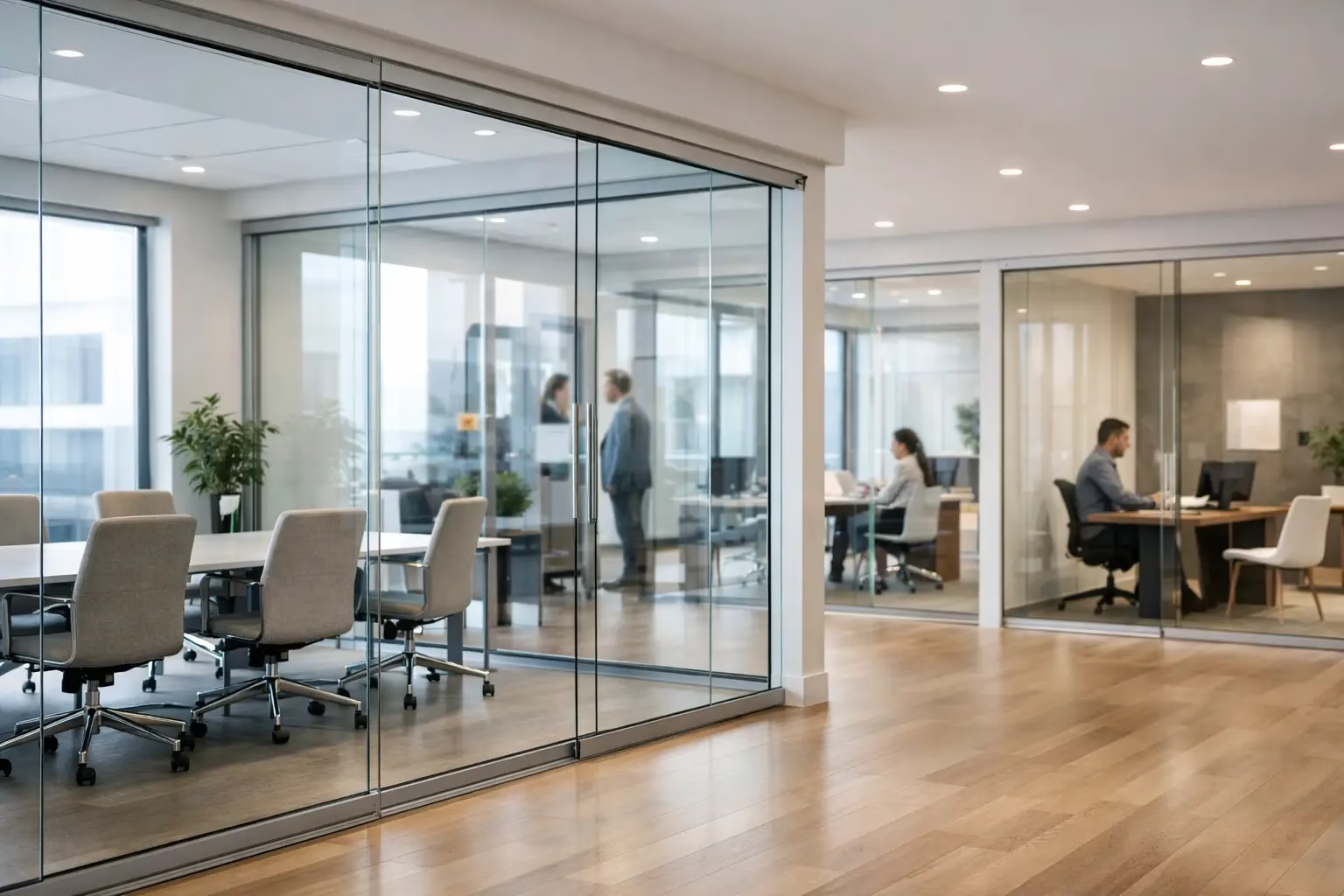
A closed office can feel expensive long before the buildout invoice arrives. It costs in natural light, in visibility across teams, and in how quickly a layout becomes outdated. That is why glass wall systems for offices have become a practical upgrade for companies that want a cleaner look, better space performance, and the flexibility to adapt without starting over.
The appeal is not just aesthetic. Well-designed glass systems help businesses create conference rooms, private offices, meeting areas, and focused work zones while keeping the floorplan visually open. For owners, architects, and facility teams, the real question is not whether glass looks good. It is whether the system is engineered to perform over time, support the way people work, and make future changes easier instead of harder.
Why glass wall systems for offices keep gaining ground
Traditional framed drywall offices still have a place, especially where full acoustic separation is the top priority. But they lock a floorplan into place. Once walls are framed, finished, and painted, every change becomes a construction project. That is a poor fit for businesses that expect growth, team shifts, or changing space demands.
Glass wall systems offer a different model. They define space without making the office feel smaller. They allow daylight to travel deeper into the interior. They also support a more contemporary visual standard, which matters for client-facing businesses, recruiting, and everyday workplace experience.
For many companies, the biggest advantage is adaptability. Demountable systems can be reconfigured, expanded, or relocated with far less disruption than permanent construction. That matters if you are planning for headcount changes, departmental moves, or phased renovations.
What separates a high-performing system from a basic partition
Not all glass office systems deliver the same long-term value. From a distance, many options look similar. The difference shows up in the engineering, hardware, operation, and installation details.
A well-built system should be designed for safety and performance first. That means tempered safety glass, stable framing, and hardware that holds alignment over repeated use. In sliding applications, the mechanics matter even more. A quiet system with smooth motion may seem like a design luxury, but in active offices it directly affects usability. If doors rattle, drag, or require force to operate, people notice.
Bottom-wheel locking designs are another detail worth paying attention to. They improve stability and safety while supporting cleaner operation in daily use. In practical terms, that means less movement where it should not occur and more confidence that the system will hold up in high-traffic environments.
Customization also matters. Standard sizes can work well for straightforward projects, but many offices have ceiling conditions, room dimensions, or layout constraints that require made-to-order sizing. A system that can be tailored to exact measurements usually produces a cleaner result and avoids the compromises that come with trying to force a standard product into a custom space.
Where glass wall systems work best in office design
The strongest use cases are usually the most functional ones. Conference rooms are an obvious example. Teams need enclosed space for meetings, presentations, and private discussions, but they also want those rooms to feel connected to the rest of the office. Glass maintains that connection while creating a clear boundary.
Private offices are another common application, especially for leadership, HR, or client services roles that need enclosed space without visual heaviness. In open-plan environments, glass can also be used to create office cubicles with a more refined and spacious feel than traditional panel-based workstations.
There is also value in transitional zones. A glass enclosure can define a reception-adjacent meeting area, divide executive suites from collaborative work areas, or carve out focused work rooms inside larger open layouts. In each case, the system is doing two jobs at once: improving organization and preserving openness.
The privacy question every buyer asks
Privacy is where most office projects become more nuanced. Glass increases visibility, which is often the point, but that does not mean every space should be fully exposed.
The right answer depends on how the room is used. For a general meeting room, clear glass may be ideal because it keeps the office bright and connected. For HR offices, legal discussions, or executive meetings, partial frosting, strategic placement, or a more enclosed configuration may make better sense. Acoustic expectations also need to be realistic. Glass partitions can create strong visual separation and useful sound control, but they do not perform exactly like a fully insulated wall assembly.
That is not a flaw. It is a design decision. The best projects start by identifying which spaces need openness, which need discretion, and where a balanced solution will serve the business better than an extreme in either direction.
Demountable systems are a business decision, not just a design choice
When companies evaluate office improvements, they often compare upfront costs and stop there. That misses the long-term value of a demountable system.
If a business expects to grow, downsize, reorganize teams, or repurpose square footage, movable glass walls offer a clear operational advantage. They can reduce the waste, downtime, and reconstruction costs associated with traditional renovation cycles. That makes them especially attractive for growing firms, leased offices, multi-tenant properties, and businesses that want capital improvements to stay useful through more than one layout.
This is where product quality really matters. A demountable wall system only creates value if it is built to be removed and reinstalled without turning into a patchwork of compromised parts. Precision manufacturing, durable hardware, and reliable fit are what make flexibility possible.
What to look for before you request pricing
Before comparing quotes, it helps to define the project in terms that affect performance, not just appearance. Start with the intended use of each enclosed area. A conference room, private office, and reception divider may all use glass, but they do not always need the same door type, framing approach, or privacy level.
You should also think about whether your priority is fixed separation, sliding access, or a combination of both. Sliding glass systems are especially useful where swing clearance is limited or where a cleaner, more contemporary opening is preferred. They can also improve traffic flow in tighter footprints.
Lead times, installation coordination, and measuring accuracy should be part of the conversation early. A premium glass system is only as good as its fit. That is why many buyers prefer suppliers that can support both standard and custom sizing, provide transparent pricing paths, and coordinate installation through trusted partners when needed.
For commercial clients, there is another practical consideration: disruption. The best office upgrade is not just the one that looks right after completion. It is the one that can be planned, delivered, and installed with minimal interruption to the business.
Design value matters because offices are judged at a glance
An office does not need to be extravagant to make a strong impression. It does need to feel intentional. Glass walls help create that effect because they introduce structure without visual bulk.
For client-facing businesses, this can elevate the entire environment. Visitors notice natural light, clean lines, and well-defined spaces immediately. Employees notice it too. An office that feels brighter and better organized tends to support a more professional daily experience.
That said, design value should not come at the expense of durability. The strongest systems combine visual refinement with materials and engineering that are designed to last for decades. That balance is what separates a short-term design trend from a reliable interior solution.
Choosing the right partner for glass wall systems for offices
A good product matters. A good process matters just as much. Office buyers need clear specifications, honest guidance on trade-offs, and options that fit both design intent and budget realities.
That includes knowing when standard configurations are sufficient and when custom fabrication is the smarter route. It includes understanding safety features, operational differences, and installation requirements before the order is placed. And it includes working with a company that treats glass systems as architectural components, not decorative afterthoughts.
For that reason, many buyers look for a specialized manufacturer rather than a general supplier. A focused partner can usually provide stronger technical guidance, better dimensional control, and more confidence that the finished system will perform the way it should. Doors22 is one example of that approach, with custom demountable glass office systems designed for safety, silent operation, and long-term flexibility.
The best office spaces rarely happen by accident. They are built from decisions that improve how the space works every day, while leaving room for what comes next.
.png) Share this post with others
Share this post with others


