
“Breaking Down Barriers: How Glass Partitions Transform Boardroom Dynamics”
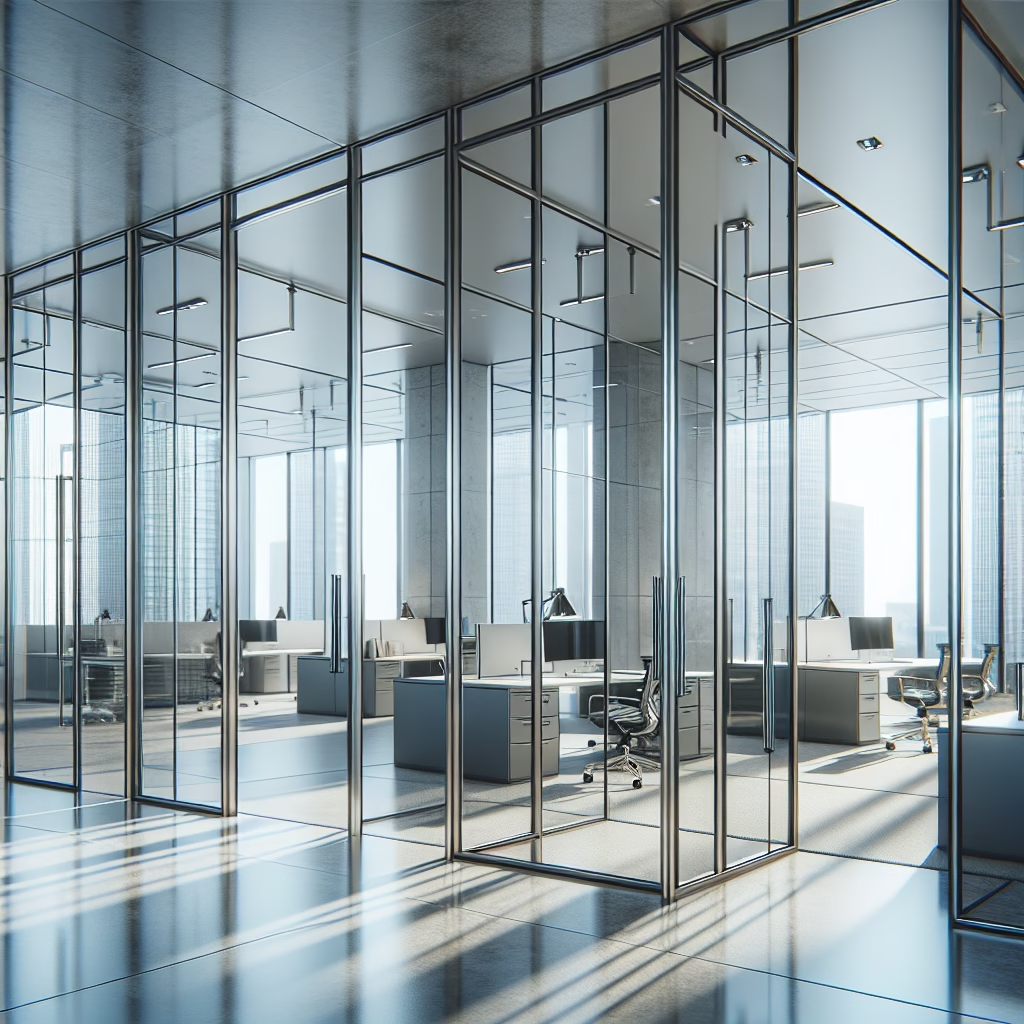
“Breaking Down Barriers: How Glass Partitions Transform Boardroom Dynamics”
Breaking Down Barriers: How Glass Partitions Transform Boardroom Dynamics
I remember stepping into a boardroom last year for an annual strategy meeting. There it was: a traditional wooden table, heavy chairs, and walls that felt more like a fortress than a space for collaboration. As colleagues settled in, the atmosphere was thick with formality. Attempts at communication often took the shape of polite nods rather than genuine exchanges of ideas. I couldn’t help but think—how did we end up creating such rigid boundaries in a place meant for innovation?
Enter glass partitions. At first, it might seem like a simple design choice, a cosmetic upgrade. But when you dig deeper, you start to realize that these transparent dividers are not just about aesthetics; they’re game changers for boardroom dynamics.
Visual Openness and Connection
Just imagine a boardroom where the walls are made of clear glass. At first glance, it feels as if the barriers have disappeared. As I observed team members interact in a newly designed glass-partitioned space, there was a noticeably lighter atmosphere. The sun streamed in through large windows, creating a warm light that bounced off the sleek, reflective surfaces of the glass. This shift caught my attention. Conversations that once took place in confined, echoing spaces now flowed freely. Ideas were shared openly, and every voice had a place in the dialogue.
Having this openness didn’t just uplift the room’s aesthetic; it transformed how we communicated. Instead of retreating into our shells behind heavy doors, we became more accountable to one another. Shared visibility can promote a sense of community. We were not just colleagues; we became collaborators, and it felt empowering.
Encouraging Inclusivity
A friend once said that the best decisions come from a diverse range of perspectives. I couldn’t agree more. In conventional boardrooms, inconvenient seating arrangements often left quieter team members feeling sidelined—literally. With glass partitions, seating layouts can be reimagined. The circle of chairs, all facing each other, naturally fosters engagement. It allows everyone, no matter their position or personality type, to contribute.
In one memorable meeting, we found ourselves brainstorming tough questions about our project. Normally, the loudest voices dominated the room. But with glass partitions and an open space, it felt less intimidating to express dissent or alternative viewpoints. I watched as a junior colleague shared a critical insight. She wasn’t just brave; she felt safe.
Setting the Right Tone
One subtle yet powerful element of glass partitions comes in how they alter the tone of discussions. When the physical divide is minimal, you begin to sense an emotional shift amongst the team. It’s as if the air becomes lighter, free from the heavy judgments that sometimes come in traditional, enclosed settings. I recall a strategic meeting where decisions were made with earnest collaboration rather than authority-driven commands. I think the glass walls played a role. They encouraged openness while still maintaining a professional atmosphere.
There’s something about standing in a room with glass partitions that amplifies the stakes yet alleviates the pressures. It’s not about erasing hierarchy but creating a more egalitarian space to share ideas. The transparency invites a sense of honesty.
Light and Clarity
Often, the physical aspects of a space can greatly influence how we interact within it. Have you ever noticed how much more engaged you feel in a well-lit room? In a glass-partitioned boardroom, natural light floods in, illuminating faces and making the environment feel alive. I experienced exactly this last October. As we discussed company values amidst the backdrop of a forest view, the sunlight sparkled off the glass, revitalizing our conversations.
Moreover, the clarity doesn’t just apply to the light. The metaphorical clarity of thought seems to emerge, as well. With fewer distractions and no need to retreat to a corner office, the focus shifts to productive dialogue. Transparency in the physical environment mirrors transparency in intent. I felt that everyone in the room was there with one goal: to elevate the organization together.
Bridging Old with New
Though glass partitions are a modern twist, they don’t require us to abandon our heritage altogether. They provide a bridge. Armed with these elegant dividers, we can honor the traditions that foster deep-seated values while adapting to the more collaborative demands of today.
In fact, I was part of a discussion where we connected our past experiences and corporate culture with a more agile mindset. The glass acted as a conduit, allowing us to reflect on who we are while embracing change. Conversations about what had worked in the past evolved into discussions about future potentials.
Rethinking Conflict
There’s something disarming about glass. When you foreground transparency, conflict feels less ominous. I think back to those moments when disagreements arose. Traditionally, conflict could spiral into an unyielding standoff—a clashing of egos. Yet in our new space, the comfort of openness shifted the tone. In one instance, two colleagues had a heated discussion over project priorities. The surrounding glass didn’t isolate them; rather, it invited others to weigh in, moderating the encounter. It felt less like a confrontation and more like a collaborative effort to reach common ground.
Final Thoughts
As I reflect on these experiences, it becomes clear how integral glass partitions have become in shaping boardroom dynamics. They have pushed us to break down barriers—physical and metaphorical—that hinder creativity and collaboration. Through the transparency of glass, we explore new possibilities. The connection fosters a sense of belonging while keeping ideas flowing freely.
Perhaps in our quest for innovation, we need to remember that sometimes, breaking down barriers isn’t just about changing policies or processes—sometimes, it’s about changing perspectives. And in that newly illuminated space, we find that the most valuable ideas often emerge from the simplest of shifts. I can’t wait to see how far we can take this transformation next.
.png) Share this post with others
Share this post with others


