
A Practical Guide to Glass Wall Acoustics
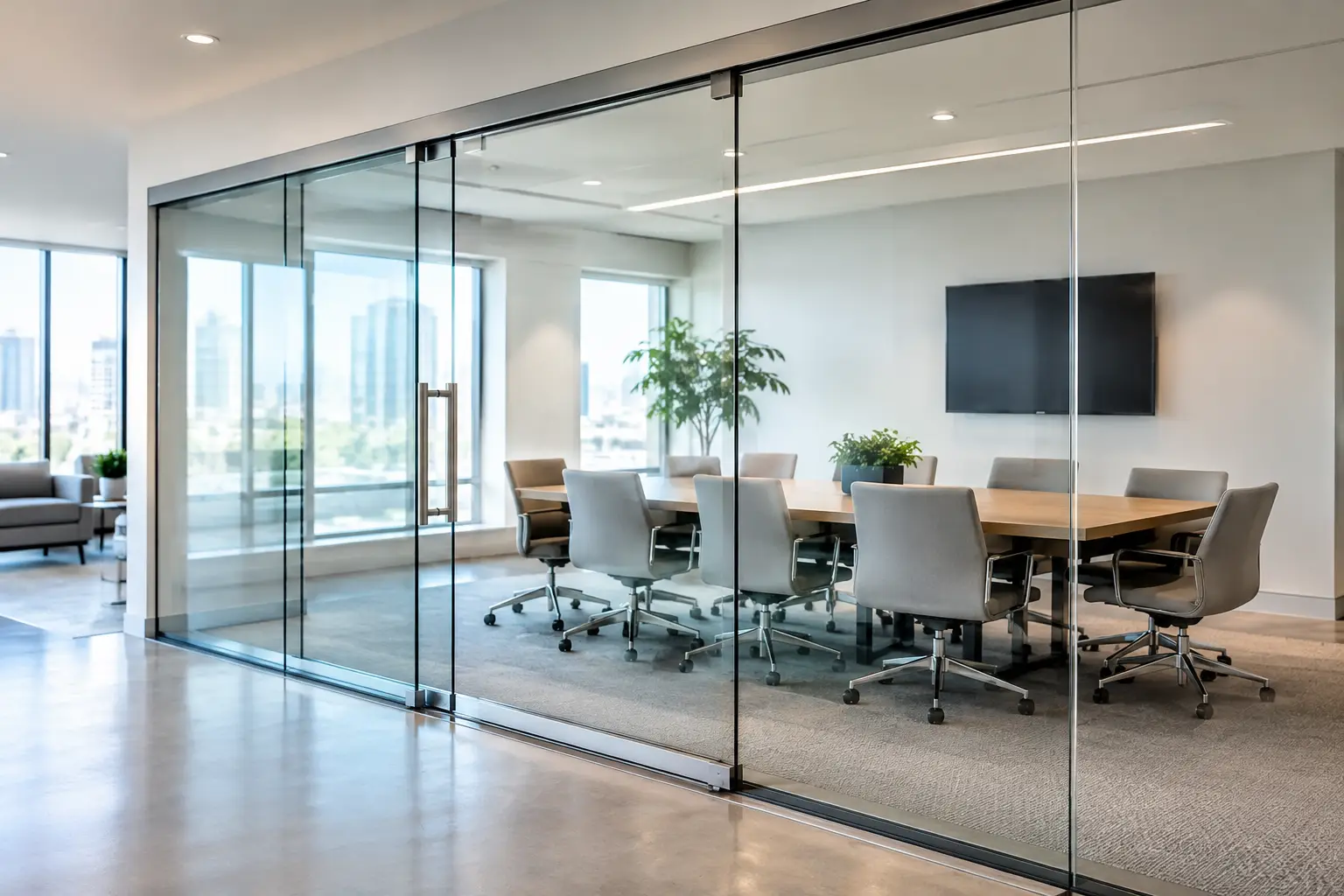
A Practical Guide to Glass Wall Acoustics
A glass conference room can look open, polished, and highly functional – until a private call becomes audible from the workstations outside. That is the real starting point for a guide to glass wall acoustics: not whether glass is inherently loud, but how the full wall system controls the paths sound uses to travel.
Glass partitions can support productive, light-filled interiors without accepting poor speech privacy. The result depends on the glazing, frame, perimeter seals, door design, ceiling condition, and the level of acoustic performance the space actually requires. A small home office and an executive meeting room may both use glass, but they should not be specified the same way.
What Glass Wall Acoustics Actually Measure
Acoustics are often reduced to one question: “Will people hear us?” The answer depends on two related but distinct goals. Sound isolation limits noise transmission between spaces. Sound absorption reduces echo and reverberation within a room.
A glass partition primarily addresses isolation when it is properly designed and installed. It can separate conversations, phone calls, and background office activity from the adjacent space. However, glass is a hard, reflective surface. If a conference room also has concrete floors, an exposed ceiling, and minimal soft furnishings, voices may still sound sharp or reverberant inside the room.
For planning purposes, Sound Transmission Class, or STC, is a useful reference point. A higher STC rating generally indicates better resistance to airborne sound transmission. But the rating of a glass panel alone is not the rating of the completed room. A high-performing panel can be undermined by gaps at the frame, an unsealed door edge, open ceiling pathways, or penetrations for electrical and mechanical systems.
That distinction matters for architects, facility managers, and homeowners. Specify the system, not just the glass.
The Main Sound Paths in a Glass Partition
Sound behaves like air and water in one critical respect: it finds openings. Even a narrow perimeter gap can have a disproportionate effect on perceived privacy. For that reason, acoustic performance begins with construction details rather than glass thickness alone.
Glass Type and Thickness
Thicker glass generally provides more mass, which can improve sound isolation. Laminated glass is often a stronger acoustic option because it combines glass layers with an interlayer that helps dampen vibration. In many settings, laminated glazing also supports safety requirements, making it a practical choice for office fronts, conference rooms, interior doors, and residential dividers.
Double-glazed systems can offer another level of performance. The air space between panes helps disrupt sound transmission, especially when the panes differ in thickness. This is not automatically necessary for every project. It adds cost, weight, and system depth, so it is best reserved for spaces with meaningful privacy demands or persistent exterior and interior noise.
Frames, Tracks, and Perimeter Seals
The frame is not a secondary detail. It is part of the acoustic assembly. Tight connections at the floor, walls, and ceiling help prevent flanking transmission – sound that moves around the glass rather than through it.
Well-designed gaskets and seals close small openings while allowing a demountable system to remain serviceable. This is particularly valuable in offices that may need to reconfigure as teams, work styles, or lease requirements change. A movable glass wall system should protect flexibility without treating acoustic control as an afterthought.
Doors Are Often the Weak Point
A glass wall may perform well until a door is added. Doors have operating clearances, hardware cutouts, and edges that must move freely. Those features make them a common source of sound leakage.
Sliding glass doors are excellent for preserving floor space and maintaining a clean visual line, but their acoustic performance depends on the track, edge seals, overlap, and locking design. Swing doors can often accept more compression sealing around the perimeter, which may better serve rooms requiring stronger speech privacy. The right choice depends on the room’s use, available clearance, and target performance – not appearance alone.
For either configuration, quiet operation matters. Hardware that closes and locks precisely supports daily usability while helping maintain consistent contact at the sealing points.
The Ceiling Above the Wall
A partition that stops below an open ceiling can provide visual separation, but it will not create reliable acoustic separation. Sound simply travels above the wall. This is one of the most common reasons a beautiful glass room underperforms.
For enclosed meeting rooms, private offices, and therapy or consultation spaces, extend the partition to a sealed structural deck whenever possible. If the project uses a dropped acoustic ceiling, assess whether the ceiling itself continues above the wall and whether that plenum path needs additional treatment. A ceiling-height glass system may be appropriate for a collaborative zone, but it should not be presented as a confidential room.
How to Match Performance to the Room
A successful guide to glass wall acoustics starts with the activity inside the room. Avoid paying for high-performance assemblies where they are unnecessary, but do not expect a visually open partition to solve a confidentiality problem without the right details.
A casual collaboration area may only need modest separation from surrounding activity. Here, standard tempered or laminated glass, clean perimeter detailing, and acoustic finishes within the room can produce a comfortable result. The goal is reduced distraction, not silence.
A conference room needs a more deliberate approach. Video calls, presentations, and group discussions create a predictable need for speech control. Full-height glazing, perimeter seals, a well-fitted door, and sound-absorbing materials inside the room are usually the right baseline. Upholstered seating, acoustic ceiling elements, rugs where appropriate, and wall panels can reduce the echo that glass alone will not address.
Private offices, human resources rooms, legal spaces, and healthcare consultation rooms demand more caution. If occupants will discuss salaries, personnel matters, financial details, or protected information, specify for privacy from the beginning. Laminated or insulated glass, sealed full-height construction, carefully selected doors, and attention to adjacent walls and ceilings are essential. In some cases, white noise or sound masking may be appropriate, but it should support a properly built enclosure rather than compensate for gaps.
At home, a glass-enclosed office can separate work from family life while preserving daylight and sightlines. The trade-off is that fully transparent glass provides little visual privacy. Frosted film, reeded glass, or strategic solid sections can create a more focused environment without giving up the room’s openness. For frequent calls, prioritize a sealed door and soft interior finishes before assuming thicker glass is the only solution.
Design Choices That Improve Both Acoustics and Appearance
The best acoustic decisions do not need to make an interior feel heavy or enclosed. They simply make the performance requirements visible early enough to guide the design.
Start by locating high-noise spaces thoughtfully. Place a conference room away from active café zones, reception desks, print stations, or equipment rooms when the floor plan allows. A glass wall cannot erase noise generated directly outside the room.
Then consider the interior finish palette. Glass looks especially refined alongside wood, fabric, acoustic felt, carpet, and textured wall surfaces. These materials balance the reflective quality of glazing and produce a room that sounds as considered as it looks. In office environments, a small amount of absorption can make speech easier to understand during meetings and reduce the sense of activity spilling into the corridor.
Visual design can also support behavioral privacy. Frosted bands at seated eye level, partial opacity near desk areas, or a combination of clear and obscured panels can reduce distractions while retaining natural light. This is useful for executive offices, home workspaces, salon suites, and meeting rooms facing busy circulation paths.
Questions to Ask Before Ordering a Glass Wall System
Before final measurements or fabrication, clarify what people need to do in the completed room. Will the space host confidential conversations, frequent video calls, focused individual work, or informal meetings? Is the ceiling open or closed? Does the partition need to be moved later? Will a sliding door save essential floor space, or does the room need the stronger perimeter sealing possible with a swing door?
It is also worth reviewing the surrounding construction. Sound can bypass a premium glass system through side walls, ceiling voids, air returns, and under-door gaps elsewhere in the room. A coordinated site review prevents a common mistake: investing in upgraded glass while leaving the primary noise path untouched.
Custom sizing is especially valuable here. Properly measured panels, tracks, and door openings create cleaner lines and reduce the compromises that produce gaps. Doors22 designs demountable glass systems around exact dimensions, safety-focused hardware, and long-term daily performance, helping teams balance flexibility with a more controlled interior environment.
Glass walls perform best when they are treated as architectural systems, not decorative screens. Define the privacy level, build the enclosure around that requirement, and use the right combination of glass, seals, doors, and interior finishes. The finished space can remain bright and visually open while giving people a quieter place to think, meet, and work.
 Share this post with others


