
Salon Suite Glass Partitions That Work
Salon Suite Glass Partitions That Work
A salon suite can look premium on paper and still feel cramped, dark, or noisy once clients start moving through it. That is usually where salon suite glass partitions change the equation. When the partition system is designed correctly, it gives each tenant real definition and privacy without turning the entire floor into a row of closed boxes.
For salon owners, developers, and designers, that balance matters. You need suites that feel independent enough to lease with confidence, but open enough to support light flow, visual consistency, and an upscale experience. Glass does that well, but only when the system is engineered for commercial use and planned around the daily realities of salon traffic, cleaning, acoustics, and reconfiguration.
Why salon suite glass partitions make sense
Traditional framed walls solve one problem by creating another. They define space, but they also reduce visibility, block natural light, and make smaller footprints feel tighter than they are. In salon environments, that can affect both tenant satisfaction and the client experience.
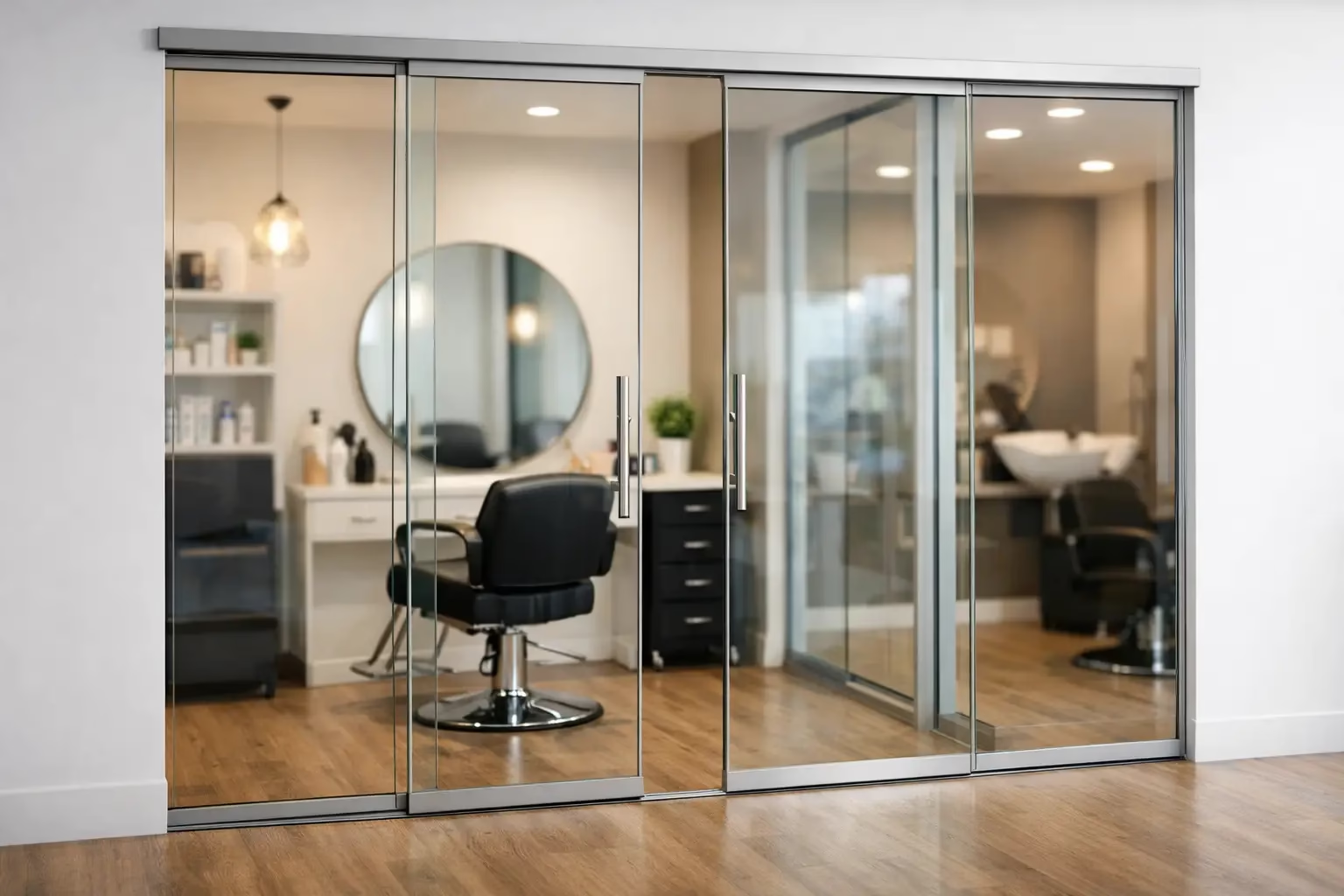
Salon suite glass partitions create separation without cutting off the interior. Clients still get the sense of a private suite. Operators still get a layout that feels brighter and more modern. For landlords and multi-suite operators, that visual openness can make the entire property easier to market because the space looks finished, contemporary, and intentionally designed rather than simply divided.
There is also a practical advantage. Demountable glass systems support future changes better than permanent construction. If a tenant mix shifts, if suite sizes need to be adjusted, or if a reception area needs to expand, a movable partition system gives you options that drywall does not.
What to look for in a commercial salon suite system
Not all glass partitions are built for the same level of use. A salon suite has very different demands than a decorative divider in a home or a simple office screen. People are entering and exiting constantly. Equipment has to move in and out. Noise control matters. So does cleaning. Safety is non-negotiable.
The first thing to evaluate is the system itself, not just the glass. A strong salon suite partition depends on the quality of the frame, panel stability, hardware, door operation, and locking method. If the structure feels light-duty, the finished suites will feel temporary no matter how attractive they look on day one.
A well-built system should be designed for safety and performance over years of daily use. That includes tempered safety glass, reliable track or panel support, and hardware that does not loosen quickly under commercial traffic. If sliding doors are part of the design, smooth and quiet operation becomes especially important. Loud or unstable doors undercut the premium atmosphere most salon operators are trying to create.
The second factor is custom sizing. Salon footprints are rarely perfectly standard, especially in converted retail spaces, mixed-use buildings, or second-generation commercial interiors. Custom-fit systems allow cleaner planning around columns, existing walls, HVAC drops, and circulation paths. That usually leads to a better finished product and fewer compromises during installation.
Privacy without losing light
One of the most common concerns with glass is privacy. In a salon suite environment, the answer is rarely all-or-nothing. Full clear glass may work in some concepts, especially upscale open layouts that want maximum visibility. In other cases, partial frosting, full frosting, or strategic sightline planning makes more sense.
The right privacy level depends on the service model. A barber suite may prefer more visibility. An esthetician, med spa operator, or lash technician may need a stronger sense of separation. Glass gives you more control than many people expect because privacy can be tuned rather than forced into a solid-wall approach.
Design decisions that affect performance
The best salon interiors are not just attractive. They are easy to operate. That is why material choice and layout planning should happen together.
If the suites are narrow, clear glass can prevent a corridor from feeling compressed. If the floor has limited natural light, full-height glazing can help distribute it deeper into the plan. If acoustics are a major issue, panel configuration and door detailing need more attention early in the design process.
This is where trade-offs matter. Glass improves openness and light, but no transparent system should be expected to perform exactly like a heavily insulated solid wall. If maximum acoustic isolation is the top priority in every suite, the design may need a mix of solutions rather than glass everywhere. For many salon businesses, the better target is a balanced system that delivers strong visual refinement, practical privacy, and dependable day-to-day function.
Sliding doors vs. swing doors
Door style affects more than appearance. In compact salon suites, sliding glass doors often make better use of square footage because they do not require swing clearance. They also support a cleaner circulation path in busy hallways.
That said, the hardware matters. A sliding system should operate quietly and feel controlled, not loose or rattling. Safety-focused details, such as bottom-wheel locking design and stable track alignment, help prevent the kind of movement that leads to wear, maintenance calls, and a poor user experience.
Swing doors can still be the right choice in some layouts, especially where accessibility, code requirements, or user preference point in that direction. The key is choosing the door type based on how the suite will actually function, not just what looks good in a rendering.
Installation planning is where good projects stay on track
Salon build-outs are often schedule-sensitive. Lease-up timelines, contractor coordination, and opening dates leave little room for avoidable delays. That is why the partition supplier should be part of the planning conversation early, especially if the project involves multiple suites, custom dimensions, or phased installation.
Accurate field measurements are critical. So is clarity on ceiling conditions, floor transitions, electrical runs, and any integration with existing walls. A premium partition system is only as good as the planning behind it. When the dimensions are right and the installation path is clear, the result is cleaner, faster, and more predictable.
Demountable systems add another advantage here. They can reduce future disruption if the layout needs to change. Instead of going back to demolition and reconstruction, operators may be able to reconfigure portions of the space with less mess, less downtime, and more control over cost.
Long-term value goes beyond the initial build
Cost matters in any commercial interior, but the lowest upfront number is not always the lowest ownership cost. Cheap partition systems often show their weaknesses quickly. Doors fall out of alignment. Hardware wears down. Panels feel unstable. Replacements become harder to source. What looked efficient during procurement becomes expensive in maintenance and tenant frustration.
A better salon suite glass partition system should be designed to last for decades, not just long enough to get through the first lease cycle. Durable materials, tested hardware, and precise fabrication support that outcome. So does selecting a system from a supplier that understands commercial interiors rather than treating salon partitions as a one-off decorative product.
This is also where aesthetics carry real business value. A polished glass suite layout supports stronger first impressions with prospective tenants and clients. It helps the property feel current. It photographs well. It communicates order, cleanliness, and professionalism before anyone comments on the services being offered.
When custom is the smarter choice
Standard sizes can work for some straightforward layouts, and they may help with speed and budget. But many salon suite projects benefit from made-to-order dimensions. Custom sizing allows the glass system to fit the plan rather than forcing the plan to fit the product.
That usually means better use of rentable square footage, cleaner alignment across multiple suites, and a more finished architectural look. It can also simplify installation in spaces with irregular conditions. For owners trying to maximize both appearance and operational efficiency, custom is often the smarter long-term move.
A manufacturer like Doors22 can be especially useful when the goal is to combine design precision with installation coordination and quote clarity. That matters when you are comparing options across several suites and need confidence in what will be delivered.
Choosing a system that fits your business model
The right solution depends on how you plan to operate the space. A single-owner salon converting part of an existing floor has different priorities than a developer building a multi-tenant suite concept from the ground up. One may care most about quiet operation and visual branding. The other may prioritize repeatable layout modules, fast procurement, and future flexibility.
The best approach is to think past the partition itself. Consider how tenants will use the suites, how often the layout may evolve, how much privacy each service requires, and how important natural light is to the brand experience. When those answers are clear, the right glass system becomes much easier to specify.
Salon suite glass partitions work best when they are treated as part of the business strategy, not just part of the finish package. Get that decision right, and the space feels brighter, more valuable, and easier to lease from the moment the doors open.
.png) Share this post with others
Share this post with others


