
Transforming Workspaces: How Glass Partitions Enhance Office Acoustics
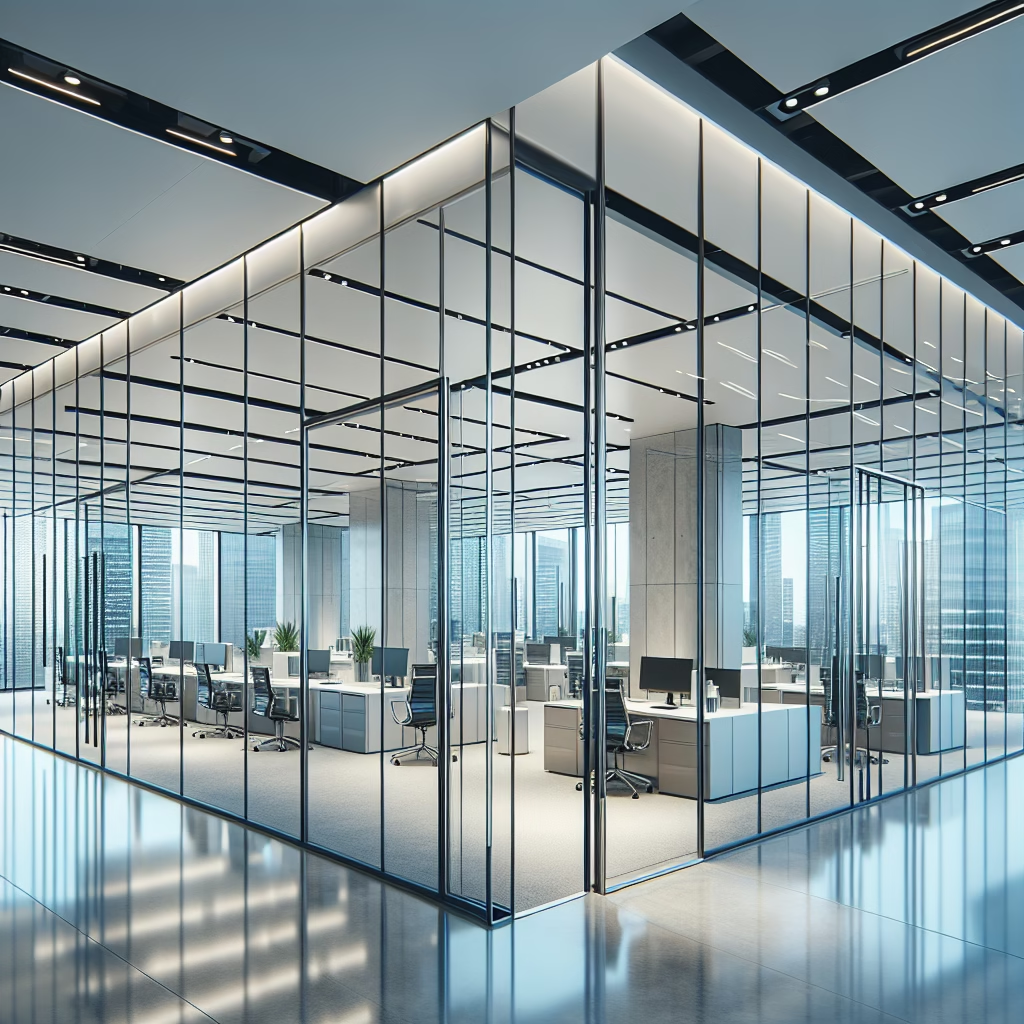
Transforming Workspaces: How Glass Partitions Enhance Office Acoustics
One morning, seated at my desk with the sun filtering through the blinds, I found myself lost in a symphony of office sounds. The thump of footsteps, the chatter of colleagues sharing jokes, and the clattering of keyboards painted a lively picture. But as the day wore on, those sounds morphed into distractions. I wondered: how can we create an environment that supports focus while still fostering collaboration?
As someone who thrives on creativity and collaboration, it’s not just about keeping the noise down. It’s about crafting a space that balances privacy and openness, a challenge many of us face in the modern workspace. Enter glass partitions. At first glance, they might seem like mere room dividers, but they hold transformative potential not only for aesthetics but also for acoustic improvement.
When I first encountered glass partitions in a friend’s office, I had my reservations. Would they really drown out the everyday sounds that jittered my concentration? To my surprise, what I found was an elegant solution that did much more than define spaces. It was as if a new layer of awareness was applied to the art of designing workspaces. The glass allowed natural light to flow freely, creating a vibrant energy while skillfully dampening the cacophony of a bustling office.
Reflecting on my experience one day while sitting in a glass-encased meeting room, I couldn’t help but be struck by the serenity it provided. I could see my coworkers moving about, engaged in their tasks, yet I was shielded from the distractions of their conversations. The clusters of glass didn’t create walls; rather, they encouraged whispers of collaboration. They carved out personal bubbles amidst the collective buzz of creativity, all while maintaining transparency.
The science behind glass and sound is fascinating. Sound travels in waves, and hard surfaces can bounce those waves around, creating echoes and unwanted din. Glass, with its smooth surface, can absorb and diffuse sound waves better than conventional materials like drywall. This subtle yet effective characteristic was recently pointed out in a discussion I had with an office designer, who emphasized how strategic placement of glass can create smoother sound transitions throughout an office.
In a space optimally designed with glass partitions, conversations seem to drift softly rather than blare. I recall an instance during a brainstorming session where ideas flowed freely among a small group. Because the partitions allowed for visual communication but reduced sound bleed, we could engage deeply without the distracting interruptions so common in open office designs. Each voice complemented the other, and it felt as though the walls were listening—not just dividing.
I’ve also noticed a unique shift in team dynamics when glass is introduced into the workspace. The invisible connection fostered by transparent dividers brings a sense of accountability. When colleagues feel more connected yet subtly private, it encourages more thoughtful conversations. In environments where focus is paramount, especially during calls or deep work periods, the partitions act almost like acoustic cloaks, providing a much-needed sanctuary while still preserving the sense of a bustling community.
Moreover, the adaptability of glass partitions allows for dynamic office layouts that can evolve with changing needs. For instance, during one project ramp-up, our team zones fluctuated as tasks shifted. The use of glass partitions meant we could easily redefine spaces without enforcing a heavy-handed redesign or retreating to solitude. When creativity beckoned, we could come together, and when focus was essential, we simply had to adjust our proximity.
Sustainability also plays a role in this narrative. Many glass partitions are crafted with materials that look stunning while being eco-friendly. Their durability promotes longevity, and the play of natural light reduces the building’s reliance on electric lighting, fostering a more mindful workplace. Each shard of glass comes with a story of intentional design and consideration, marrying aesthetics with function.
Yet another aspect to highlight is the psychological impact of working in spaces defined by glass. Humans are inherently social beings. A workspace that feels open can stir creativity and motivation. The visual connectivity offered by glass allows teams to engage across divisions without disrupting the overall atmosphere. I can vividly recall how, during one particularly arduous project, just seeing my colleagues in adjoining glass rooms sparked discussions that ultimately led to breakthroughs. Instead of feeling isolated, I felt part of a broader narrative, where each voice was pivotal.
There’s also an understated elegance to the design of glass partitions. Their minimalist aesthetic brings a modern flair that adds sophistication to any office environment. It creates a cleaner, sharper look that invites creativity. In one instance, when we incorporated a few frosted panels into our workspace, not only did it enhance acoustics, but it also offered a soft focus that balanced visual allure with functionality.
Transforming workspaces through glass partitions is about so much more than just sound management. It’s about redefining how we coexist in professional spaces, creating environments that spark ideas and encourage collaboration, all while preserving individual thought. As noise levels in our contemporary work culture become more pronounced, the need for effective sound management only becomes crucial.
As I reflect on my journey through the enchanting world of glass partitions, I recognize that they offer a pathway to creating a workspace that breathes life into productivity while promoting serenity. They are both barriers and bridges—preserving the sanctuary of focus while inviting the warmth of community. Perhaps it’s time we all embrace the possibilities of our spaces, turning them into harmonic sanctuaries that acknowledge sound, creativity, and collaboration in beautifully equal measure.
.png) Share this post with others
Share this post with others


