
Residential Glass Room Divider Ideas
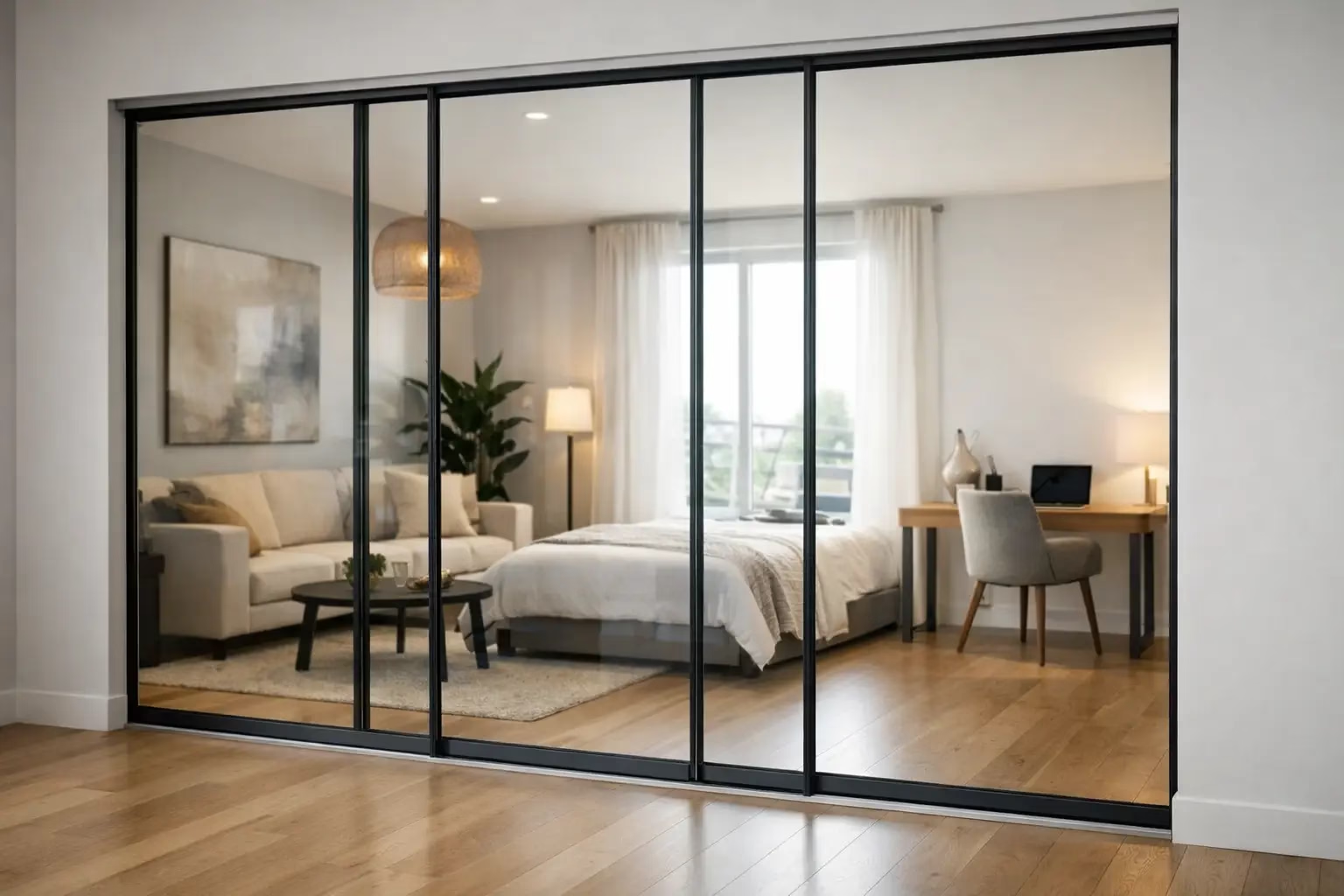
Residential Glass Room Divider Ideas
Open-plan living sounds great until one room has to do three jobs at once. A residential glass room divider gives you a practical way to separate space without shutting out daylight, shrinking sightlines, or making the home feel boxed in. For homeowners who want cleaner zoning, better function, and a modern finish, glass is often the smarter answer than adding permanent walls.
Why a residential glass room divider works so well at home
Most homes need more flexibility than their original floor plan provides. A guest room becomes an office. A dining area turns into a study zone. A loft corner needs privacy without losing brightness. Traditional construction can solve that, but it is expensive, messy, and hard to reverse.
A residential glass room divider solves a different problem than drywall. It creates separation while preserving visual openness. That matters in smaller homes, condos, townhouses, and any room where natural light is limited to one side. Instead of forcing a dark, closed-off layout, glass lets you define purpose while keeping the interior feeling larger and more connected.
This is also why glass works especially well in upgraded primary suites, home offices, walk-in closets, finished basements, and shared family spaces. You are not just dividing a room. You are improving how the room performs.
Where homeowners use glass dividers most
The best use case usually starts with a space conflict. One area needs privacy, but the room still needs light and a clean visual flow. That is where a divider earns its place.
In a home office, glass separates work from living space without making the office feel isolated. This is useful when a spare bedroom is not available and the office has to fit into a larger room. For remote workers, that visual boundary can improve focus while keeping the home more organized.
In bedrooms, glass room dividers are often used to separate a dressing area, create a private sitting zone, or define a closet space. The result feels more tailored than a curtain and more refined than a standard partition wall.
In living areas, a divider can create a reading nook, play area, or secondary lounge without breaking up the architecture. In basements, it can separate a gym, media room, or guest area while helping the full level feel brighter. In lofts and open-plan homes, it can introduce needed structure without sacrificing the open concept that made the layout appealing in the first place.
Framed, frameless, sliding, or demountable
Not every system fits every home. The right choice depends on how much privacy you need, how permanent the installation should be, and how often the space needs to change.
Framed systems offer stronger visual definition and often align better with contemporary interiors that use black, bronze, or minimal aluminum detailing. They can feel architectural and intentional, especially in homes with modern industrial or transitional styling.
Frameless options create the lightest look. They work well when the goal is subtle separation and minimal visual interruption. If you want the divider to almost disappear, this is often the best direction.
Sliding glass dividers are ideal when floor space matters. Unlike swing doors, they do not require clearance arcs, which makes them useful in tighter rooms or multipurpose areas. A well-engineered sliding system should operate quietly, track cleanly, and feel stable over time. That last point matters more than many buyers realize. A divider is something you interact with every day, so poor movement or weak hardware becomes frustrating fast.
Demountable systems make sense when flexibility is part of the plan. If you may reconfigure the room later, a movable or removable solution offers a better long-term value than building a fixed wall. This is especially attractive in homes where needs change quickly, such as households balancing remote work, guests, and growing families.
Privacy is not all or nothing
One common hesitation is simple: if the divider is glass, will it actually create privacy? The answer depends on the glass type, the frame layout, and the room’s purpose.
Clear glass works best when openness and light transmission are the priorities. It is ideal for home offices, living spaces, and layout definition where visual connection is still desirable.
Frosted or reeded glass shifts the balance toward privacy while still allowing light to pass through. That makes it a strong choice for dressing zones, bathrooms adjacent to bedroom suites, or work areas where you want separation without a heavy look. Some homeowners want complete visual screening, while others only need softened visibility. There is a big difference between the two, and the best divider systems account for that rather than treating privacy as a one-size-fits-all feature.
Acoustic privacy is a separate issue. Glass can help create a quieter boundary, but it will not perform like a fully insulated wall. If your main concern is reducing noise for calls, study sessions, or media use, the system design and perimeter details matter. This is one of those areas where expectations should be realistic. Glass improves space planning and visual control first. Sound reduction can improve too, but it depends on construction, gaps, and panel configuration.
What to look for in the engineering
Design gets attention first, but performance decides whether the system still feels premium years later. For a residential glass room divider, the most important details are not always obvious from photos.
Safety glass is essential. In a residential setting, especially in family homes, the system should be built for safety and performance with materials intended for long-term daily use. Tempered glass is a baseline expectation for interior divider applications.
Hardware quality matters just as much. Rollers, tracks, handles, locking points, and panel stability all affect the experience. If a sliding divider rattles, drags, or feels loose, the sleek look loses its value quickly. Quiet operation is not a luxury feature. In a home, it is part of basic comfort.
The support method matters too. Bottom-wheel locking designs can add stability and safety, particularly for larger panels. This helps prevent the system from feeling top-heavy or vulnerable to sway. When buyers compare systems, these engineering details often separate a product that photographs well from one that performs reliably.
Durability should also be part of the evaluation. A good divider should be designed to last for decades, not just through the first remodel cycle. Finishes, hardware tolerances, and structural consistency all play a role.
Custom sizing changes the outcome
Residential projects rarely fit standard dimensions perfectly. Ceiling heights vary. Openings are not always square. Some homes need narrow partitions, while others call for wide-span dividers that become the defining feature of the room.
That is why custom sizing often produces a better result than trying to force a stock solution into a nonstandard opening. A made-to-order system can align with ceiling conditions, wall placement, furniture layout, and daily use patterns. It also tends to look more integrated, which matters when the divider is a visible part of the interior design.
For homeowners and designers, custom sizing is not just about getting the measurements right. It is about controlling proportions. Slim frames, panel width, sightlines, and door placement all affect how refined the final installation feels.
Installation, planning, and cost
The simplest projects are straightforward. Others require coordination around flooring, wall conditions, and whether the divider is being added during a renovation or after the room is already finished. A precise site measure is always worth the effort because glass systems leave little room for guessing.
Costs vary based on size, frame type, glass type, hardware, and whether the system is fixed, sliding, or demountable. Installation also affects the total. Some homeowners want a solution that is approachable for a capable installer, while others prefer coordination through experienced partners. The right path depends on the complexity of the opening and the finish level expected.
Speed matters too. If the divider is holding up a move-in, office setup, or larger renovation schedule, responsive quoting and clear lead times are not small details. They are part of the buying decision. That is one reason design-conscious homeowners often choose specialized manufacturers over generic room divider products. The product itself is important, but so is confidence in sizing, safety, and support.
Choosing the right look for your home
A glass divider should feel intentional, not imported from another style of building. Black-framed systems create a sharper architectural statement and work especially well in modern, urban, and transitional interiors. Lighter metal finishes can soften the look. Frameless glass keeps attention on space and light rather than on the frame.
The best choice depends on what the room already has. If your home uses clean lines, minimal trim, and open sightlines, a simple glass system will usually feel natural. If the home is warmer or more layered, a framed design can add structure without looking cold.
For buyers who want a solution that combines visual sophistication with practical daily use, a well-built system from a specialist like Doors22 can offer that balance. The goal is not just to divide a room. It is to improve how the home works while keeping the finish clean, modern, and durable.
A good divider should earn its footprint every day – by bringing order to open space, preserving light, and giving your home more ways to function without asking it to feel smaller.
.png) Share this post with others
Share this post with others


