
Sliding Glass Room Divider Buying Guide
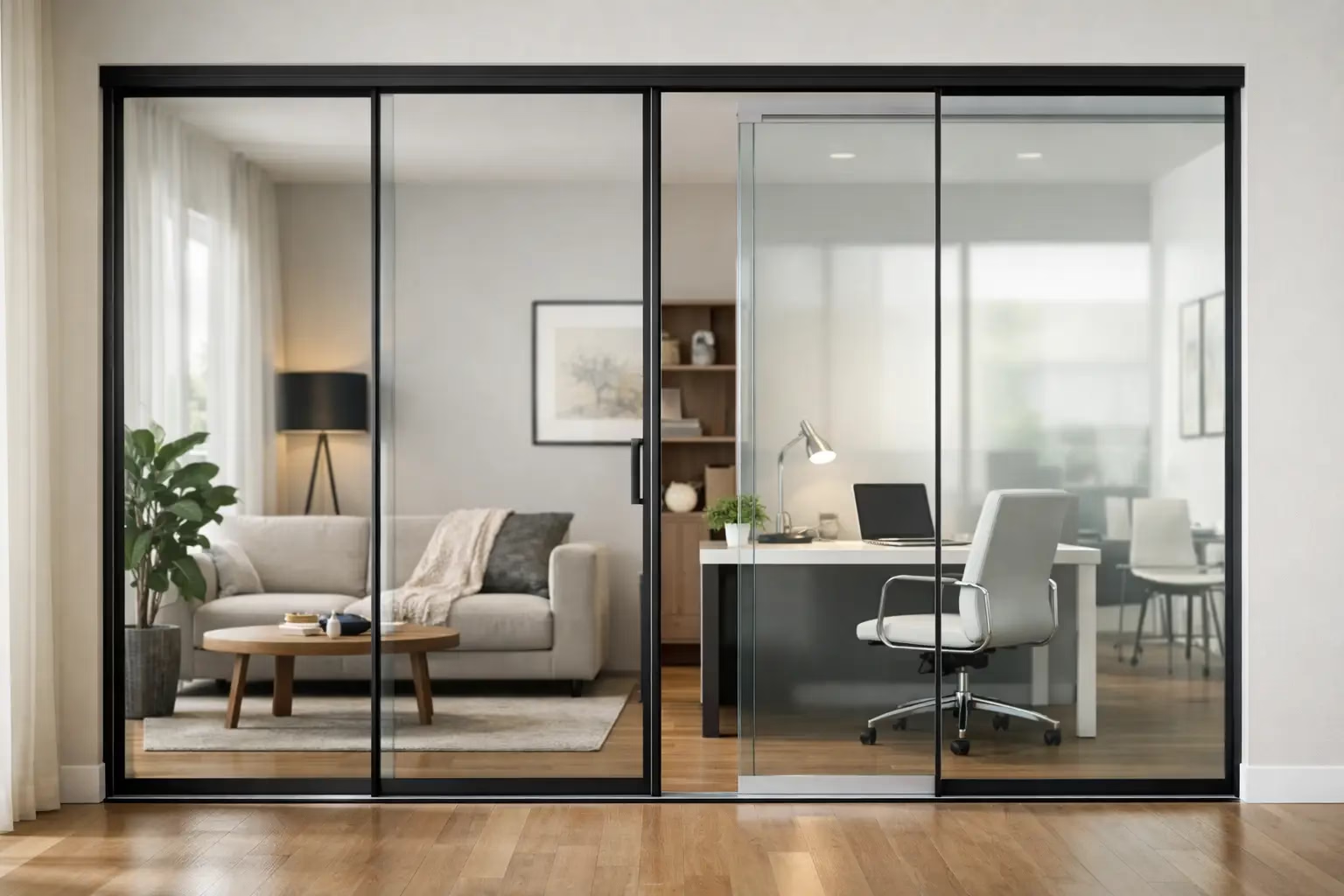
Sliding Glass Room Divider Buying Guide
A wall can solve one problem and create three more. It blocks noise, but it also kills daylight, closes off sightlines, and locks your floor plan into one permanent decision. A sliding glass room divider solves that tradeoff better than most interior systems because it separates space without making the room feel smaller.
For offices, that can mean creating a conference area, private office, or quiet focus zone while keeping the open look clients and teams prefer. For homes, it can mean giving a home office, guest area, closet opening, or loft section real definition without the heaviness of framed construction. The value is not just visual. It is operational. You get flexibility, better light flow, and a finished architectural look in one move.
Why a sliding glass room divider works so well
The strongest case for glass is simple: it lets one square foot do more. In a commercial setting, layouts change. Teams grow, departments shift, and space has to adapt. In a residential setting, rooms often serve more than one purpose. A spare bedroom becomes an office. A loft becomes a sleeping area. A dining nook becomes a study zone. Fixed walls are slow and expensive to revise. Sliding systems give you a way to divide space now without overcommitting later.
There is also a visual reason these systems continue to gain traction. Glass preserves openness. Even when the divider is closed, the room usually feels larger than it would with drywall, solid wood, or opaque partition panels. That matters in smaller homes, narrow offices, salons, and shared workspaces where natural light and clean lines do a lot of the design work.
Still, not every glass divider performs the same way. The best results come from matching the system to the room, the traffic level, and the level of privacy you actually need.
What to look for in a sliding glass room divider
Start with the mechanics, not the finish. A room divider is used repeatedly, often multiple times a day, so the hardware matters as much as the glass. Poorly engineered systems tend to show their age quickly. They rattle, drag, wobble, or become noisy under regular use. A well-built divider should move quietly, track cleanly, and feel controlled from open to close.
Safety is just as important. Tempered safety glass is the baseline for interior applications, but the support system deserves equal attention. Bottom-wheel locking designs and stable track engineering reduce sway and improve long-term reliability. That is especially important in active homes, offices with frequent traffic, and any setting where users expect the system to feel solid rather than delicate.
Sizing is another major factor. Standard sizes can work well when openings are predictable, but many interiors are not built around convenient dimensions. Ceiling height, wall conditions, trim details, and flooring transitions all affect fit. Custom sizing often makes the difference between a divider that looks added on and one that looks integrated into the architecture.
Then there is frame style. Minimal frames give the cleanest modern look and allow the glass to do most of the visual work. Heavier frames can be useful in certain interiors, but they create a more defined boundary. Neither choice is wrong. It depends on whether you want the divider to quietly blend in or make a stronger design statement.
Privacy, acoustics, and realistic expectations
One of the most common mistakes buyers make is expecting glass to behave like a solid insulated wall. It will not. A sliding glass room divider can create meaningful visual separation and some sound reduction, but it is not the same as full structural construction.
That does not make it a compromise. It makes it a different tool. In offices, clear glass supports supervision, openness, and light distribution while still marking dedicated zones. Frosted or partially obscured glass can improve privacy for meetings, phone rooms, executive offices, wellness areas, and treatment rooms. In homes, privacy needs vary. A divider for a home office may only need to reduce distraction and define the boundary. A divider for a sleeping area may need a higher level of screening.
If sound control is a top priority, system details matter. Panel overlap, track quality, perimeter fit, and glass thickness all influence performance. The right expectation is not silence. The right expectation is improved separation with a much lighter visual footprint than a traditional wall.
Best applications for sliding glass room dividers
Commercial interiors are a natural fit because they benefit from flexible planning. A divider can create executive offices, conference rooms, waiting areas, salon suites, or individual work zones without losing transparency. This is especially useful in spaces where the brand image depends on a polished, contemporary look.
Residential interiors benefit in different ways. A sliding divider works well between a bedroom and closet, living room and home office, primary suite and dressing area, or loft and sleeping zone. It is also a smart solution where swing clearance would be a problem. Because the panel slides rather than opens into the room, you preserve usable floor area.
There are limits, of course. In very uneven openings or heavily obstructed walls, installation becomes more technical. In rooms where complete visual privacy is non-negotiable, clear glass may not be the best fit unless you choose a frosted or textured option. The point is not that glass works everywhere. The point is that when the layout and use case are right, it solves several design and planning issues at once.
Design choices that affect performance
A lot of buyers focus first on the glass finish, but daily performance often comes down to configuration. Single sliding panels work well for narrower openings and simpler room divisions. Multi-panel systems are better for larger spans and spaces that need a wider opening when fully retracted.
Track placement also shapes the experience. A well-designed top and bottom guidance system helps maintain smooth motion and alignment over time. If the system is demountable or movable, that adds long-term value in commercial projects where layouts may change later. That kind of flexibility can reduce future renovation costs and shorten downtime when reconfiguring space.
The finish selection should support the room rather than compete with it. Clear glass creates the most openness. Frosted glass introduces privacy without giving up light. Black-framed systems add contrast and structure. Lighter frames feel more restrained and architectural. The right choice depends on how visible you want the divider to be when it is closed.
Installation planning matters more than most buyers expect
Even premium systems can disappoint if the opening is measured incorrectly or the surrounding conditions are ignored. Floor level, wall plumb, ceiling structure, and adjacent trim all affect how the divider operates and how refined it looks once installed.
This is where project support becomes valuable. Some buyers are comfortable coordinating a straightforward install, especially in standard openings. Others need custom sizing, field verification, or installer coordination in major metro markets. Neither approach is unusual. What matters is making sure the divider is built for the actual opening and not for an assumed one.
Lead time and shipping should also be part of the planning conversation. Standard configurations can move faster, while custom systems typically require more production time. If your renovation has a fixed completion date, those details should be addressed early, not after finishes are selected.
Cost, value, and what you are really paying for
A sliding glass room divider is not the cheapest way to break up a room. It is often one of the smartest ways to do it well. The price reflects more than glass. You are paying for engineered hardware, safety performance, precision sizing, finish quality, and the ability to transform how the room functions.
In commercial spaces, that investment can support better use of square footage, a stronger client-facing environment, and future flexibility if the layout changes. In residential spaces, it can turn underused areas into practical, attractive rooms without the disruption of major construction. Over time, systems designed to last for decades usually justify their cost better than lower-grade alternatives that need adjustment, repair, or replacement.
Doors22 approaches this category the way serious buyers expect – built for safety and performance, custom when needed, and designed to last with quiet daily operation.
How to choose the right system with confidence
The best buying decision starts with three questions. What level of privacy do you need? How often will the divider be used? And does the opening call for a standard size or a made-to-order solution?
From there, compare systems based on hardware quality, safety engineering, finish options, and installation support. Do not assume all glass dividers are interchangeable because they look similar in photos. The difference between a decorative product and a dependable architectural system usually shows up after installation, during everyday use.
If your goal is to create a brighter, more flexible interior without giving up a finished professional look, this category is worth serious consideration. The right divider does more than separate two areas. It gives your space better range, better light, and a better way to work or live within the same footprint.
A well-designed interior should not force you to choose between openness and structure. With the right system, you can keep both.
.png) Share this post with others
Share this post with others


