
How to Plan Office Glass Layouts Right
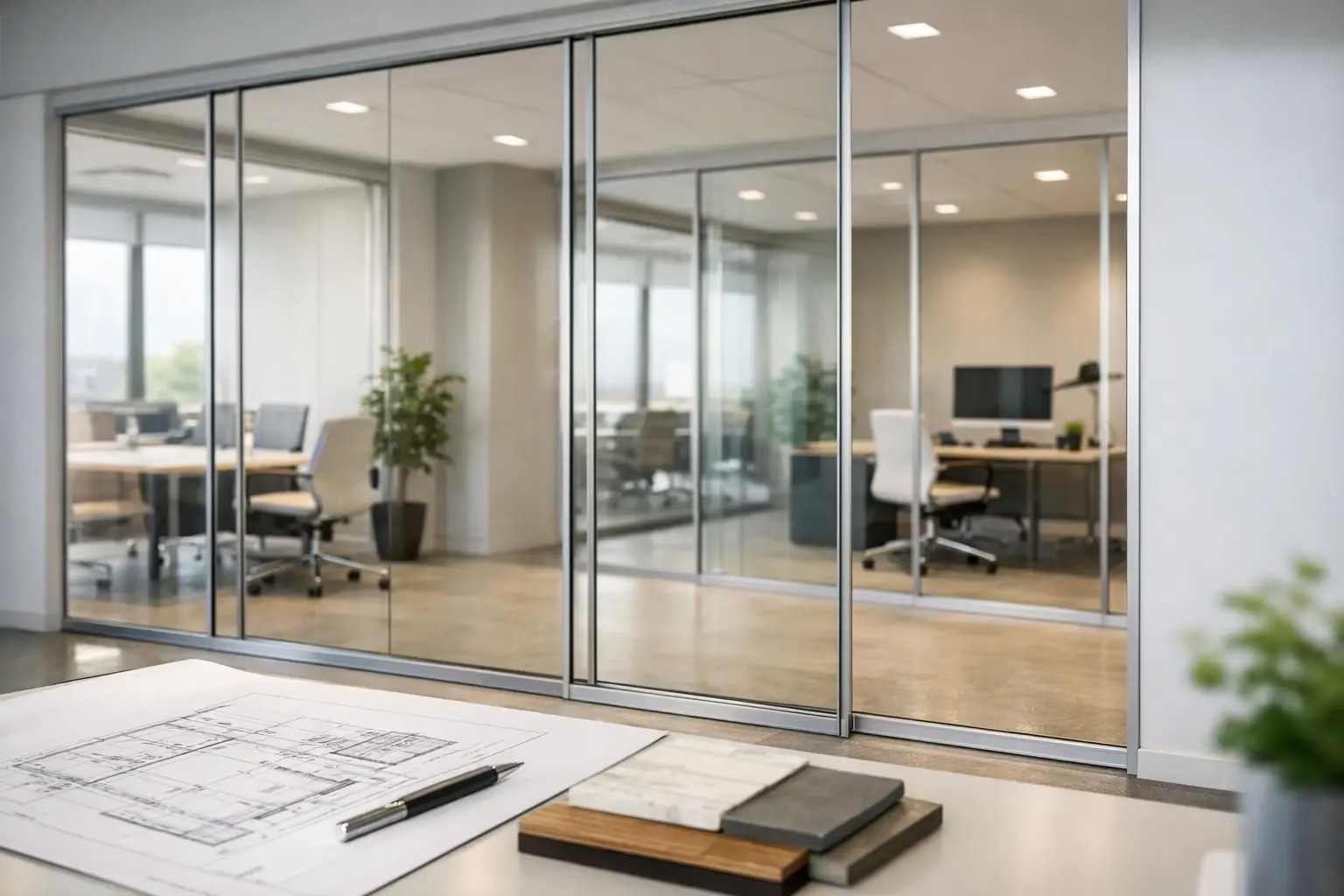
How to Plan Office Glass Layouts Right
A glass office layout can look impressive on a rendering and still fail in daily use. The usual problem is not the glass itself. It is the planning behind it. If you are deciding how to plan office glass layout, the real goal is to balance openness with function so the space works for people, furniture, acoustics, and future changes.
That means looking beyond where partitions fit on a floor plan. You need to think about circulation, line of sight, natural light, privacy levels, code requirements, door swing or sliding clearance, and how the office may need to evolve over time. When those decisions are made early, glass becomes a high-performance design tool rather than a visual feature that creates workarounds later.
Start with the way the office actually works
Before choosing panel sizes or door styles, define how each part of the office will be used. A conference room, a manager office, a quiet focus room, and an open team zone do not need the same level of enclosure. Planning gets more accurate when you assign each area a real function instead of a generic label.
For example, a sales team may benefit from visual openness and strong daylight sharing, but HR or finance may need more privacy. Executive offices often need a polished appearance with sound control, while huddle rooms may prioritize quick access and efficient footprint use. If every room receives the same glass treatment, the layout tends to look consistent but perform inconsistently.
This is where many projects benefit from demountable systems. If your team expects growth, departmental shifts, or changing room sizes, a fixed wall approach can become expensive fast. A demountable glass layout gives you flexibility without sacrificing a clean architectural finish.
How to plan office glass layout around traffic flow
Good traffic flow is one of the clearest markers of a well-planned office. People should be able to move between workstations, meeting rooms, entrances, and shared spaces without bottlenecks or awkward turns. Glass partitions can improve this by keeping sightlines open, but only if the placement is disciplined.
Start with the main circulation paths. Then place enclosed glass rooms around those routes instead of forcing traffic through narrow leftover zones. This matters even more in smaller offices, where one poorly placed door can interrupt movement all day.
Door type also changes the layout logic. Traditional swing doors need clear radius space and can conflict with furniture placement. Sliding glass doors reduce that issue and often make better use of compact office footprints. They also create a more controlled, streamlined look, especially in conference rooms and private offices where floor area is tight.
Sightlines matter too. Transparent partitions help people orient themselves quickly, but direct views into every workspace are not always desirable. It depends on the role of the room. A clean layout often uses openness along shared areas and more selective screening where concentration or confidentiality matters.
Balance natural light with practical privacy
One of the strongest reasons to invest in office glass is light transfer. A well-planned layout lets daylight travel deeper into the space, reducing the closed-in feeling that solid walls often create. This is especially valuable in office suites with perimeter windows and internal rooms that would otherwise feel isolated.
Still, more transparency is not always better. Conference rooms used for client meetings, legal discussions, or internal reviews may need visual privacy at least part of the time. Individual offices may also need a degree of shielding depending on leadership style and work type.
The solution is usually not to avoid glass. It is to specify the right kind of enclosure in the right place. Clear glass works well in collaborative zones and reception-facing areas. Frosted sections, partial privacy treatments, or more strategic room positioning can handle areas where discretion matters. The best layouts do not force one privacy standard across the entire office.
Use dimensions that support furniture and function
Office glass layout planning often breaks down at the furniture stage. On paper, the room fits. In practice, the conference table leaves no comfortable clearance, the desk blocks the door, or the chairs crowd the glass line.
To avoid that, plan from the inside out. Start with the actual furniture, equipment, and occupancy expected in each enclosed space. Then build the partition layout around realistic clearances. A conference room should support seating movement and screen placement. A private office should allow desk orientation, guest seating, and door access without forcing everything against the glass.
This is also where custom sizing becomes valuable. Standard dimensions can work well in many spaces, but some layouts need exact measurements to avoid wasted square footage or visual imbalance. A tailored system can help align partition runs with ceiling conditions, corridor widths, and room proportions in a way that feels intentional instead of improvised.
Plan for acoustics early
Glass creates openness, but acoustics need separate attention. Many clients assume an enclosed glass room will automatically perform like a traditional wall. That depends on system design, door detailing, perimeter conditions, and how the room is used.
If the office includes frequent calls, confidential meetings, or focused work, sound control should be addressed from the start. This does not mean every room needs maximum acoustic separation. It means you should identify where sound privacy truly affects performance.
A good layout places high-noise functions away from concentration zones when possible. It also matches room type to usage. A quick meeting pod can tolerate more sound transfer than a boardroom or an executive office. In premium systems, the quality of track design, panel fit, and door operation also affects the everyday experience. Silent operation is not just a luxury detail. In a busy office, it becomes part of how refined and functional the space feels.
Think through safety, code, and long-term durability
Design matters, but office glass planning is not only a visual exercise. Safety and code compliance have to be built into the layout. That includes proper tempered or safety glass use, door hardware planning, egress considerations, and system stability.
This is especially important in high-traffic offices and multi-room configurations where doors are used constantly. Hardware quality, locking design, and panel support affect both safety and maintenance over time. A system built for safety and performance should reduce movement issues, resist wear, and maintain smooth operation through years of use.
Durability also influences layout choices. If the office needs movable or reconfigurable partitions, choose a system designed to be demounted and reused rather than one that looks modular but performs like a temporary fix. Long-term value comes from combining flexibility with engineering reliability.
Coordinate the layout with installation reality
A clean concept can still become a difficult installation if site conditions are ignored. Ceiling height variations, floor level changes, HVAC placement, lighting alignment, and existing wall conditions all affect how the final glass layout will fit.
That is why accurate field measurement matters. A glass office system is only as precise as the dimensions behind it. If you are planning multiple offices, conference rooms, or corridor-facing enclosures, even small site deviations can multiply across the project.
This is also the stage where product selection and installation support become practical advantages. A manufacturer that offers standard and custom solutions, direct quote support, and installation coordination can help reduce delays and avoid redesigns. For many commercial buyers, speed matters almost as much as aesthetics.
How to plan office glass layout for future change
The best office layout is not just optimized for move-in day. It is prepared for what happens next. Teams grow, departments shift, and rooms change purpose. A private office may become a shared meeting room. A conference room may need to split into two smaller spaces. If the glass system cannot adapt, every change becomes disruptive.
This is why flexibility should be part of the original plan. Demountable partitions make more sense than permanent construction when agility is a real business need. They protect the initial design investment while giving you room to adjust without starting over.
For companies that want a modern office without locking themselves into a rigid floor plan, that balance matters. Doors22 approaches glass systems with that exact priority in mind – refined design, dependable performance, and layouts that can keep pace with how people actually use space.
A strong office glass layout does more than divide rooms. It shapes how light moves, how teams interact, how private work feels, and how efficiently the space can evolve. Plan it with precision, and the result will look sharp on day one and keep working long after the furniture is in place.
.png) Share this post with others
Share this post with others


