
Best Room Dividers for Small Spaces
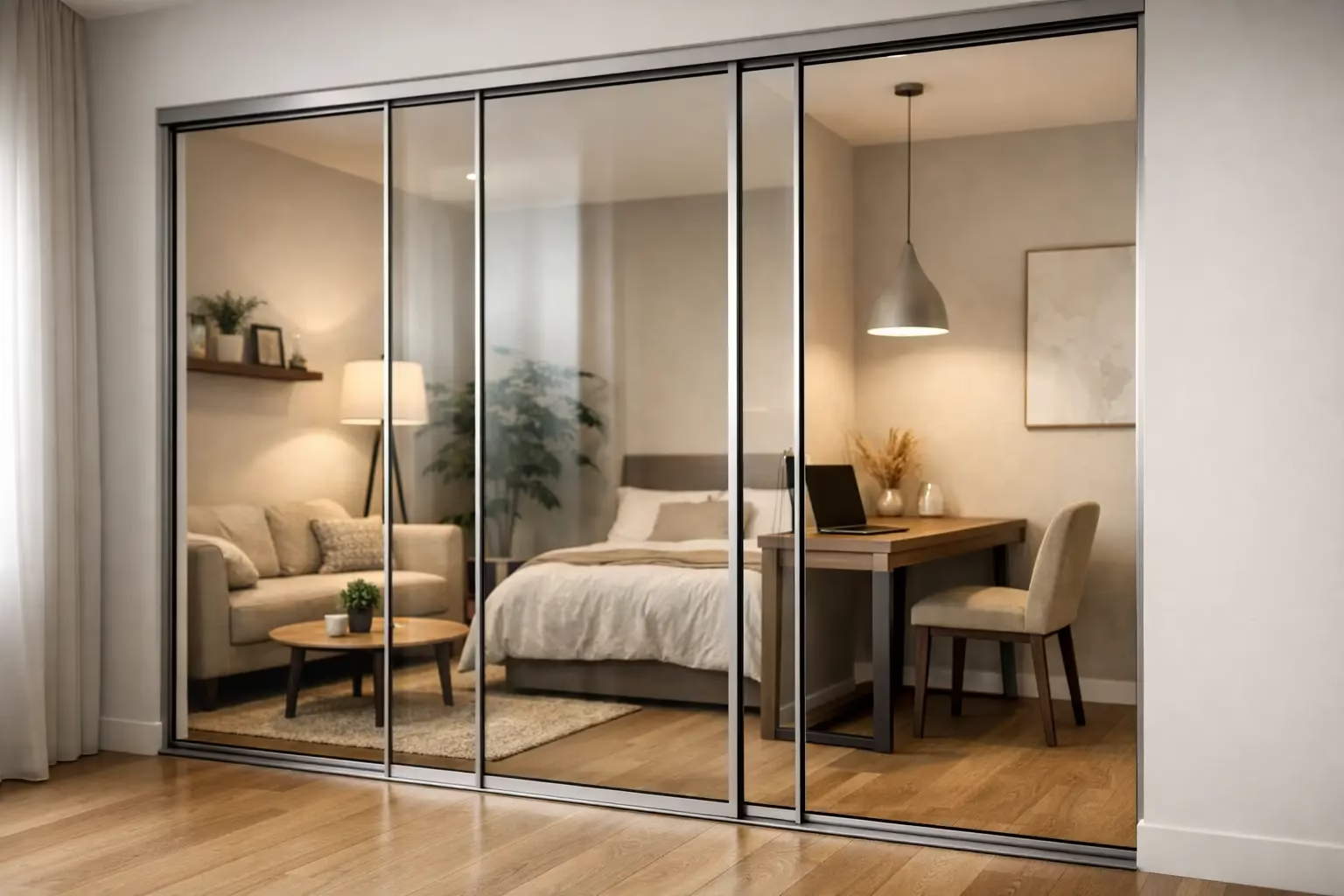
Best Room Dividers for Small Spaces
A small room usually fails for one of two reasons: it does too much, or it does too little. The best room dividers for small spaces solve both problems at once. They create separation where you need focus, privacy, or storage, while keeping the room open enough to feel usable, bright, and intentionally designed.
That balance matters more than most buyers expect. In a studio apartment, divider choice affects light, circulation, and how large the room feels at night. In a home office, it affects concentration and acoustics. In a commercial interior, it can shape traffic flow, client perception, and how efficiently square footage performs. A divider is not just a visual screen. It is part of the architecture of how the space works.
What makes the best room dividers for small spaces
In compact interiors, the wrong divider can make the room feel cut in half. The right one adds function without adding heaviness. That is why the first question is not which style looks best, but what the divider needs to do.
If the priority is privacy, a solid or semi-opaque solution may make sense. If the room lacks windows or already feels tight, preserving natural light should lead the decision. If flexibility matters, a movable or demountable system often performs better than a fixed wall. If the divider will be used daily, durability, safety, and ease of operation matter just as much as appearance.
Good small-space dividers usually share a few traits. They have a narrow footprint, support clean circulation, and avoid unnecessary visual bulk. They are also proportioned correctly. Oversized units can overpower a room, while undersized ones look temporary even when the goal is a polished interior.
Glass room dividers: the strongest option for light and definition
For many modern interiors, glass is the most effective answer. It separates space without blocking sightlines, which is exactly what small rooms need. A glass divider can create a bedroom zone in a studio, a quiet home office in a living area, or a meeting enclosure in a compact commercial layout without making the floor plan feel boxed in.
Clear glass works best when openness is the priority. Frosted or reeded glass adds privacy while still carrying light through the room. Framed systems can lean architectural and defined, while cleaner frameless looks feel lighter and more minimal.
This is also where quality matters. A poorly designed glass system can feel flimsy, rattle over time, or create safety concerns. An engineered system built for safety and performance is a different category altogether. Buyers should look for tempered glass, dependable hardware, smooth operation, and locking or stabilization features that keep panels aligned and secure. In smaller rooms, where every inch is used more intensively, those details show up fast in daily use.
When sliding glass dividers make the most sense
Swing doors need clearance, which small spaces rarely have. Sliding glass systems solve that problem by operating within their own plane. That makes them especially useful in apartments, home offices, bedrooms, and compact conference areas.
They also support a cleaner layout. You can close off a workspace during the day, then visually reconnect it to the rest of the room when the workday ends. In residential settings, this gives one room multiple functions without permanent visual separation. In commercial settings, it allows private zones to coexist with an open-plan feel.
Silent operation is not a minor feature here. In a small space, harsh rolling noise becomes part of the room. Smooth, quiet movement is part of the product experience, and it signals better engineering.
Folding screens: flexible, affordable, and often temporary
Folding screens are common because they are easy to move and require no construction. For renters or short-term setups, that can be a real advantage. They can separate a sleeping area, hide storage, or create a quick backdrop in a multipurpose room.
Still, there are trade-offs. Most folding screens do not improve acoustics much, and many look lightweight in a way that reads temporary rather than integrated. They also take up floor area in a zigzag footprint, which is not always efficient in tight rooms.
That does not make them a bad choice. It just means they are best when flexibility and low commitment matter more than long-term performance or a built-in look.
Open shelving as a divider: useful, but visually heavier
Shelving units can divide a room while adding storage, which sounds ideal for smaller homes. In the right setting, it is. A low or open-backed shelf can create separation between living and working zones without fully blocking light.
The issue is visual density. Once filled with books, baskets, decor, or office supplies, shelving becomes heavier than many people expect. In a compact room, that weight can make the entire layout feel crowded. It also introduces clutter risk. If the shelf is doing divider duty in a main room, everything on it becomes part of the design whether you intended that or not.
For buyers who need storage first and division second, shelving can work well. For those who want a cleaner, more refined interior, glass often delivers the same zoning effect with less visual interruption.
Curtain dividers: soft, simple, and limited
Curtains are one of the fastest ways to create privacy in a small room. They work well around sleeping areas, dressing zones, and flexible live-work spaces where the divider does not need to feel permanent.
Their strengths are speed and softness. Fabric can warm up a room and reduce harsh lines. But curtains do not offer the crisp visual definition many modern interiors need, and they rarely feel premium unless the track, fabric, and installation are all handled carefully. They can also collect dust, sway with airflow, and look unfinished if ceiling heights or panel widths are off.
For a temporary or budget-sensitive project, they are practical. For a more architectural result, they are usually a step down from a well-designed panel system.
Wood slat and partial dividers: good for style, mixed for privacy
Slatted dividers are popular because they create separation without closing off the room completely. They can look warm, modern, and custom, especially in residential spaces that need more texture than glass alone provides.
But they solve a narrower problem. They define zones visually, yet they do not provide much acoustic control or full privacy. In some layouts that is perfect. In others, especially where calls, meetings, or sleeping areas are involved, they can underperform.
This is a good example of where aesthetics and function need to stay aligned. A divider that photographs well is not always the one that works best day to day.
How to choose the right divider for your layout
The best choice depends on what you are trying to protect or improve. If you need to preserve daylight, choose glass. If you need frequent reconfiguration, consider movable or demountable systems. If your main issue is visual clutter, avoid bulky shelves and overly decorative screens. If safety is a concern, especially in homes with children or in commercial settings with daily traffic, engineered glass systems with stable bottom guidance and quality hardware deserve serious attention.
Custom sizing also becomes more important in small spaces than in large ones. When dimensions are tight, standard products do not always align with openings, ceiling conditions, or furniture placement. A made-to-measure divider can turn an awkward corner or underused section of the room into something efficient and polished.
This is one reason premium glass systems continue to gain traction. They offer a cleaner finish than temporary dividers and more flexibility than conventional walls. For buyers who want something designed to last for decades, not just get through the next lease cycle, that long-term value is easy to justify.
Best room dividers for small spaces in home and office use
Residential and commercial buyers often start with different priorities, but they arrive at similar conclusions. Homeowners want privacy without losing openness. Businesses want better space planning without shutting down light flow or committing to heavy construction. In both cases, slim-profile glass systems tend to outperform bulkier divider types because they support flexibility, visibility, and a more premium interior finish.
That does not mean every project should use glass. A guest room corner may only need a curtain. A temporary rental setup may be better served by a folding screen. But if the goal is a divider that looks intentional, performs reliably, and improves the perceived size of the room rather than shrinking it, glass usually leads the field.
For design-conscious buyers comparing options, the real test is simple: does the divider make the space work harder without making it feel smaller? If the answer is yes, you are looking at the right solution. And if you are investing in a long-term upgrade, a custom-engineered system from a specialist like Doors22 can do more than split a room – it can make the entire layout feel smarter, brighter, and better resolved.
Small spaces reward precise decisions. The divider you choose will shape how the room feels every morning, how it functions every day, and whether it still works when your needs change.
.png) Share this post with others
Share this post with others


