
Bottom Rolling Glass Door System Guide
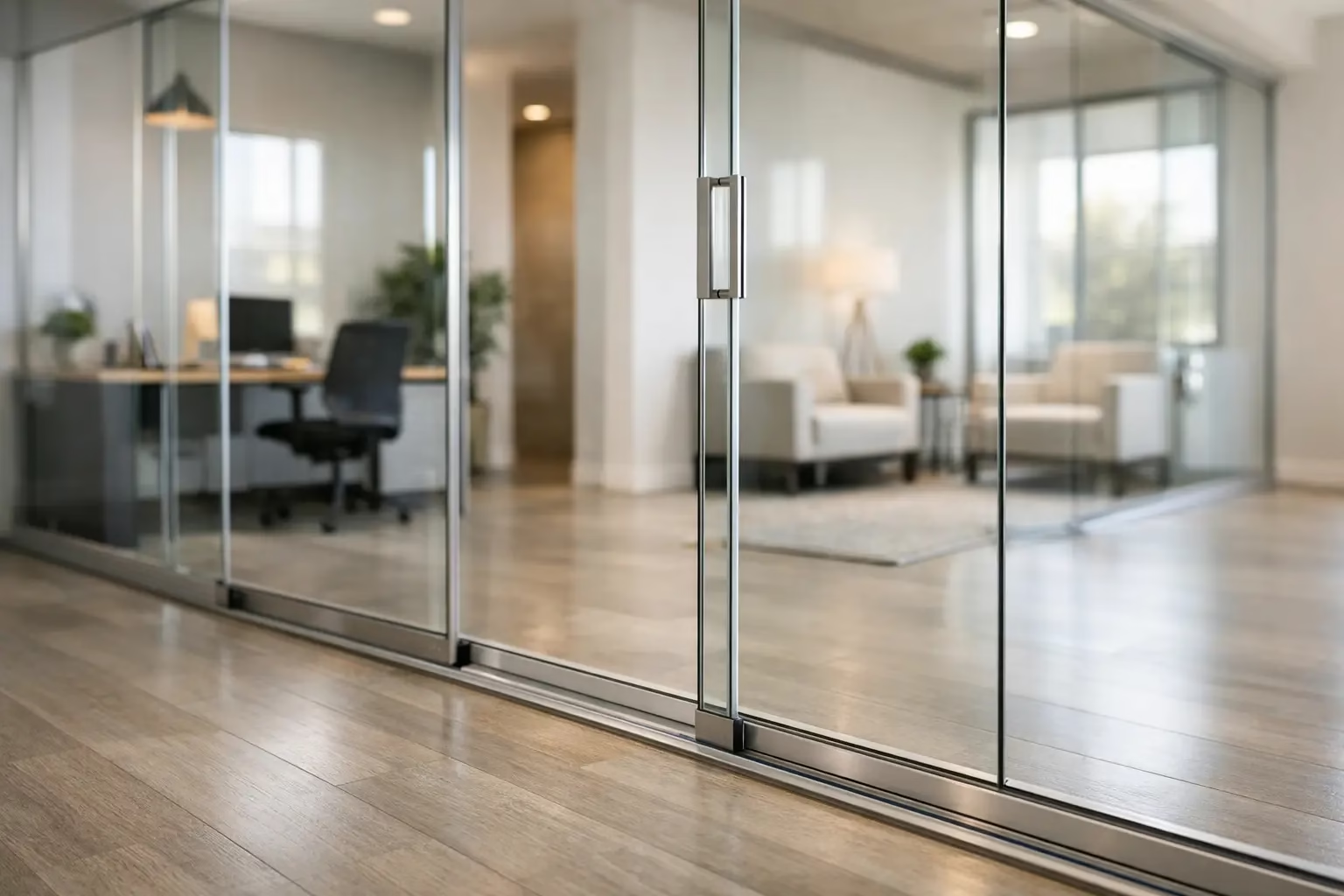
Bottom Rolling Glass Door System Guide
When a sliding glass door feels heavy, wobbles in motion, or forces the header to carry too much load, the problem is usually in the system design – not the glass. A bottom rolling glass door system solves that by placing the primary weight on the floor through engineered rollers, creating a more stable and predictable slide for interior spaces where performance matters every day.
For offices, conference rooms, salon suites, home offices, and modern room dividers, that difference is not minor. It affects sound, user comfort, long-term wear, and even how clean the finished opening looks. If you are comparing sliding glass options, understanding how a bottom rolling system works will help you avoid the common mistake of choosing hardware based on appearance alone.
What a bottom rolling glass door system actually does
A bottom rolling glass door system supports the panel with rollers at the base, while the upper track guides the glass and keeps movement aligned. In practical terms, the floor carries the working load. That changes how the door behaves under daily use.
Because the weight is transferred downward, the system tends to feel more planted than top-hung alternatives. Large glass panels move with less sway, and the header does not need to do all the structural work. In many interior applications, that is a major advantage. It can simplify planning, reduce stress on surrounding construction, and improve consistency over time.
This approach is especially useful where clean sightlines still matter but reliable operation matters more. A beautiful door that starts dragging or rattling after months of use is not a premium solution. A properly engineered bottom rolling setup is built for safety and performance first, then finished with the refined look clients expect.
Why bottom rolling systems are often the better fit
Not every project needs the same hardware strategy. Top-hung systems can work well in the right conditions, especially when floor interruption must be minimized. But a bottom rolling glass door system is often the stronger choice when panel weight, long spans, daily traffic, or installation practicality come into play.
The first reason is stability. Since the rollers support the panel from below, the door has less tendency to pendulum during movement. In commercial spaces with frequent opening and closing, that creates a more controlled feel. In residential settings, it gives the door a solid, premium motion instead of a light, shaky one.
The second reason is structural efficiency. Top-hung doors place more demand on the head condition, which can be limiting in remodels, demountable systems, and openings where the overhead support is not ideal. A bottom rolling system reduces that dependency. You still need proper alignment and professional planning, but the load path is more forgiving.
The third reason is long-term durability. Good bottom-wheel assemblies are designed to last for decades when specified correctly. That matters in office partitions, closet enclosures, and room divider systems where smooth operation is part of the user experience every single day.
Where this system performs best
Interior applications are where bottom rolling systems show their value most clearly. In offices, they work well for conference room fronts, private offices, movable glass partitions, and modular layouts that need both openness and control. The system supports clean modern design while standing up to repeat use by employees, clients, and visitors.
In residential spaces, they are a smart solution for home offices, closets, flexible room dividers, and openings where swing clearance is limited. Homeowners often focus first on the visual impact of glass, but the hardware determines whether the space feels high-end in daily life. Quiet movement and stable tracking are what people notice after installation.
They are also well suited to demountable or reconfigurable interior environments. If the goal is flexibility, the door system should not become the weak point. A well-built bottom rolling setup supports modular planning by combining durability with controlled movement and dependable alignment.
The details that separate a premium system from a basic one
Not all bottom rolling hardware performs the same way. Two systems may look similar in a photo and behave very differently once installed. That is why engineering details matter.
Roller quality is the first thing to evaluate. The wheel assembly should be designed for the panel weight, expected usage, and track profile. Cheap rollers can create flat spots, noise, and inconsistent motion. Better systems are quieter, more precise, and better able to maintain performance under long-term use.
The locking and anti-jump design is just as important. Safety is not an optional feature with glass. A premium bottom rolling glass door system should keep the panel securely engaged and reduce the risk of derailment or unwanted movement. This is especially relevant in commercial settings, homes with children, and any high-traffic interior.
Track design also matters more than many buyers expect. A poorly designed bottom track can collect debris, interfere with smooth travel, or look too bulky for a refined interior. A better track balances function with a clean finish, making it easier to maintain while preserving the visual simplicity that modern glass systems require.
Then there is acoustic comfort. Interior sliding systems are never the same as a fully gasketed swing door, but silent technology and precision hardware can make a major difference. If the door chatters, scrapes, or bangs at the stop, the space feels cheaper than it looks. Quiet operation is part of the product, not a bonus.
Sizing, glass selection, and layout planning
Choosing the right system starts with more than just measuring the opening. Glass width, panel height, overlap, track length, and stacking behavior all affect performance. So does glass type.
Tempered safety glass is standard for many interior applications, and in some layouts laminated glass may also be worth considering depending on privacy, acoustics, and safety goals. The right thickness depends on the panel size and the hardware rating. Oversizing the glass without matching the roller and track capacity is where problems begin.
Custom sizing is often the right move when the project needs a built-in look rather than an off-the-shelf compromise. That is particularly true for office fronts, L-shape enclosures, salon suites, and residential openings with nonstandard dimensions. A made-to-order system generally gives you better proportions, cleaner alignment, and fewer installation adjustments on site.
Layout planning should also account for user behavior. Will the door stay mostly open during the day? Will it close frequently for meetings or privacy? Is the goal visual separation, acoustic improvement, or space saving? The best specification depends on those answers. There is no single hardware choice that fits every opening.
Installation realities buyers should know
A bottom rolling system can be easier to integrate than a fully top-supported design, but that does not mean every floor condition is equal. Substrate quality, levelness, and finish transitions all matter. If the floor is out of tolerance, the door may never operate as intended.
That is why site review matters before ordering. Professional measurement is the safer route for many commercial projects and custom residential installs. It helps confirm clearances, identify structural constraints, and avoid field modifications that can compromise both appearance and performance.
For buyers managing timelines, it is also worth asking how the system will be delivered, whether standard and custom sizes are available, and what installation support exists. A premium product should come with technical reassurance, not guesswork. Doors22, for example, focuses on exact sizing, safety-focused bottom-wheel design, and installation coordination through partners in major cities because the hardware alone is only part of a successful result.
How to tell if this is the right choice for your project
If you want a sliding glass solution that feels stable, handles daily use well, and supports larger interior panels with confidence, a bottom rolling glass door system is often the right answer. It is especially strong for design-conscious buyers who need both modern aesthetics and dependable performance.
If your project depends on an ultra-minimal floor condition or has unusual threshold requirements, another system may deserve consideration. That is the trade-off. Bottom support brings real mechanical advantages, but the surrounding design has to be planned properly to get the full benefit.
The best results come from treating the door as part of the architectural system, not as an accessory. Glass, track, rollers, locking features, sizing, and installation all need to work together. When they do, the result is simple to use, quiet in motion, and built to last for decades.
A good sliding glass door should make the space feel lighter without adding uncertainty to the build. That is why the right system is rarely the cheapest one – it is the one that keeps performing long after the opening day photos are gone.
.png) Share this post with others
Share this post with others


