
The Future of Office Design: How Sound Control Glass Boosts Productivity
The Future of Office Design: How Sound Control Glass Boosts Productivity
The Future of Office Design: How Sound Control Glass Boosts Productivity
Picture this: you’re in an expansive office space, bright with sunlight streaming through large windows. The vibe is energetic; people are chatting, keyboards are clicking, and phones are ringing. But then, somewhere in the background, a conversation escalates. Suddenly, the noise is no longer just background; it’s intrusive, seeping into your focus like an unwelcome guest.
We’ve all been there, haven’t we? The open office concept, while fostering collaboration, often comes with its own set of issues—particularly sound management. It’s a dichotomy. We crave interaction, yet we also need quiet to concentrate. This is where the innovative concept of sound control glass emerges as a game-changer in office design.
Reimagining Workspaces
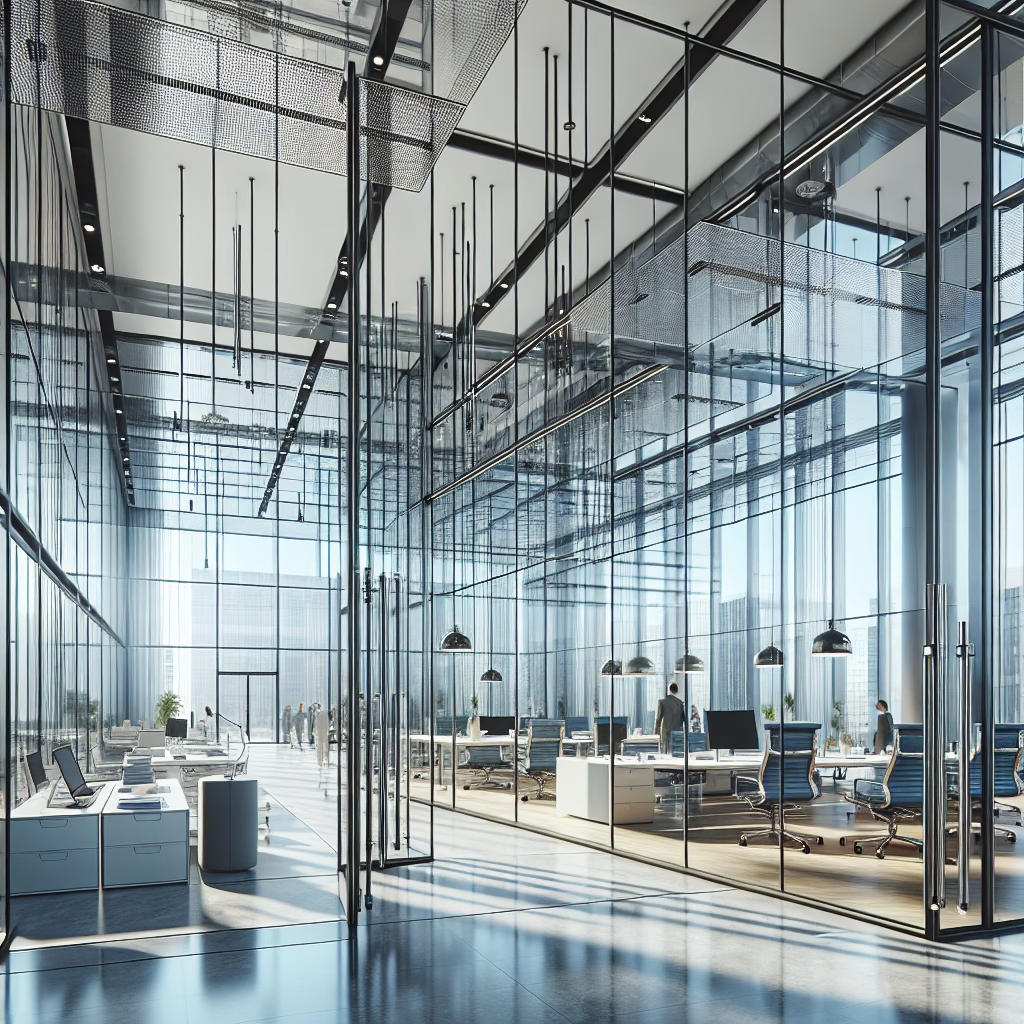
When I first learned about sound control glass, I was intrigued. Could a mere material truly influence productivity? I stepped into a sleek, modern office fitted with this specialized glass—a place that almost felt like it was operating in a different realm from ordinary workplaces. The sound control glass refracted both light and noise differently than your standard window. In reality, it was elegantly separating the chaos of the bustling office from the focused haven of individual workers’ pods.
Employees seemed to float in a bubble of quiet concentration, while nearby collaboration hubs thrummed with energy and ideas. It’s remarkable how a simple shift in materials can transform feelings and interactions within a space.
Understanding Sound Control Glass
So, what exactly is sound control glass? It’s engineered to minimize external and internal noises, creating a serene environment conducive to productivity. Unlike traditional office dividers, this glass allows light to flow freely, maintaining an open feel without sacrificing peace. It’s like having a barrier that doesn’t isolate but instead enhances the office experience.
The science behind it is fascinating. This glass utilizes a remarkable balance of density, thickness, and special coatings to absorb sound rather than reflect it. I had the chance to speak with an architect who specialized in office designs incorporating sound control glass, and he described it as a “transformative element.” When a design elevates function while also attending to our sensory experiences, it’s a win-win.
Creating Focus in Collaboration
One space I remember vividly was a conference room lined with sound control glass. Inside, a small team was engaged in a brainstorming session, their voices animated yet contained. Meanwhile, just outside, the hum of office life continued—phones scattering messages, soft shuffles of foot traffic. The glass did its job; I could sense the energy within the room without being distracted by it.
This design invites a certain irony: it promotes collaboration while still respecting the individual’s need for focus. You can have that spontaneous catch-up without turning it into a disruption for those deep in work mode. I couldn’t help but think about how essential this balance is in our increasingly interconnected yet distraction-filled work environments.
The Psychological Impact of Sound Control
Beyond the technical aspects, there’s a psychological element to sound control glass that’s both subtle and profound. During my visits to various office spaces using this technology, I’ve noticed something striking—the overall mood. There’s a sense of calmness that pervades, as though people feel shielded from the outside noise that usually invades their productivity.
In a space that allows for quiet contemplation, ideas flourish. Employees can enter a ‘flow’ state where creativity thrives. I once spoke with a graphic designer who mentioned that, without the distractions of unwanted sound, she was able to create work that not only met deadlines but also captured her best efforts. “It’s as if the glass creates a sanctuary,” she said. “It allows me to immerse myself completely in my tasks.”
The Future of Office Design
As office design continues its evolution, the incorporation of sound control glass feels not just innovative but necessary. It represents a future where offices are built with human experiences in mind—recognizing that we are not just productive machines but emotional beings who respond to our environment. This adaptability excites me; it feels like a step toward creating workspaces that genuinely understand the intricate dynamics of collaboration and focus.
Imagine stepping into your office every day, greeted by an atmosphere that encourages collaboration yet protects your personal space for creativity and concentration. The buzz of productivity harmonizes with the rhythmic pulse of innovation. That isn’t just a dream; with sound control glass, it’s becoming our reality.
Conclusion: Enhancing Our Work Lives
In reflecting on the journey of office design, I believe sound control glass is a pivotal point. It exemplifies how we can rethink our environments, prioritizing elements that truly support productivity. It’s not merely about walls and windows but about creating spaces where people feel respected, inspired, and energized.
The future of office design, it seems, is not just in aesthetics but in how well we can design our environments for the complex web of human interactions. By prioritizing sound control, we invite a more thoughtful, engaged workforce.
As I left that sunny office, I couldn’t shake a sense of hope—hope that we’re stepping into a future where our workspaces embrace the full spectrum of our needs. It’s an encouraging thought, and I’m excited to see how this whisper becomes a resounding shift in office environments everywhere.
.png) Share this post with others
Share this post with others


