
Breaking Down Barriers: How Glass Walls Foster Collaboration and Creativity
Breaking Down Barriers: How Glass Walls Foster Collaboration and Creativity
Breaking Down Barriers: How Glass Walls Foster Collaboration and Creativity
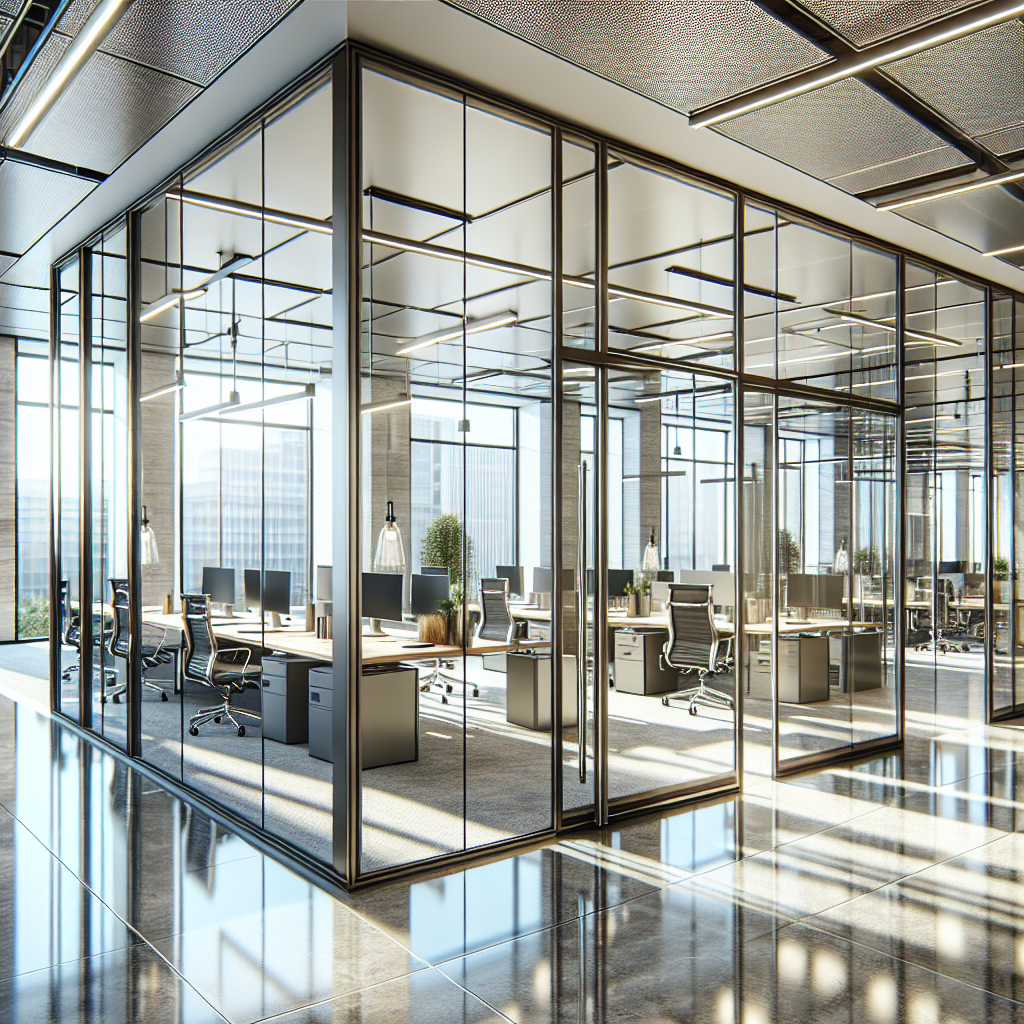
Walking into an office filled with glass walls can often feel like stepping into a new world—one where boundaries are transparent, and energy flows freely. I remember my first day at a new job, glancing around at the open spaces, and feeling both excitement and unease. The usual cubicle structures of my previous job were replaced with sleek, clear barriers. At first, it seemed like a bold move, and I wondered: Would these glass walls really make a difference? Or would they simply create a fishbowl effect, where creativity gets stifled by scrutiny?
Over time, I discovered that there’s an inherent beauty in transparency—not just in design, but in the way we interact. The glass walls may have seemed like a structural choice, but they also represented a shift in mindset. In a world where ideas flicker like candles in the wind, having fewer barriers allows those sparks to ignite. We were encouraged to speak up, to share, to pitch ideas across the room without the dull thud of insulated walls dampening our enthusiasm.
When I saw my colleagues perched on the edges of their desks, looking over to join conversations, I realized something profound: the presence of glass walls encourages us to break down barriers, both literal and metaphorical. Our discussions became less formal, more fluid. Someone would toss out an idea, and just like that, multiple voices would ring out in a dance of dialogue. With each commotion, creativity blossomed, feeding off the vibrant energy of collaboration.
I recall a specific project that illustrated this beautifully. It was a push to redesign our client’s branding, a daunting task that seemed to require endless back-and-forth. On one particularly lively afternoon, I found myself seated at a communal table, my eyes flitting from one translucent room to another. Ideas were swirling around like confetti—sketches were shared, laughter echoed, and brainstorming felt less like a chore and more like camaraderie.
What struck me was how the glass walls facilitated spontaneous encounters. One day, while scrubbing details for a client presentation, I caught a glimpse of a colleague drafting brilliant visuals in her glass-walled office. I knocked gently. “Can I steal a moment of your time?” The openness invited this kind of interaction. So much more than mere aesthetics, those walls served as bridges, not barriers.
In environments where we hide behind opaque walls, we lose touch with the zeitgeist around us. When ideas are born from isolation, they’re often stifled, struggling to grow. But the transparency brought by glass walls cultivates a more dynamic flow of creativity. I distinctly remember when a new graphics designer joined our team. His first few days were spent acclimating to the transparency; he was quiet, often fading into the background. Yet, it wasn’t long before he began sketching ideas for a campaign that caught the eye of everyone. It was the informal conversations, the casual interactions—these became the fertile ground where his ideas blossomed.
Physically, those glass walls did more than open up the layout of our space; they changed the very fabric of our collaboration. When someone walked by, it felt natural to engage, to share a thought or critique a design. The fear of being overheard seemed diminished. I noticed how people would throw out half-formed ideas that would eventually blossom into fully realized concepts. We were all in it together, and the glass walls visually reinforced that.
Even in moments of tension, when deadlines loomed large and pressure brewed, the open layout encouraged us to lean into those experiences as a team. I can still hear the sounds of laughter mingling with the hum of active conversation, each whisper and shout breaking apart the heaviness with which we sometimes grappled.
Some may argue that glass walls can lead to distractions, and yes, there were times when that chatter from the collaborative space could be overwhelming. But isn’t collaboration inherently messy? I found that those moments taught us how to focus amid the chaos. We learned to shield our tasks against the noise while also embracing the creativity it invited.
In reflection, breaking down those barriers doesn’t just mean establishing an open space; it means celebrating vulnerability. It’s about allowing ourselves to be seen and heard. It’s about recognizing that each individual voice has a place and value. One day, in a meeting held within the sea of glass, someone even remarked how the layout made them feel accountable—not just to the work, but to each other. In that accountability, creativity thrived.
Being part of an environment like this prompts us to reimagine collaboration and creativity—not as isolated events that happen in cubicle corners but as an ongoing, shared experience. The absence of walls lets our ideas crash together, sometimes gently, sometimes fiercely, but always towards a singular goal.
Now, stepping into spaces framed by glass no longer feels intimidating or confined; it feels liberating. I’ve come to appreciate that the transparent walls are not just design choices but catalysts for connection. They invite collaboration, push us to innovate, and inspire us to break down both physical and psychological barriers.
So, next time you step into an office lined with glass, take a moment to reflect. You’re not just entering a workspace; you’re stepping into a realm of possibilities. There’s magic in breaking down barriers, and those walls—once barriers themselves—are now transformed into gateways for collaboration and creativity. In that transparency, we find humanity, and in that humanity, we find innovation.
.png) Share this post with others
Share this post with others


