
Transparently Productive: How Glass Room Dividers Boost Workplace Efficiency
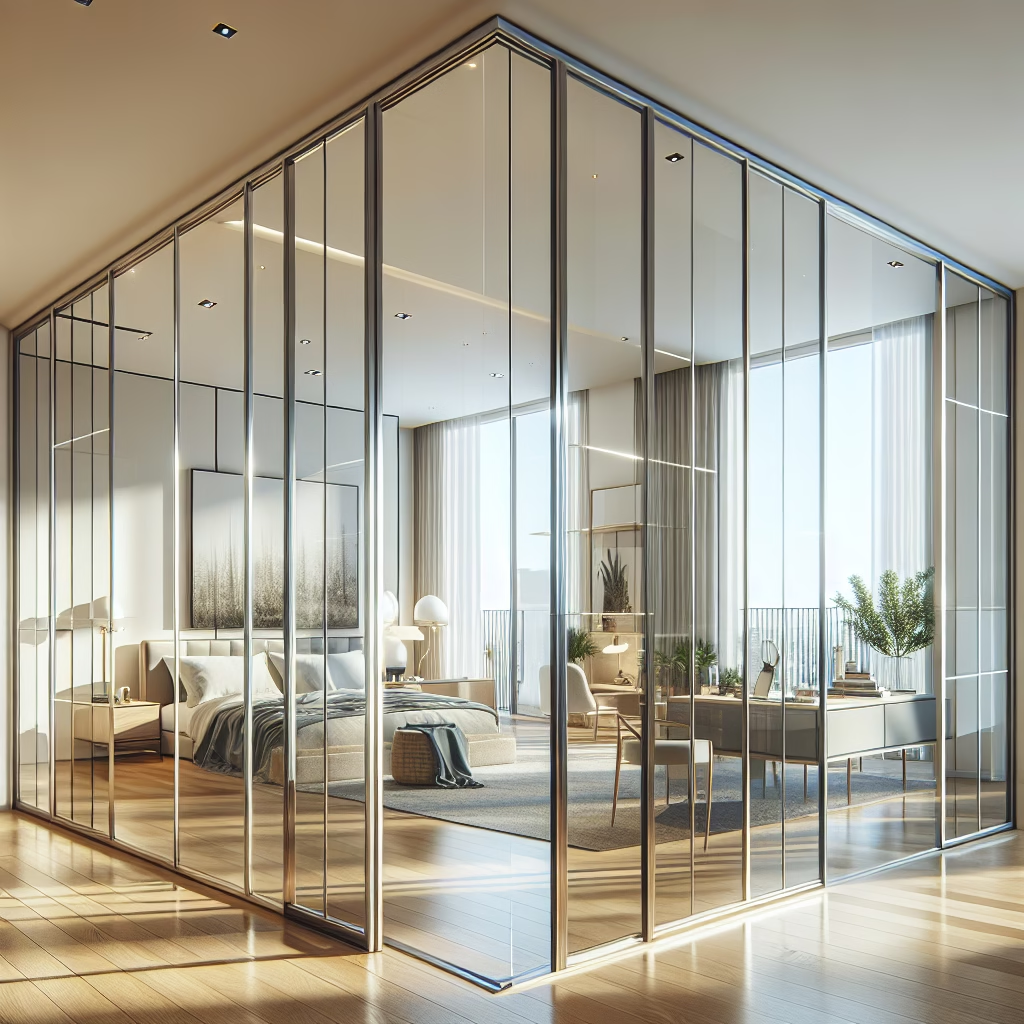
Transparently Productive: How Glass Room Dividers Boost Workplace Efficiency
Transparently Productive: How Glass Room Dividers Boost Workplace Efficiency
Have you ever walked into an office space that feels both open and cozy at the same time? There’s something special about being in a room where you can see your colleagues, yet also enjoy pockets of quiet. Recently, I had a chance to experience a workplace that beautifully showcased the art of glass room dividers. It made me reflect on how a simple design choice can cascade into improved productivity.
In many workplaces, the challenge is often creating an environment that balances collaboration and focus. The usual fixed walls isolate us, blocking not just our view but also impeding spontaneous interactions. I remember my first job in a traditional cubicle setup—rows of partitions made the space feel confined. It sometimes felt like working in a series of tiny boxes, not conducive to teamwork or inspiration. Yet in this new office with glass dividers, everything changed.
The immediate benefit of glass room dividers is their ability to enhance visibility. As soon as I stepped into the workspace, I noticed not just the physical design but the emotional atmosphere. Colleagues were working on projects but could glance up and see each other—no walls to create barriers. Conversation flowed naturally, punctuated by light laughter and the occasional brainstorming session that leaked into the common areas. The transparency didn’t just allow for physical visibility, but it also created a sense of communal spirit.
When projects need to be tackled quickly, clarity is imperative. With glass dividers, I observed how teams could quickly convene. There were no cumbersome doors to open or awkward transitions from one enclosed space to another. A hand gesture or a shout across the room was often enough to gather people for an impromptu check-in. This immediacy facilitated quicker decision-making, streamlining what could have been obstructed by a lack of accessibility.
Part of the charm of the glass dividers was the way they expertly managed noise. In previous workplaces with solid walls, sounds bounced around like ricocheting balls, building up tension. Here, while some conversations traveled across the tempered surfaces, the overall noise level remained surprisingly low. Each space felt private yet connected, a delicate balance that encouraged both focus and interaction. With natural light streaming in and illuminating the space, the environment felt vibrant rather than sterile.
A memorable moment for me was during a project review. Teams gathered around a central space created by these dividers, laptops open but attention focused fully on the conversation. The glass walls allowed our team leader to engage with others but also provided us some degree of quiet to think and absorb feedback. It was a fleeting reminder that even in group settings, personal space still matters—a lesson many overlook in densely packed offices.
Moreover, transparency has a profound effect on accountability. With glass dividers, there’s an inherent social contract. Everyone can see who is working on what. I recall a colleague mentioning how this visibility made her more inclined to stay on task, as distractions are harder to conceal. Each person felt the gentle motivation from peers around them working diligently, a subtle but effective nudge towards productivity.
Creativity also flourished in this transparent setting. The presence of glass encouraged an open exchange of ideas. Daily, I would witness spontaneous meetings form around the dividers. Whiteboard markers replaced the usual stifling walls, as employees brainstormed in shared glimpses. The fluidity of these interactions intrigues me; creativity often breeds in spaces where individuals don’t feel boxed in.
I’ve come to see that design significantly impacts wayfinding, both literally and metaphorically. With glass dividers, you can navigate the space easily. You don’t inadvertently brush against walls or misjudge where someone might be sitting. Instead, movement becomes seamless, a dance of togetherness without the usual barriers. Even the simplest task, like fetching documents from a colleague, turns into an opportunity for engagement. A gentle smile, a quick hello—these little moments pile up to create a vibrant workplace culture.
Additionally, glass dividers are aesthetically pleasing. They enhance the overall appearance of the workspace, allowing light to filter through and adding an airy feel. I found myself feeling energized, the environment less monotonous than the dull beige of traditional office buildings. When a space embraces openness, it often cultivates a sense of well-being, which directly ties into the productivity we seek in our daily endeavors.
In considering the broader implications of these dividers, one cannot help but acknowledge their role in fostering inclusivity. The transparency they embody aligns with many companies’ goals of creating spaces where everyone feels welcomed and valued. With clear sightlines, there’s an implicit invitation for participation, making every voice feel essential to the collective effort.
Of course, implementing glass room dividers isn’t just about aesthetics or trendy design—it’s about rethinking the way we approach workspaces in the context of modern demands. We live in dynamic times, where collaboration and flexibility are paramount. This is where I believe glass dividers shine the most.
Transitioning back to that memorable office layout, I left feeling inspired. The open-dialogue culture fostered by transparent dividers reflected not only an architectural choice but also a shift in workplace philosophy. Each time I return, I’m reminded of how something so simple—like choosing how to divide space—can lead to a profound impact on workplace efficiency and morale.
In a world increasingly embracing remote work, perhaps the beauty of glass room dividers lies in their challenge to traditional workspaces. They remind us that while we’ve evolved in our work methods, the essence of productivity still thrives on connection, visibility, and engagement. Just like the light that filters through those glass panes, it illuminates not only our work lives but also our collective potential.
.png) Share this post with others
Share this post with others


