
Transforming Your Basement: How Glass Offices Bring Light and Life to Underground Spaces
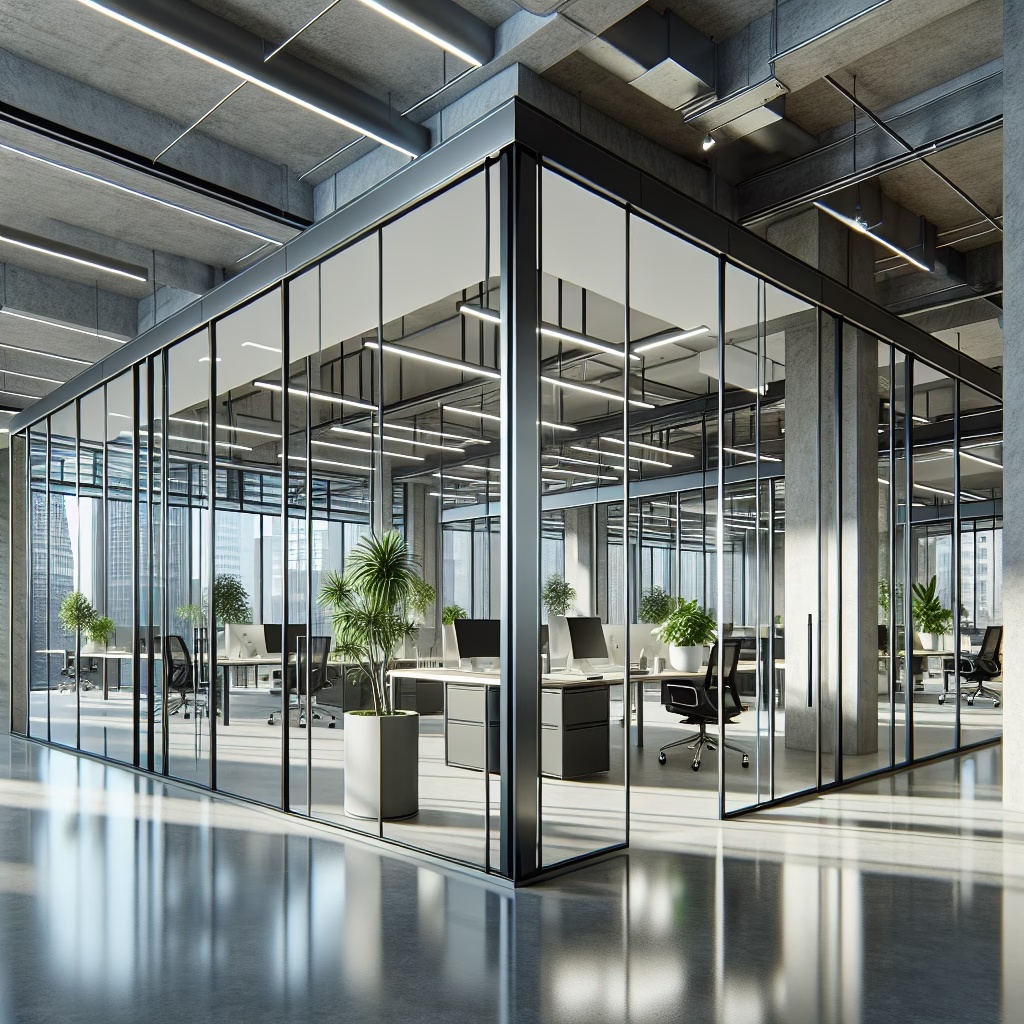
Transforming Your Basement: How Glass Offices Bring Light and Life to Underground Spaces
When I first stepped into my basement, I couldn’t shake the feeling that it was a forgotten corner of my home. The low ceilings, dim lighting, and damp smell were somehow stifling. I remember glancing around, watching dust motes dance in the sparse beams of light filtering through a single tiny window. Ah, the dripping potential of that space! It was like a ghost of what could be. With all of the untouched square footage, I knew a transformation was overdue. But how could I breathe life into such a dark nook?
The answer came in an unexpected form: glass offices. Yes, glass. I was skeptical at first. Could transparent walls really transform a subterranean space? Yet, as I dove deeper into ideas of modern design, I started imagining how light could filter in, how an airy atmosphere could emerge from what was once heavy and confining.
Let me paint a picture. I envisioned my glass office as a sanctuary. One where I could work without the claustrophobia that typical basement walls could induce. The thought of replacing solid, oppressive walls with sleek sheets of glass excited me. Glass doesn’t just separate spaces; it creates an openness that can spark creativity and productivity. It offers a clear view of the outside world—perhaps not a garden view, but a glimpse of life above.
The beauty of glass offices lies in their ability to harness natural light, often a scarce commodity in basements. By strategically placing windows and utilizing frosted glass for privacy where needed, the office can become a bright hub that invites motivation. Imagine sitting at my desk, sunlight streaming in, illuminating pages of projects in progress. With each ray, I felt more energized, more alive.
During the planning phase, I was standing in the basement, tracing the outline of my envisioned glass office. I could almost hear the murmur of the world outside, the bustle of daily life, and I realized how much I wanted that interaction. I wanted my workspace to feel connected, not isolated. The choice of glass instantly brought a promise—a fusion of interior and exterior spaces, a slice of life amidst the underbelly.
One of the striking features of glass is how it transforms the sense of space. In those early brainstorming sessions with a designer, we discussed the concept of open-plan design. We sketched a plan where the glass office wouldn’t just be a workspace but rather an extension of the home itself. The more we talked, the clearer it became: this wasn’t merely about aesthetics; it was about redefining how I experienced my basement altogether.
As I embarked on the installation, a cascade of emotions enveloped me. The first crack of sunlight through the newly installed glass shifted the mood entirely. The oppressive feeling of low ceilings vanished, replaced with an expansive openness that felt welcoming, even invigorating. With thoughtful decor—a minimalist desk and a cozy reading chair—the office became a canvas for productivity, creativity, and calm.
I found inspiration in the nuances of the materials chosen. The way the sunlight caught the edges of the glass, creating a dance of shadows on the floor, turned an ordinary workspace into an art piece. My basement was no longer just a storage place but a hub filled with promise. Natural stone walls, paired with glass, yielded a balanced contrast that drew me in every day.
For my small book club, the transformation was even more significant. We gathered in the new office, sunlight pouring through, illuminating our discussions and laughter. The ambiance felt contagious and inspiring. Every book we pondered on took on a new life amidst the vibrant glow. It was as if the glass walls had a way of amplifying our collective energy.
One might wonder about privacy. The glass office isn’t entirely transparent; there are ways to introduce elements of seclusion. Smart glass options can tint with a flick of a switch, creating a serene cocoon when I need to dive deep into work. The beauty of this adaptation is that it doesn’t close off connection completely. It offers flexibility. I can enjoy the vibrancy of sunlight pouring in or cocoon myself in calm when needed.
The impact rippled beyond just aesthetics; it shifted how I perceived that once-stuffy basement and all it had to offer. It transformed into a multi-functional space. There were work calls from the glass office, yes, but also moments of play—where friends gathered for games, or family enjoyed movie nights, the light spilling around us, prompting conversation and laughter.
When someone first steps into this transformed space, their expression often shifts. A hesitant explorer becomes a curious wanderer. Questions flow: “Is this really a basement?” or, “How did you achieve this bright feel?” I take a moment to breathe in the atmosphere and smile, because I know the answer is a simple one: light and openness.
So, if you find yourself in a darkened, neglected basement, I urge you to reflect on what it could become with a little ingenuity. Imagine infusing it with glass offices—not merely as functional workspaces, but as transformative experience hubs. Your basement can be more than storage; it can be illuminated with potential, as it did for me.
In the end, embracing the uniqueness of a glass office isn’t just about design—it’s about allowing life to permeate every corner of your space, even the ones we often overlook. The basement doesn’t have to remain a forgotten room; it can thrive, just waiting for that brilliant idea to bring it to life.
.png) Share this post with others
Share this post with others


