
Clarity and Collaboration: How Glass Partitions Redefine Office Dynamics
Clarity and Collaboration: How Glass Partitions Redefine Office Dynamics
In the fast-paced world of business, the design of our office space often has a profound impact on workplace dynamics. I remember walking into an office where dim lighting and high cubicle walls built a sense of isolation among employees. Conversations were stifled, creativity was muted, and collaboration felt more like a chore than an invigorating task. It was a space that unintentionally bred confusion rather than connection.
Then, I discovered the transformative power of glass partitions. Suddenly, we weren’t just improving office aesthetics; we were redefining how we interact with one another. Glass partitions act as a bridge, merging openness with privacy. They create a sense of clarity in the workspace that fosters collaboration.
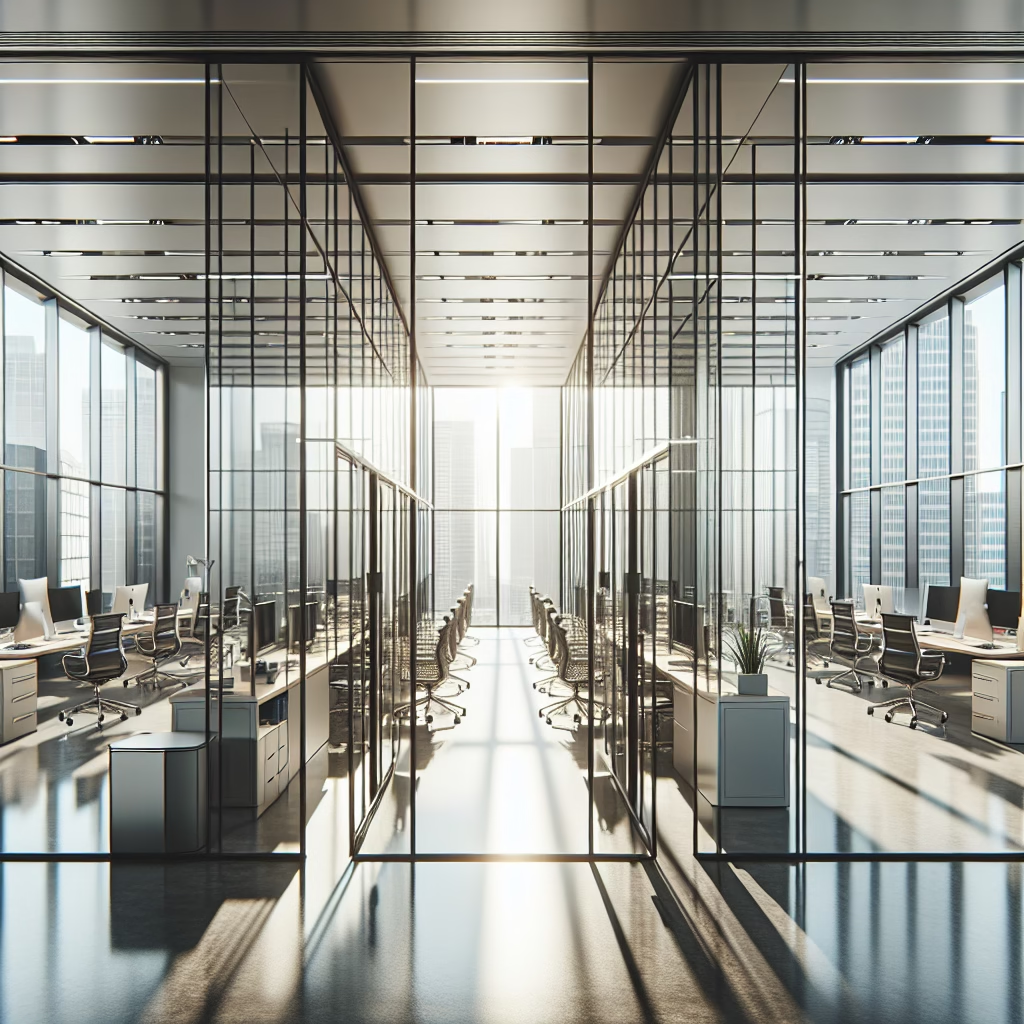
Visualizing an office filled with opaque walls is daunting. It feels baked in a time where barriers are built physically and emotionally. People hunched over desks, avoiding eye contact, churning out work while missing out on the synergy created by human interaction. Contrast this with an office featuring glass partitions. Here, natural light spills through expansive panes, casting soft reflections across the floor. The barriers are still there, but they’re transparent, inviting a level of interaction that opaque walls simply can’t provide.
Take a moment to imagine this space. Picture clusters of employees gathered in huddle rooms showcasing their ideas, their laughter ringing out, or even a quiet dialogue unfolding in one of the glass-enclosed meeting rooms. The transparency encourages accountability, but it also fosters a shared sense of purpose. People can see their peers engaged in discussion, brainstorming innovative solutions, or simply celebrating small wins together.
This shift in dynamics isn’t just about physical arrangements; it reshapes our perception of collaboration. When every workspace is accessible and visible, communication flows more freely. “Hey, can I bounce an idea off you?” becomes an easy question to ask, rather than a mountain of effort that involves navigating barriers, both physical and metaphorical.
I often reflect on how, in traditional setups, employees had to muster the courage to step out of their cubicle tombs to connect with someone. It felt daunting, sometimes uninviting. But in spaces where glass partitions reign, that same question doesn’t need to come with anxiety. It can bubble up like a refreshing stream, one that encourages spontaneous interactions.
Collaboration through these partitions naturally breaks down hierarchical barriers too. In traditional office structures, it’s easy to feel like the person in the corner office is untouchable. But shift to a space where everyone is visible, and the invisible chains start to break. You’re just one glance away from a discussion with leadership or a moment of sharing insights. Ideas become democratic, nurtured through casual exchanges that feel equally accessible to all.
The aesthetics also play a vital role in this dynamic. Glass itself has a way of softening the environment. It removes the often harsh lines created by solid walls and bland colors. Instead, sunlight pours in, invigorating the atmosphere. In such spaces, I find that tension eases, and even serious discussions feel like conversations among friends, enhancing both clarity and creativity.
When there are clear sightlines, even meetings become more engaging. Witnessing the interactions happening outside your glass-walled meeting room brings a sense of inclusion, as if the energy of collaboration flows harmoniously throughout. Imagine being in a brainstorming session, glancing out, and seeing people eagerly exchanging ideas. It feels like a community rather than isolated islands of work.
I’ve also noticed that glass partitions often find themselves in hybrid environments, where remote work collides with traditional office dynamics. They serve as a visual cue that invites connection without making anyone feel cornered. They make hybrid workers more easily visible, allowing teams to acknowledge each member’s presence, noticing someone pondering a solution or even just sharing a smile through the transparent wall. It becomes easier to sync with each other in a flexible work culture.
Of course, it’s essential to recognize that glass partitions aren’t simply about putting up walls—albeit transparent ones—just for the sake of design. They require intentionality. Each partition should serve a clear purpose, whether it’s creating focus zones or communal spots for collaboration. And it’s crucial to balance privacy, as there are moments when a little seclusion can truly enhance productivity.
I once had a mentor who often emphasized how important it was to make our workspaces reflective of our values. In my experience, glass partitions not only embody clarity in design but also clarity in communication. They remind us that while we may work in separate spheres, we are ultimately part of a cohesive whole—an interlinked community striving towards a common goal.
Integrating glass partitions into office design isn’t just a trendy choice; it’s a commitment to fostering an environment where collaboration thrives. I’ve witnessed firsthand how these structures can shift team dynamics, creating open channels for communication while maintaining an inspiring workspace. They redefine our experiences and interactions, bringing purpose back to the workplace.
As I look back, I realize that the positive impact of these partitions extends beyond mere layout adjustments. They create feelings of belonging, dismantling walls—both physical and metaphorical—promoting a culture where collaboration fuels innovation. It’s not just about clarity in a visual sense; it’s about cultivating clarity in our shared objectives, and that’s what makes all the difference in an office atmosphere.
Ultimately, the beauty of glass partitions lies in their ability to invite us in while allowing us to keep our focus. They break down barriers and elevate collaboration, reminding us of the power of transparency in every sense of the word.
.png) Share this post with others
Share this post with others


