
Looking Through Glass: How Office Partitions Enhance Collaboration and Style
Looking Through Glass: How Office Partitions Enhance Collaboration and Style
Looking Through Glass: How Office Partitions Enhance Collaboration and Style
You step into an office, and what do you notice? The hum of conversation? The rhythm of keyboards clicking like a heartbeat? Or perhaps it’s the way light filters through large windows, casting soft shadows on the walls. But then your gaze lands on the partitions—those elegant glass barriers that divide spaces yet invite connection. In that moment, you realize they’re not just functional; they elevate the entire environment.
Let’s unpack how office partitions, particularly glass ones, weave collaboration and style into the fabric of a workspace. In today’s world where remote and hybrid work has transformed our professional landscape, the need for dynamic spaces that foster genuine collaboration is vital.
The Art of Transparency
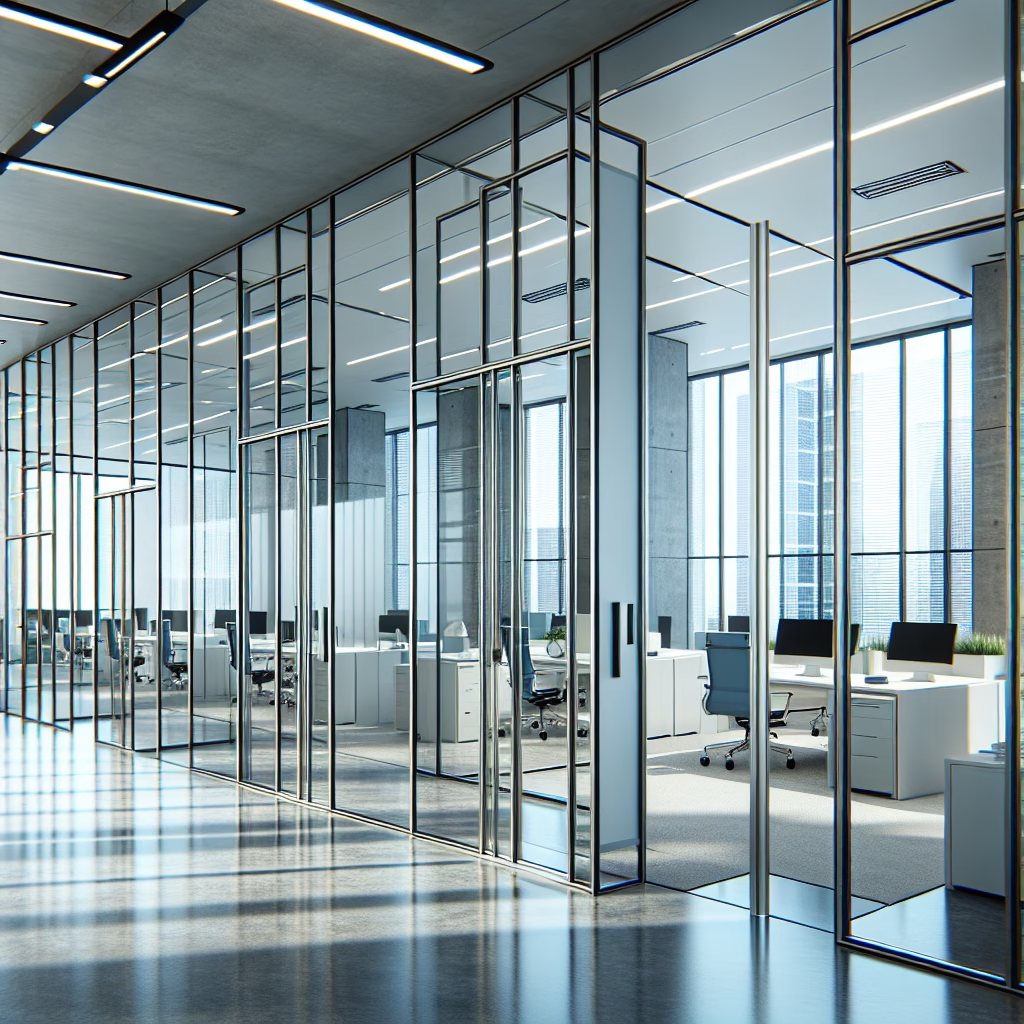
The beauty of glass partitions lies in their transparency. Unlike traditional cubicles that often feel like fortresses, these installations create an open atmosphere. I remember visiting a creative agency where the entire layout revolved around glass. The walls sparkled as sunlight streamed in, illuminating the faces of my colleagues—everyone finishing each other’s sentences, bouncing ideas off one another like a game of catch.
Unlike heavy walls, these glass barriers give the illusion of openness while still providing necessary boundaries. My friends in management often talk about the challenges of creating a balanced environment. Too little separation can result in chaos, while too much can stifle creativity. This is where glass partitions step in, allowing team members to work independently yet remain visually connected.
The Sound of Collaboration
If you’ve ever worked in an open office space, you know the cacophony that can arise when too many voices blend into one. Yet, with glass partitions, sound control becomes an unexpected benefit. The materials used typically feature sound-dampening properties that help manage volume without feeling closed off. It’s almost like a jazz ensemble—each instrument plays its part, but together they create a harmonious tune.
A particular day stands out in my memory: I walked into a space where a design team was brainstorming ideas for a new project. Behind a glass wall, I could see them animatedly discussing concepts, gesturing towards colorful sketches. The enthusiasm was palpable—even from a distance, their laughter and excitement spilled into the larger space, occasionally drawing in a passerby looking to chime in with an idea or two. That’s the magic of glass partitions; they invite informal conversations without compromising on productivity.
Aesthetic Appeal Meets Functionality
Now, let’s talk about style. Gone are the days when office design meant bland beige walls and uninspired furniture. Today, aesthetics and functionality go hand-in-hand. Glass partitions come in sleek designs that can complement any décor. Whether it’s a minimalist approach or more elaborate custom designs, these partitions add a modern flair that enhances the ambiance of any workspace.
Recently, while helping a friend design their new office, I was struck by how much personality glass partitions brought to the layout. They chose a frosted finish that offered an air of sophistication yet kept a touch of privacy for specific areas. The result? A beautiful juxtaposition—a space that felt both intimate and expansive. Art isn’t just reserved for gallery walls; it can carry through the very construction of our environments.
Flexibility Redefined
One of the most significant advantages of glass partitions is their adaptability. Offices today need to be versatile. Teams grow and shrink, projects pivot, and new ideas emerge. With traditional walls, any change was labor-intensive and costly. Glass partitions, however, can be reconfigured with a simple adjustment.
I recall a company that underwent a major shift in their workflow philosophy. They rapidly expanded their collaboration areas, integrating a few glass partitions to create brainstorming nooks that encouraged spontaneity. Within weeks, they transformed a conventional office layout into a vibrant, dynamic ecosystem. They have successfully created spaces where inspiration could thrive, reinforcing the idea that design is a living entity, growing and evolving alongside its inhabitants.
Embracing New Norms
As we embrace more flexible work styles, glass partitions stand as a testament to evolving professional norms. They signal to employees that the company values collaboration, creativity, and openness. The mere presence of such elements can positively impact morale. I think back to a gathering I attended at an office adorned with these translucent partitions. Each room was encased in sections of glass, giving the entire space an airy feel.
It struck me how that atmosphere encouraged discussions; employees flowed naturally from one area to another, exchanging ideas over a cup of coffee or a quick chat. These spaces seemed to whisper an invitation to engage, to connect, to innovate. Isn’t that what office life should be all about?
Creating Contextual Spaces
Lastly, we should discuss how glass partitions create contextual spaces. Each section becomes a hub for specific activities, all while maintaining a cohesive visual narrative. For example, a central area might be used for presentations, bounded by glass partitions that allow observers to witness brainstorming sessions without interrupting the process. In essence, it transforms the everyday workspace into a canvas of creativity.
One day, while visiting a tech firm, I noticed a recent grad softly sketching at a nearby table while a senior designer stood next to him, discussing the finer points of user experience. They were separated by a glass wall, yet their exchange felt collaborative, charged with the kind of energy that sparks innovation. It reminded me that design decisions can foster these kinds of moments—they encourage collaboration in a way that feels organic and effortless.
The Final Reflection
In concluding these reflections on office partitions, I find it fascinating how a simple material change can lead to profound shifts in workplace culture. Glass is not merely a barrier; it embodies a philosophy of openness, collaboration, and adaptability. As we navigate this new era of workspaces, it stands as a reminder that the way we design our environments profoundly impacts the way we connect and create.
So, the next time you walk into an office adorned with glass partitions, take a moment to appreciate the subtle dance of transparency and boundaries. These structures resonate far beyond their physical presence. They are invitations—calling us to lean in, engage, and be present as we forge connections, one idea at a time.
.png) Share this post with others
Share this post with others


