
From Cubicles to Clarity: Why Glass Partitions Are Redefining Modern Offices
From Cubicles to Clarity: Why Glass Partitions Are Redefining Modern Offices
From Cubicles to Clarity: Why Glass Partitions Are Redefining Modern Offices
Walking into a typical office, you might find yourself surrounded by rows of cubicles. I often think back to my own experiences, seated in those fabric-walled boxes, feeling like they were the grown-up version of a school desk. They were supposed to provide privacy and a sense of focus, but more often than not, they felt stifling—like walls closing in on creativity and collaboration. The constant hum of chatter, the flickering fluorescent lights—it’s a setting that can quickly drain inspiration.
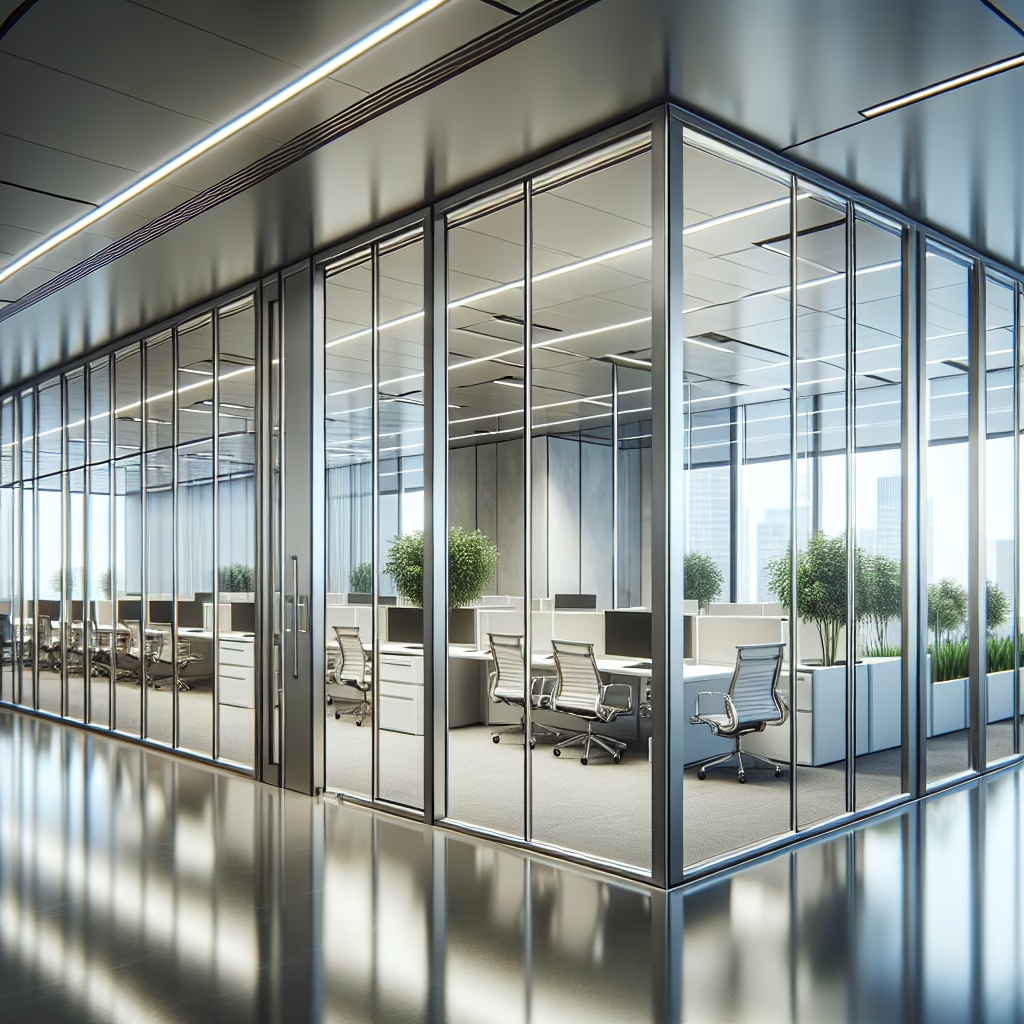
Fast forward to today’s office designs, where the rise of glass partitions is not just a trend but a transformative movement. These sleek, transparent barriers shift the very essence of how we perceive space and interaction at work. Imagine walking into an office where you can see the vibrant energy of collaboration emanating from an adjacent team or catch a glimpse of someone brainstorming creatively at a nearby table. That visibility encourages engagement in ways cubicles simply cannot. Rather than isolating us in our silos, glass partitions invite connection.
Breaking Down Barriers
Consider for a moment what happens when you remove the opaque walls. Suddenly, it’s not just about being “in your own world”; it’s about being part of a larger ecosystem. The bright, airy feel that permeates through glass partitions allows natural light to flood the space. I still remember how different it felt transitioning from a dimly lit cubicle to an office bathed in sunlight, where the glow of the day created a lively atmosphere, inspired by nature itself. Those glass walls usher in light and life, elevating mood and productivity.
But it’s not merely aesthetics; there’s a psychological aspect at play. Glass partitions create a sense of openness and transparency. In an age where trust plays a monumental role in workplace culture, these transparent barriers signal that there is nothing to hide. We’re all in this together, collaborating towards common goals rather than unwittingly competing in isolated environments.
The Space for Innovation
When I visited a startup nestled within a shared office space featuring glass partitions, I was struck by how seamlessly ideas flowed between teams. The layout encouraged spontaneous conversations and impromptu brainstorming sessions. This environment was bustling with energy, and one moment stands out in my mind: a team huddle that spilled into the hallway. With glass walls around them, their chaotic but productive discussion felt inclusive. Anyone could see the sparks of innovation taking flight—their enthusiasm was palpable.
In stark contrast, I recalled the headaches of trying to confer with colleagues crammed into cubicles, often squinting over high dividers or straining to hear each other across the “walls.” This design caused barriers—not just physical, but emotional. With glass partitions, ideas weave like a rich tapestry rather than get snipped one by one.
Control and Comfort
It’s interesting to consider how the nature of work itself is evolving, leaning towards flexibility and comfort. Glass partitions provide a unique blend of privacy and transparency, something that resonates deeply in today’s work culture. On one hand, the glass allows you to feel part of the larger team, while on the other, you can easily escape into a more focused zone when needed. Imagine having the choice to retreat into a private meeting room with a clear glass door while still feeling connected to the vibrant pulse of the office.
I had a colleague once who would often feel overwhelmed in a busy office, the noise sometimes too much to bear. It was amazing to see how just positioning her desk near a glass partition—not isolated but still distinct—seemed to elevate her comfort. It was as if a barrier subtly existed without wrapping her in isolation, offering a glimpse of the bustling environment while allowing her a sense of personal space.
Design Meets Functionality
The aesthetic appeal of glass partitions cannot be underestimated. They come in various styles, from minimalist frames to vibrant designs that complement the office’s overall theme. I recall entering a tech firm where the glass partitioning was adorned with intricate patterns, reflecting the creativity of the team within. Each design told a story, making the space as much about the journey of innovation as the actual work.
The blend of functionality and form creates an inspiring backdrop. It showcases a forward-thinking mentality not just in how the office looks, but in how people interact with it. The subtle hum of conversation becomes a soundtrack to creativity rather than a distraction. Every workspace feels curated, a shared narrative driven by innovation and cooperation.
The Future of Workspaces
As remote work solutions become a norm, the way we conceive of the office will continue to evolve. Glass partitions signal a future where home-like comfort meets professional zest. It’s about creating environments that mold to how we work best—communally—or in quiet concentration.
I often ponder the ways our spaces reflect our values. With glass, we embrace a degree of vulnerability, inviting others in rather than shutting them away. The notion of community, collaboration, and engagement becomes physicalized. Would we be open to extending this thought into other aspects of our lives? If office spaces can be redefined so dramatically, what’s stopping us from challenging our perceptions elsewhere?
As organizations strive to cultivate environments that attract and retain talent, glass partitions stand out as more than just a clever design solution. They encapsulate the very essence of modern work—the intention to include, engage, and uplift. It’s a profound shift from cubicles to clarity, leading us into spaces where the barriers of yesterday have become the glass doors of opportunity for tomorrow.
In essence, it’s not just about how we divide our spaces; it’s about how we choose to connect them. And as that connection becomes clearer, perhaps so will our purpose.
.png) Share this post with others
Share this post with others


