
Beyond Traditional Walls: Why Glass Room Dividers are the Future of Interiors
Beyond Traditional Walls: Why Glass Room Dividers are the Future of Interiors
Have you ever found yourself in a room where the energy just felt off? It can be stifling, cramped, almost like walls are closing in on you. I remember visiting a friend’s home where the living area was largely separated from the kitchen by old, heavy wooden doors. While the spaces were functional, there was something disheartening about the division. We were in the same house but felt like we were living in separate worlds. This made me think about how essential it is for our interiors to foster connection and openness.
This yearning for connectivity is at the heart of why glass room dividers are emerging as the future of interiors. Gone are the days when solid walls dictated the layout of our homes and offices. Instead, I find myself captivated by the clarity and modernity that glass partitions bring to a space.
Consider how a glass divider transforms a room. When you walk into a space adorned with these elegant structures, you’re immediately struck by the light that pours in from both sides. Natural sunlight cascades through the glass, eliminating the dreariness that can so often come with traditional walls. In contrast to the heavy barriers of the past, glass offers a transparent embrace, allowing rooms to breathe and flow seamlessly into one another.
Imagine a bustling office where teams collaborate. Traditional cubicles, while private, often create dead zones of energy. Glass room dividers can serve as a solution, enabling individual focus while still promoting an environment of communication. In one shared workspace I frequented, the combination of glass and greenery created a vibrant atmosphere. Employees could focus on their tasks yet glance up from their screens to see colleagues in the nearby huddle. This connection kept the energy high and the ideas flowing.
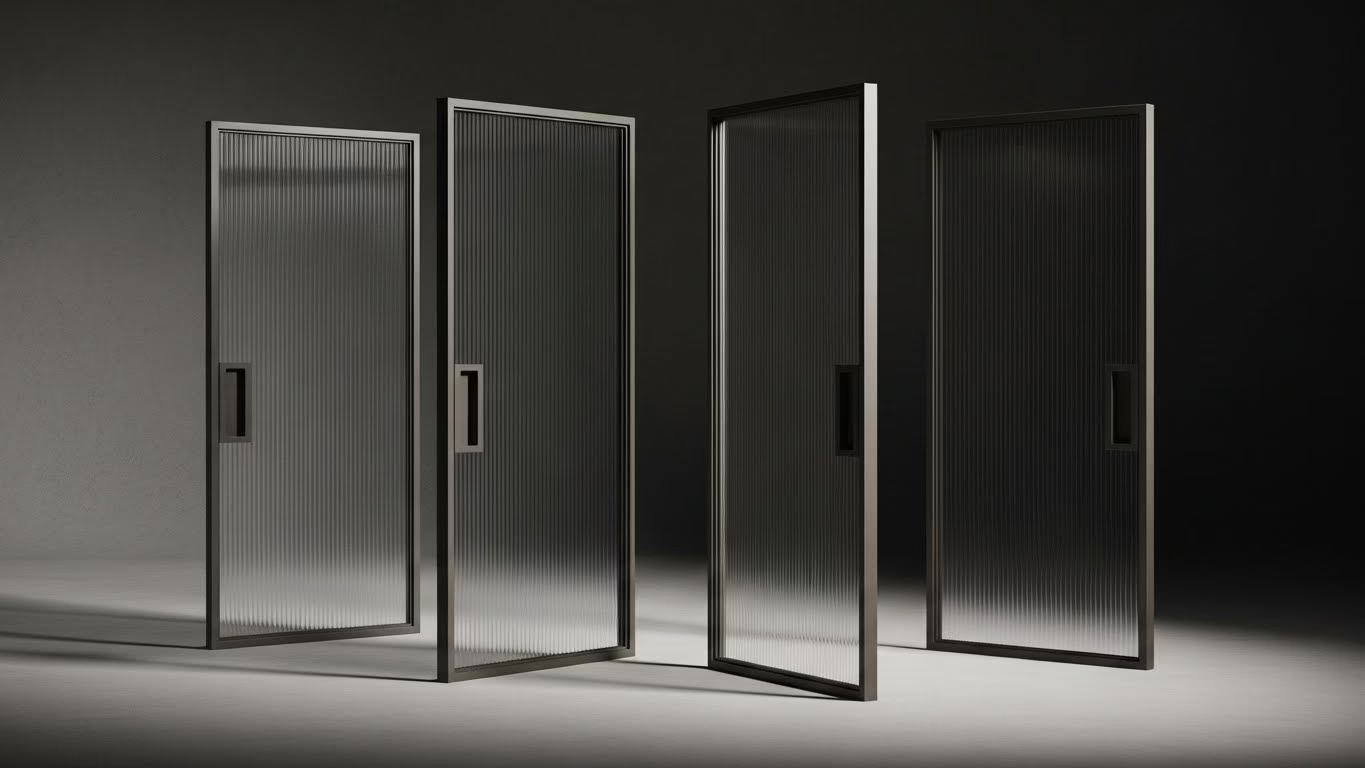
The aesthetic appeal of glass is undeniable, too. In my own home, I don’t want to just create separate rooms; I want spaces that tell a story. A glass divider can serve as a beautiful focal point, merging functionality with elegance. Whether it’s a sleek-framed design or an industrial-style piece, glass brings a contemporary vibe that harmonizes with various interior styles. It whispers sophistication, without making a loud declaration.
Moreover, glass dividers offer a twist on traditional design that feels modern and progressive. They reflect a shift in our approach to space and how we use it. Just think about the lifestyle changes we’ve experienced over the last few years. As work-from-home cultures have burgeoned, our need for versatile living spaces has increased. This is where glass dividers shine. They allow us to adapt spaces for multiple functions—be it for remote work in the morning or a cozy gathering in the evening.
A memorable example is a dining area I’ve seen where a glass room divider with artistic etchings gracefully separates it from the living room. The design doesn’t just serve as a barrier; it enhances the overall aesthetic, letting diners enjoy a sense of privacy without losing the welcoming openness of the home. The etched designs catch the light, creating intriguing shadows that dance across the walls. This kind of atmosphere invites you to linger longer, savoring the moments spent with friends and family.
Let’s not forget about maintenance—an often-overlooked aspect. Traditional walls can be a hassle to maintain, requiring regular painting and touch-ups. Glass room dividers, on the other hand, are relatively low-maintenance. A quick wipe with a soft cloth and they’re as good as new. For someone like me, who appreciates simplicity, this is an alluring benefit. They provide beauty without the burden.
However, I acknowledge that some may feel apprehensive about incorporating glass dividers. Concerns about privacy or the feeling of exposure are common. Here’s the paradox: while glass doesn’t provide the same sense of enclosure as a solid wall, it allows for an intentional kind of openness. By thoughtfully placing these dividers, we can create intimate spaces that still feel connected. Sheer curtains or frosted glass options can also provide additional privacy without losing the benefits of transparency.
Sustainability also plays a role in this future-forward design choice. As the world becomes more eco-conscious, glass structures can often be made from recycled materials and are typically more energy-efficient than traditional wooden partitions. They reflect the light, reducing the need for artificial illumination during the day—an environmentally friendly choice that doesn’t compromise style.
And let’s talk about versatility. Glass room dividers can be tailored to various heights, widths, and even shapes, allowing for a personal touch that can significantly alter the character of a space. A small apartment can be transformed with a glass divider that delineates a bedroom from the living area, giving the illusion of a loft-style design while enhancing the brightness of the entire unit.
In sharing these thoughts, I hope to illustrate that the shift away from traditional walls is not merely an aesthetic choice—it’s a lifestyle change that embraces transparency and openness. Glass room dividers reflect a desire for modernity in design, allowing spaces to evolve with our needs. We live in a world where connectivity and adaptability are vital, and our interiors should mirror that ethos.
So, the next time you’re thinking about redefining your space, I invite you to consider glass. It may just be the key to unlocking a refreshing atmosphere that not only looks beautiful but also fosters those human connections we all crave. Glass room dividers are here to stay; they are, indeed, the future of interiors.
.png) Share this post with others
Share this post with others


