
Glass Houses: Why a Transparent Workspace Could Enhance Your Productivity
Glass Houses: Why a Transparent Workspace Could Enhance Your Productivity
The Allure of Transparency
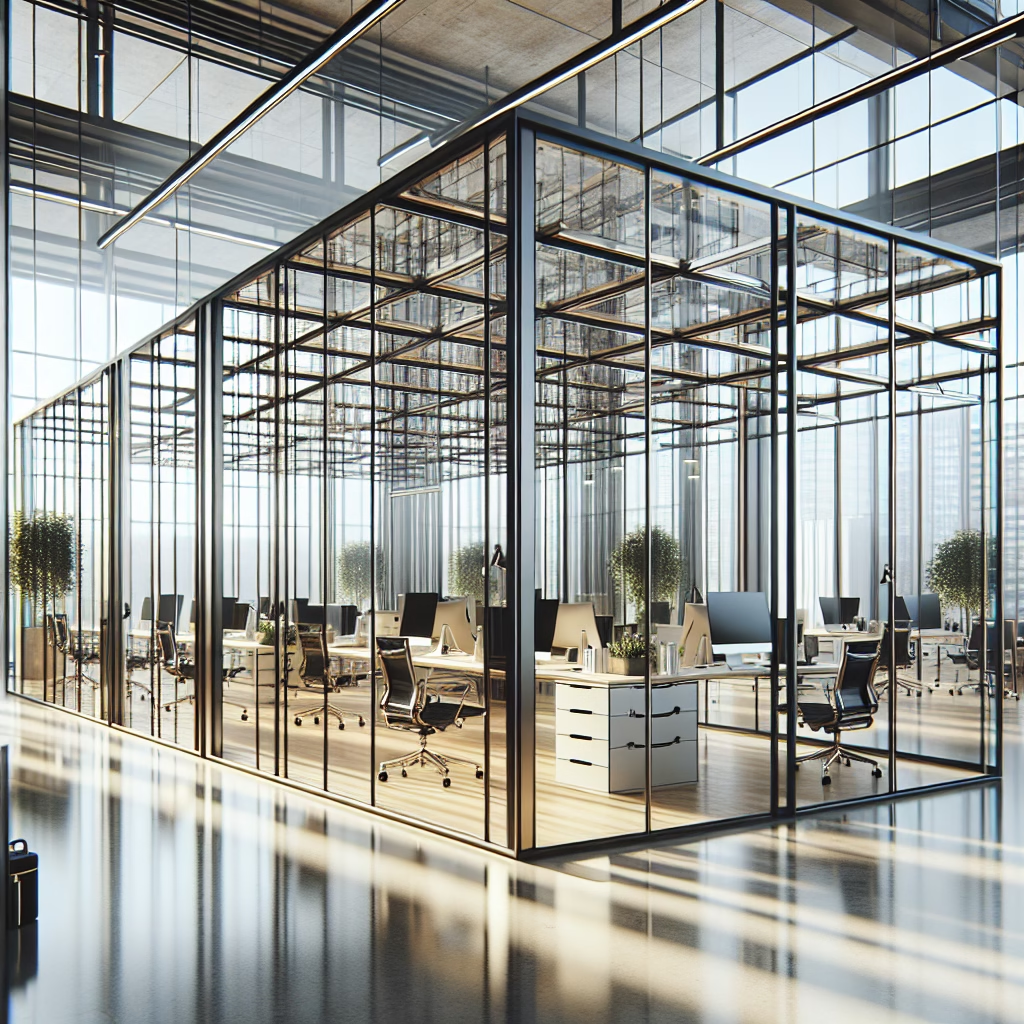
Picture this: a space filled with sunlight pouring through expansive windows, the air infused with creativity and collaboration. I once walked into a workspace that was designed as a “glass house.” The term painted pictures in my mind of fragility, but this place exuded strength and warmth with its glass walls, inviting both nature and people into its heart. It broke down barriers, both physical and metaphorical.
I remember the first time I stepped inside. The office buzzed with energy. People were conversing openly, ideas floated from desk to desk, and laughter seemed to echo even in the quieter corners. Everyone could see one another, not just through the glass but through an openness that gave birth to trust. It sparked curiosity: could this transparent layout truly enhance productivity?
The Power of Visibility
It turns out, visibility plays more than a decorative role in a workplace. In traditional offices, cubicles and partitions serve as barriers. They shield, yes, but they also isolate. We sit in our little boxes, eyes glued to screens, often forgetting about the team surrounding us. In a glass house, however, that isolation evaporates. Instead, we become aware of our surroundings. We glance up from our tasks and see a colleague brainstorming, a team collaborating, or even simply enjoying a moment of silence.
I’ve found that this visibility encourages accountability. When I’m aware that my colleagues can see my progress, I’m motivated to keep moving forward. It instills a sense of shared purpose. No one is alone in their workload; we’re all contributors to a bigger story unfolding around us.
Nature at Our Doorstep
One of the most striking aspects of these transparent workspaces is how they integrate natural elements. I recall one particular glass house equipped with indoor plants cascading from shelves and ivy wrapping around structural supports. The glass not only framed the view of the world outside but also brought elements of that world inside. Sunlight filtered through, creating soft shadows and inviting warmth. It felt fresh, invigorating.
Research backs this up: biophilic design—essentially, incorporating nature into the workplace—has shown to reduce stress and increase overall well-being. In my experience, working in a space where I could see greens and blues, engaged my senses and felt like I was part of something larger. These spaces inspire creativity; they remind us of possibilities beyond our screens.
Collaboration Without Barriers
In a glass house, the barriers to communication dissolve. I often think back to those moments when a robust discussion erupted organically around a shared table. A simple idea was tossed around, and before long, we were all involved. There’s an intimacy in this setting that inspires brainstorming and collaborative spirit. The air is charged with energy.
I vividly remember a project that began as a casual coffee break discussion. Rather than scheduling a formal meeting in a conference room, we gathered informally. We could see one another, share our ideas freely, without the stresses of a structured atmosphere. Those brainstorming sessions became a ritual, enveloped in sunlight and fresh air. Through the glass walls, our dialogue sparked insights that may have otherwise wandered unheard behind closed doors.
Empowerment Through Trust
There’s something inherently empowering about transparency. It cultivates a culture of trust. In my journey, I recognized that when teams feel trusted, they naturally rise to meet expectations. There’s a certain liberation in knowing that you are not just invisible within the framework of office walls.
In a space where trust is built through visibility, ideas flourish. I can’t pinpoint exactly when I felt my own confidence bloom in that environment, but I do remember taking greater risks in my thinking, sharing thoughts that I might have hesitated to voice in a more traditional setting. The glass house encouraged vulnerability—an acknowledgment that we all contribute to each other’s strengths.
Redefining Boundaries
Of course, like any concept, there are challenges. The transparency isn’t for everyone. There’s a fine line between openness and distraction. I remember noticing some colleagues seeking quieter corners, away from the bustle to find their focus—a necessary balance in a transparent workspace. It made me realize that flexibility is key.
By incorporating spaces where one can retreat for solitary work while also celebrating communal interaction, a glass house can embrace both the need for focus and collaboration. Subtle dividers, cozy alcoves, and noise-canceling zones can coexist harmoniously with those shimmering walls of glass.
A New Perspective on Productivity
Reflecting on my experiences, I realize that a glass house isn’t merely about the physical structure; it’s about fostering a mindset. It’s a belief in the values of collaboration, trust, and inclusion. Productivity thrives not just in screens and deadlines, but in our ability to connect with one another.
In these transparent environments, I found not just a work space, but a community. Ideas flowed like water through the framework—unimpeded and rich with potential. Watching colleagues engage, celebrating successes, and sharing challenges opened my eyes to the power of transparency in the workplace.
Closing Thoughts on Glass Houses
In the end, a glass house is an invitation—for ideas to flow, for relationships to deepen, and for creativity to blossom. It seeks to redefine what a workplace can be. Instead of brick and mortar, it showcases the beauty of shared experiences. So if you find the chance to step into one, embrace it. You might discover that the essence of transparency unlocks your own potential and enriches the tapestry of your work life. It’s a beautiful space, one where productivity has a chance to thrive in the warmth of shared light.
.png) Share this post with others
Share this post with others


